



Removal
Note: A new gasket will be required for installation and new cylinder head bolts may be required - see text. The new gasket is supplied with a sealing strip - do not remove the strip until you are about to install the gasket.
1. Before removing the cylinder head, make sure the engine is cool. Note that the head is removed together with the intake and exhaust manifolds.
2. Disconnect the negative battery terminal.
3. Raise the hood to the fully open position as described in Chapter 11.
4. Drain the cooling system as described in Chapter 1A.
5. Remove the air cleaner as described in Chapter 4.
6. Remove the sprocket and upper guide rail of the camshaft timing chain as described in paragraph 8.
7. Remove the accessory drive belt as described in Chapter 1A.
8. Disconnect the exhaust system inlet pipes from the exhaust manifold as described in Chapter 4.
9. Unscrew the nut securing the dipstick guide tube from the exhaust manifold and remove the dipstick. Plug the dipstick tube to prevent dirt from getting inside.
10. Disconnect the throttle cable from the linkage and remove it from the work area as described in Chapter 4.
11. Remove the bolts and lift the support strut off the intake manifold. On carbureted engines, remove the single bolt securing the strut to the manifold. On fuel-injected models, remove the two bolts and, working from underneath the manifold, release the throttle return spring (see fig. 11.11).
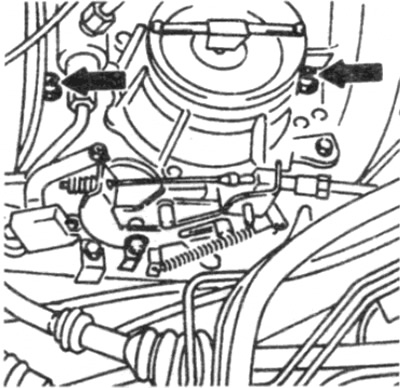
Fig. 11.11. Intake manifold support strut bolts (shown by arrows) - fuel injection engine
12. Disconnect the cooling hoses from the front and rear of the cylinder head (see fig. 11.12).
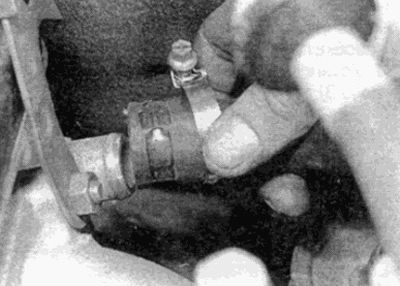
Fig. 11.12. Disconnecting the interior heater hose from the cylinder head
13. Disconnect the connector plugs from the switches and sensors mounted on the cylinder head and intake manifold/carburetor (depending on the model), remembering their location (see fig. 11.13).
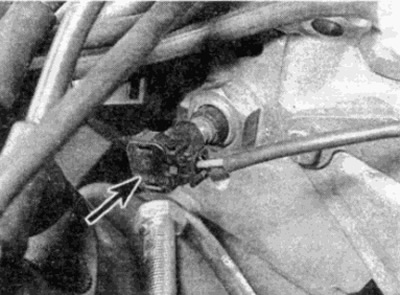
Fig. 11.13. Disconnecting the coolant temperature sensor plug (shown by arrow)
14. Similarly, disconnect the vacuum hoses from the vacuum valves attached to the cylinder head and intake manifold/carburetor (depending on the model).
15. Unscrew the union nut and disconnect the brake booster vacuum hose from the intake manifold.
16. On fuel injected models, depressurize the fuel system as described in Chapter 4.
17. Disconnect the supply and return pipes from the carburetor or from the fuel pressure regulator and fuel distributor(on fuel injected models). Where necessary, hold the fittings while loosening the nuts. Plug or cap the open ends of the tubes and fittings to reduce the leakage of gasoline and the ingress of dirt.
18. On models with air conditioning, unbolt and remove the air conditioning pipe bracket from the cylinder head.
19. On models with automatic transmission, disconnect the pressure control cable from the throttle linkage as described in Chapter 7B. Remove the bolt securing the fluid dipstick tube to the gearbox from the cylinder head.
20. Loosen the water pump bypass hose clamp on the thermostat housing.
21. Disconnect the upper radiator hose from the thermostat housing.
22. Where provided, unscrew the bolts and remove the EGR system pipe that connects the EGR valve to the intake manifold.
23. Where applicable, inspect the emission control system components and disconnect any associated hoses, valves, etc. to allow removal of the cylinder head. Note the location and routing of all hoses to aid reassembly.
24. Make a final check that all required hoses, tubes and wires are disconnected (brackets/clamps are unscrewed) and do not interfere with the removal of the cylinder head.
25. Working from the side of the timing chain housing on top of the cylinder head, remove the three bolts securing the cylinder head to the timing chain housing (see fig. 11.25).
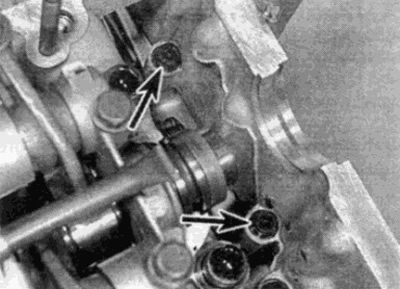
Fig. 11.25. Two of the three bolts securing the timing chain cover to the cylinder head (shown by arrows)
26. Gradually, acting in the reverse order to that shown in Fig. 11.44, loosen the cylinder head bolts (see fig. 11.26).
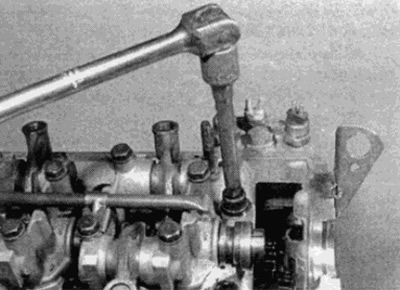
Fig. 11.26. Unscrewing the cylinder head bolt
27. Loosen the cylinder head bolts.
28. Slide the head off the cylinder block and dowel pins by rocking it. Do not use a lever between the mating surfaces of the head and cylinder block, as this may damage the surface.
29. It is best to lift the cylinder head from the block with an assistant - be careful, as the head is heavy.
30. Remove the cylinder head gasket.
Examination
31. Contact Chapter 2G for information on disassembling and assembling the cylinder head. If desired, the manifolds can be removed as described a Chapter 4.
32. Before installing the head, clean the mating surfaces of the head and cylinder block. Use a scraper to remove all traces of gasket and carbon deposits. Clean the piston crowns as well. Be careful with the aluminum cylinder head, as the soft metal is easily damaged. Make sure that no debris gets into the oil and water passages. Use tape and paper to cover the bolt holes, oil and water passages in the cylinder block. To prevent carbon deposits from getting into the gap between the piston and cylinder, apply a small amount of grease to the gap. After cleaning each piston, rotate the crankshaft so that the piston moves down the cylinder bore. Then remove the grease and carbon deposits with a clean rag.
33. Check the block and cylinder head for chips, deep scratches or other damage. If they are very slight, they can be removed from the cylinder block using sandpaper. More serious damage can be corrected by grinding on a machine, however, this is a job for specialists.
34. If there is a suspicion of warpage of the cylinder head surface, use a metal ruler to check for surface distortion as described in Chapter 2G.
35. Clean the bolt holes in the cylinder block with an absorbent cloth or a thin cloth on a screwdriver. Make sure all oil and water is removed, otherwise the block may burst due to hydraulic pressure when tightening the bolts,
36. Check the bolt threads and the threads in the cylinder head for damage. If necessary, use a tap of the appropriate size to restore the threads in the block.
37. Manufacturers recommend checking the length of the cylinder head bolts to determine if replacement is necessary; however, some owners may choose to replace all bolts if they wish.
38. Measure the length of each bolt from the base of the head to the end of the shaft (see fig. 11.38). If the bolt length exceeds the maximum permitted by technical specifications, the bolts must be replaced.
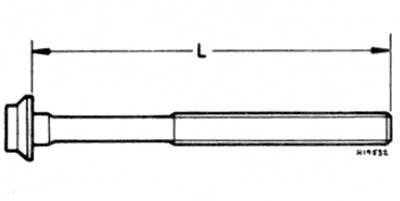
Fig. 11.38. Measuring the length of the cylinder head bolt
L maximum permissible length = 122.0 mm
Installation
Note: A new cylinder head gasket will be required for installation. The new gasket is supplied in a sealed package - do not remove the packaging until the gasket is installed.
39. Where required, install manifolds as described in Chapter 4.
40. Check the alignment of the timing marks on the camshaft and crankshaft with the position of the piston of the 1st cylinder in the BMT, as described in paragraph 3.
41. Install the gasket onto the keys in the cylinder block, checking that it is installed correctly.
42. Lower the cylinder head onto the block.
43. Lubricate the threads and contact surfaces of the cylinder head bolts with oil, then insert the bolts into the cylinder block holes and tighten by hand.
44. Tighten the cylinder head bolts in the order shown in Fig. 11.44. Tighten the bolts in several steps specified in the Specifications - i.e. tighten all bolts to step 1, then tighten the bolts to step 2, etc.
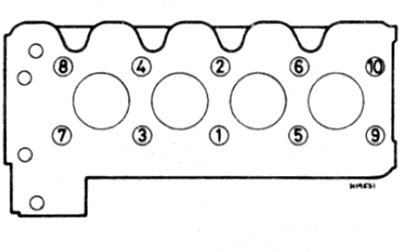
Fig. 11.44. Cylinder head bolt tightening sequence - 4-cylinder petrol engines
45. Install and tighten the three cylinder head to timing chain housing bolts.
46. Where applicable, reconnect all emission control hoses to the cylinder head and/or install any removed components that facilitated cylinder head removal. Check that hoses are positioned and routed as they were prior to removal.
47. Where provided, install the EGR pipe that connects the EGR valve to the intake manifold.
48. Connect the upper radiator hose to the thermostat housing.
49. Connect the water pump bypass hose to the thermostat housing and tighten the clamp.
50. On models with automatic transmission, install the bolt securing the fluid level dipstick tube to the cylinder head. Connect and adjust the pressure control cable as described in Chapter 7B.
51. On models with air conditioning, tighten the bolts securing the air conditioning pipe bracket to the cylinder head.
52. Connect the fuel supply and return lines.
53. Connect the brake booster hose and tighten the union nut.
54. Connect all vacuum lines and electrical connectors.
55. Connect the cooling hoses at the front and rear of the cylinder head.
56. Install the mounting stand on the intake manifold.
57. Connect and, if necessary, adjust the throttle cable as described in chapter 4.
58. Install the dipstick guide tube mounting nut, then insert the dipstick.
59. Connect the front exhaust pipes to the exhaust manifold as described in chapter 4.
60. Install the accessory drive belt as described in Chapter 1A.
61. Install the upper timing chain guide rail and camshaft sprocket as described in paragraph 8.
62. Install the air cleaner.
63. Make a final check that all parts are installed and all hoses, tubes and connectors are connected correctly.
64. Fill the cooling system as described in Chapter 1A.
65. Connect the negative battery terminal, then start the engine and check for leaks.