



Contents: Checking the drive belt - the basics ↡ 4 Cylinder Engines with Single Belt…↡ 4 Cylinder Engines with Multiple…↡ 6-cylinder engines - replacing the…↡
Checking the drive belt - the basics
1. Due to their application and design, belts have a limited service life and to avoid problems, belts should be checked periodically.
2. The number of belts is determined by the number of additional systems (units) installed. The water pump, alternator, hydraulic pump for the power steering/suspension system, air conditioning compressor and air injection pump have a belt drive
3. To improve access for belt inspection, if desired, remove the viscous cooling fan and shroud as described in Chapter 3.
4. With the engine off, use your fingers (and, if necessary, a flashlight) move along the belts, checking for cracks and belt delamination. Also check for belt fraying and glaze, which gives the belt a shiny appearance. Both sides of the belts should be checked, which can be done by turning the belt. If necessary, turn the crankshaft with a wrench on the crankshaft pulley hub bolt so that the entire belt can be checked.
4 Cylinder Engines with Single Belt - Belt Replacement
5. Remove the cooling fan blades and cover as described in Chapter 3.
6. Loosen the tensioner bolt by a quarter to half a turn (if necessary, remove the plastic plug to gain access to the bolt) (see fig. 8.6).
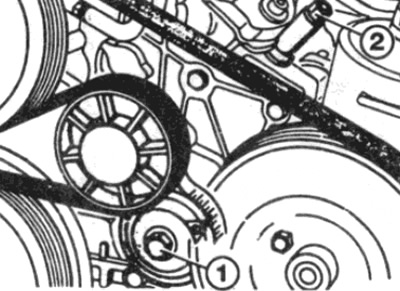
Fig. 8.6. Loosen the tensioner bolt (1) and turn the adjusting nut (2) - 4-cylinder engine with one accessory drive belt
7. Loosen the adjusting nut (counterclockwise), to move the adjuster back and remove the belt from the pulleys.
8. Route the new belt in the order shown around the pulleys, starting with the tensioner pulley (see Fig. 8.8, a-c). Make sure the belt is properly positioned on the pulleys.
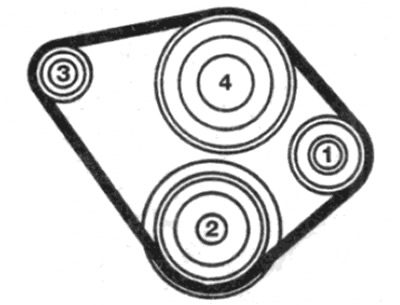
Fig. 8.8, a. Auxiliary drive belt - 4-cylinder engine without power steering
Install the belt in the following order:
1 Tensioner pulley
2 Crankshaft pulley
3 Generator pulley
4 Water pump pulley
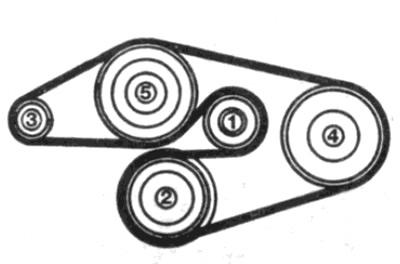
Fig. 8.8, b. Auxiliary drive frame - 4-cylinder engine with power steering, but without air conditioning system (one belt)
Install the belt in the following order
1 Tensioner pulley
2 Crankshaft pulley
3 Generator pulley
4 Power steering pump pulley
5 Water pump pulley
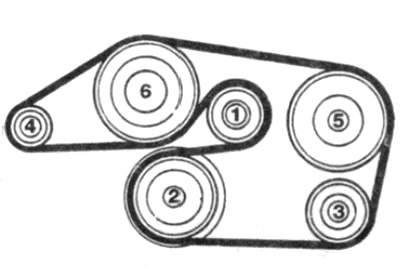
Fig. 8.8, c. Auxiliary drive belt - 4-cylinder engine with power steering and air conditioning system (one belt)
Install the belt in the following order
1 Tensioner pulley
2 Crankshaft pulley
3 Air conditioning compressor pulley
4 Generator pulley
5 Power steering pump pulley
6 Water pump pulley
9. Tighten the belt as follows.
Models with a graduated scale applied to the tensioner
10. On vehicles without power steering, turn the adjusting nut clockwise until the tensioner pointer is aligned with the 5th division of the scale (on the left side, looking at the scale at the front of the engine compartment) (see fig. 8.10).
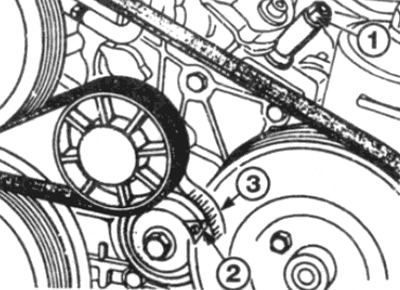
Fig. 8.10. Turn the adjusting nut (1) until the pointer tip aligns with the 5th division of the scale (3) - 4-cylinder engine (one belt)
11. On models equipped with power steering, turn the adjusting nut clockwise until the tip of the pointer is positioned between the 8 and 9 marks on the scale (on the left side, looking at the scale at the front of the engine compartment).
12. Tighten the tensioner bolt to the required torque and install the cover (where provided).
13. Install the radiator fan blades and shroud as described in Chapter 3.
Models with thick mark (and a cast triangle) on the tensioner scale
14. Turn the adjusting nut clockwise until the pointer tip aligns with the thick line (on the thicker edge of the triangle) on the scale (see fig. 8.14).
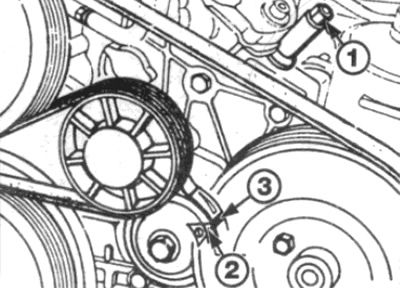
Fig. 8.14. Turn the adjusting nut (1) until the pointer (2) aligns with the thick line (3) on the skele - 4-cylinder engine with one belt
15. Tighten the tensioner bolt to the required torque and install the cover (where provided).
16. Install the radiator fan blades and shroud as described in Chapter 3.
4 Cylinder Engines with Multiple Belts - Belt Replacement
Alternator/Water Pump Drive Belt
17. If necessary, remove the shields from underneath the vehicle to improve access as described in Chapter 11.
18. Loosen the upper and lower generator mounting nuts and the adjusting lever mounting bolt to the camshaft drive chain housing (see fig. 8.18).
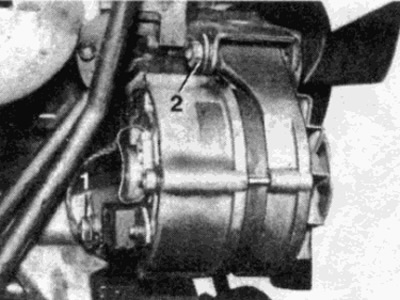
Fig. 8.18. Loosen the upper (2) and lower generator mounting nuts (1) - 4-cylinder engine (several drive belts)
19. To move the alternator forward toward the engine to remove the belt from the pulleys, turn the adjusting bolt (see fig. 8.19).
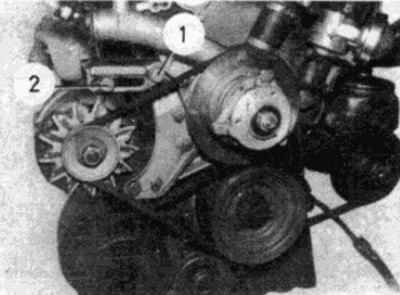
Fig. 8.19. Generator adjusting lever bolt (1) and adjusting bolt (2) - 4-cylinder engine (multiple drive belts)
20. Route the new belt around the pulleys, then turn the adjusting bolt to tension the belt so that with moderate pressure the belt can be deflected approximately 12 mm at the midpoint between the alternator and tensioner pulleys.
21. Hold the adjusting bolt in this position, then tighten the upper and lower generator mounting nuts in the following order. Then tighten the adjusting lever bolt.
22. Check the belt tension after a few minutes of engine operation, then, where provided, install the engine protection from below.
Power steering pump drive belt
23. Remove the alternator belt as described earlier in this paragraph.
24. Working from the opposite side of the power steering pump mounting bracket, loosen the governor mounting bolt furthest from the engine and the two mounting bolts closest to the engine (see fig. 8.24).
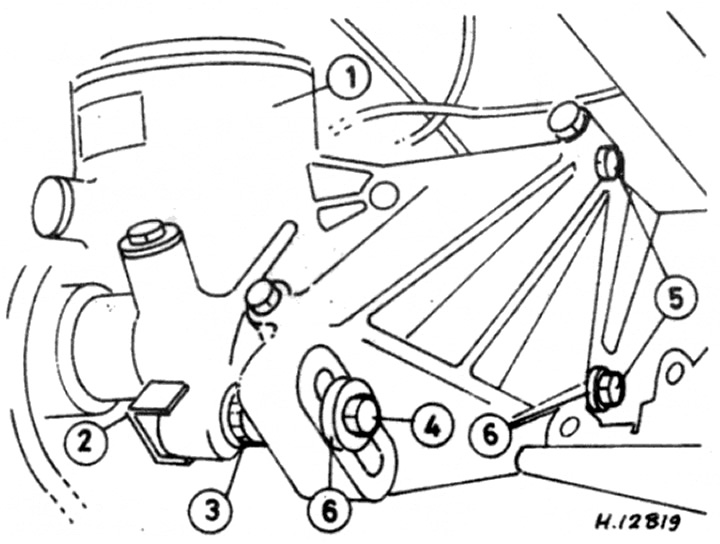
Fig. 8.24. Power steering pump mounting parts - 4-cylinder engine with multiple belts
1 Power steering pump
2 Lock nut
3 Gear adjuster
4 Regulator fixing bolt
5 Mounting bolts
6 Washers
25. Turn the timing belt adjuster bolt with an open-end wrench, move the pump forward toward the engine, then remove the belt from the pulleys.
26. Fit the new belt onto the pulleys, then turn the adjusting bolt to tighten the belt so that with moderate finger pressure it can be deflected approximately 12 mm at the midpoint between the two pulleys.
27. Tighten the fixing bolt, then the two mounting bolts.
28. Install the alternator belt as described in this paragraph.
29. Check the belt tension after a few minutes of engine operation, then, where provided, install the engine protection from below.
Air conditioning compressor drive belt
30. Remove the alternator drive belt and the power steering pump belt as described in this paragraph.
31. Loosen the compressor mounting bolt, unscrew the tensioner bolt to move the compressor forward toward the engine and remove the belt from the pulleys (see fig. 8.31).
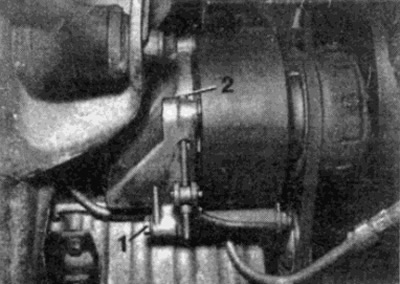
Fig. 8.31. Air conditioning compressor mounting parts - 4-cylinder engine with multiple belts
1 Fastening bolt
2 Tensioner bolt
32. Fit the new belt onto the pulleys, then tighten the adjusting bolt, tensioning the belt so that with moderate thumb force it can be deflected approximately 10 mm at the midpoint between the pulleys. When the tension is adjusted, tighten the mounting bolt.
33. Install the alternator and power steering pump belts as described in this paragraph.
34. Check the belt tension after a few minutes of engine operation, then, where provided, install the engine protection from below.
6-cylinder engines - replacing the drive belt
35. Remove the cooling fan blades and shroud as described in Chapter 3.
36. Loosen the tensioner bolt by a quarter to half a turn (if necessary, remove the plastic plug to gain access to the bolt) (see fig. 8.36).
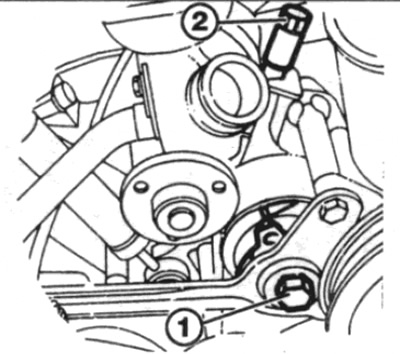
Fig. 8.36. Loosen the tensioner bolt (1) and turn the adjusting nut (2) - 6 - cylinder engine
37. Loosen the adjusting nut (counterclockwise) to move the adjuster back and remove the belt from the pulleys.
38. Route the new belt around the pulleys in the order shown, starting with the tensioner pulley (see Fig. 8.38, a. b). Make sure the belt is properly positioned on the pulleys.
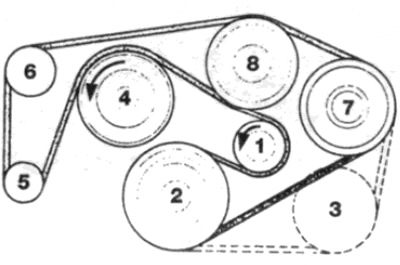
Fig. 8.38, a. Auxiliary drive belt - 6-cylinder engine without supercharger pump
Install the belt in the following order
1 Tensioner pulley
2 Crankshaft pulley
3 Air conditioning compressor pulley
4 Radiator fan pulley
5 Generator pulley
6 Tension pulley
7 Power steering pump pulley
8 Water pump pulley
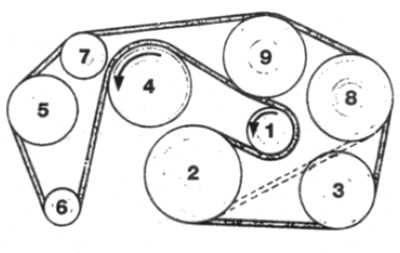
Fig. 8.38, b. Auxiliary drive belt - 6-cylinder engine with air injection pump
Install the belt in the following order
1 Tensioner pulley
2 Crankshaft pulley
3 Air conditioning compressor pulley
4 Radiator fan pulley
5 Air injection pump pulley
6 Generator pulley
7 Tension pulley
8 Power steering pump pulley
9 Water pump pulley
39. Tighten the belt as follows.
Models with a graduated scale applied to the tensioner
40. Move the tensioner pointer until it is aligned with the right end of the scale (looking at the scale at the front of the engine compartment) (see fig. 8.40).
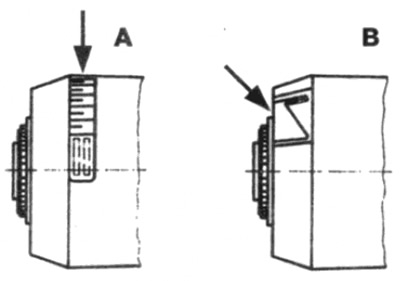
Fig. 8.40. Different types of drive belt adjusters - 6-cylinder engines
A Regulator with a scale with divisions
In Regulator with cast triangle
41. On vehicles without air conditioning, turn the adjusting nut clockwise until the tensioner pointer aligns with the 5th mark on the scale.
42. On models equipped with air conditioning, turn the adjusting nut clockwise until the tip of the pointer aligns with the 7th mark on the scale.
43. Tighten the tensioner bolt to the required torque and install the cover (where provided).
44. Install the radiator fan blades and shroud as described in Chapter 3.
Models with thick mark (and a cast triangle) not on the tensioner scale
45. Move the tensioner pointer so that it aligns with the right narrower end (looking at the scale at the front of the engine bay) triangle cabinets.
46. Turn the adjusting nut clockwise until the pointer tip aligns with the thick line (on the thicker edge of the triangle) on the scale (see fig. 8.46).
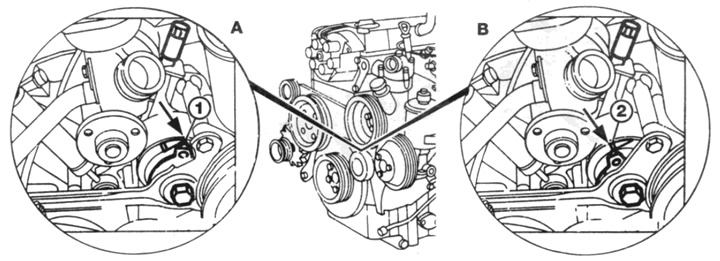
Fig. 8.46. Adjusting the accessory drive belt - 6-cylinder engine
A Tensioner indicator (1) aligned with the right edge of the arrow (marked with an arrow) on the scale - the belt is loose
In the Tensioner indicator (1) combined with a thick pin (marked with an arrow) on the scale - the belt is tight
47. Tighten the tensioner bolt to the required torque and install the cover (where provided).
48. Install the radiator fan blades and shroud as described in Chapter 3.