



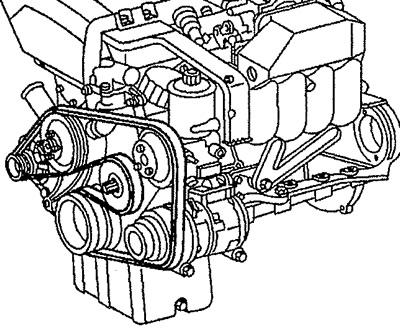
Figure 1.1. Checking drive belts.
1. Turn the ignition key to the "OFF" position.
2. Place the gear shift lever in the "N" position on a manual transmission (in the "P" position on an automatic transmission).
3. Tighten the parking brake lever.
4. Check the alternator drive belt for damage. If damage is found, the belt must be replaced.
Main damages to the belt:
- wear of the edges of the V-shaped ribs of the B belt and exposure of the cord in the grooves of the C belt; on new belts the ribs have a trapezoidal shape A (see figure 1.2);
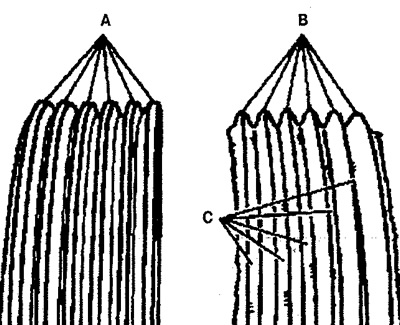
Figure 1.2. Wear of the edges of the V-shaped ribs of belt B and exposure of the cord in the recesses of belt C.
- f-belt rib break (see figure 1.3);
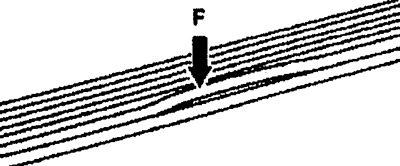
Figure 1.3. Rupture of belt ribs F.
- lateral damage to the ribs K and extrusion of the rubber mass outward J (see figure 1:4);
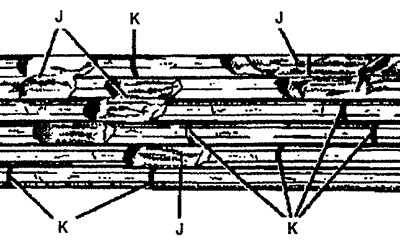
Figure 1.4. Lateral damage to the ribs K and extrusion of the rubber mass outward J.
- damage to the outer part of the D belt and transverse damage to the ribs of the E belt (see figure 1.5);
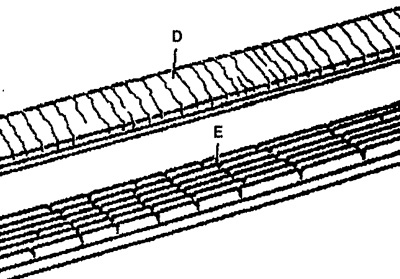
Figure 1.5. Damage to the outer part of the belt D and transverse damage to the ribs of the belt E.
- cord breakage, its exit to the outside G and cord rubbing H (see figure 1.6);
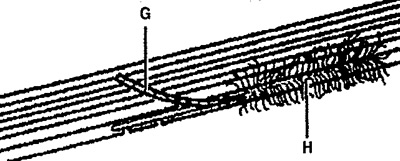
Figure 1.6. Cord breakage, its exit to the outside G and cord abrasion H.
- extrusion of rubber mass on the outer part of the L belt and contamination or adhesion of small stones in the grooves of the M belt (see figure 1.7);
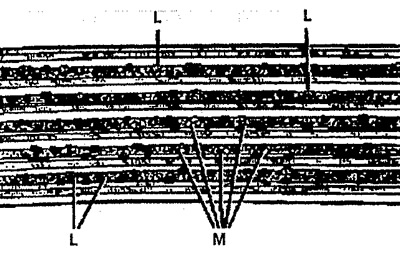
Figure 1.7. Squeezing out of rubber mass on the outer part of belt L and contamination or adhesion of small stones in the grooves of belt M.