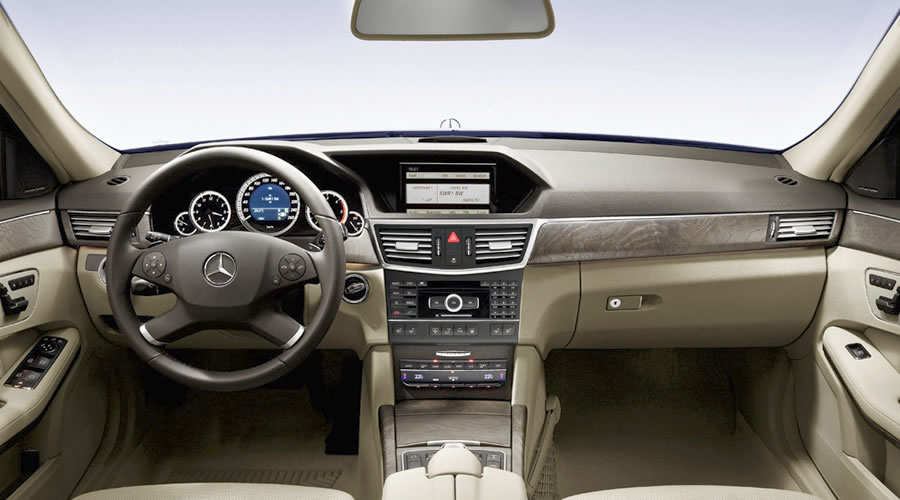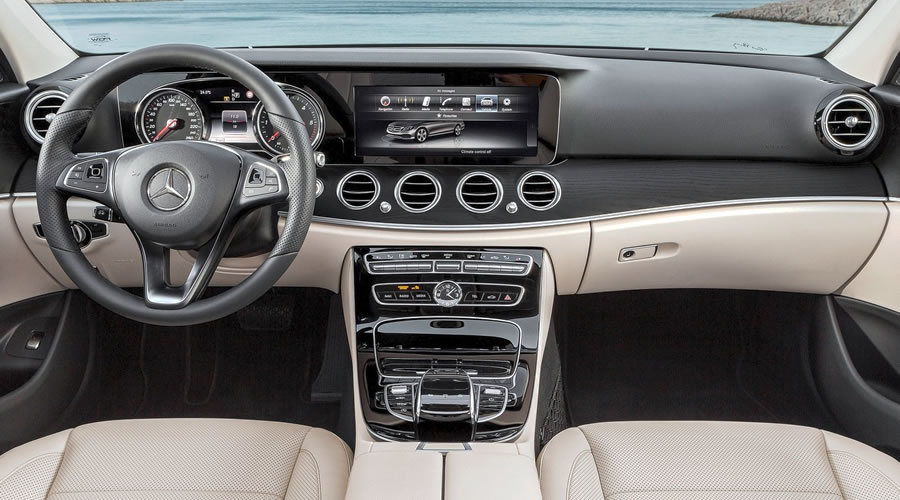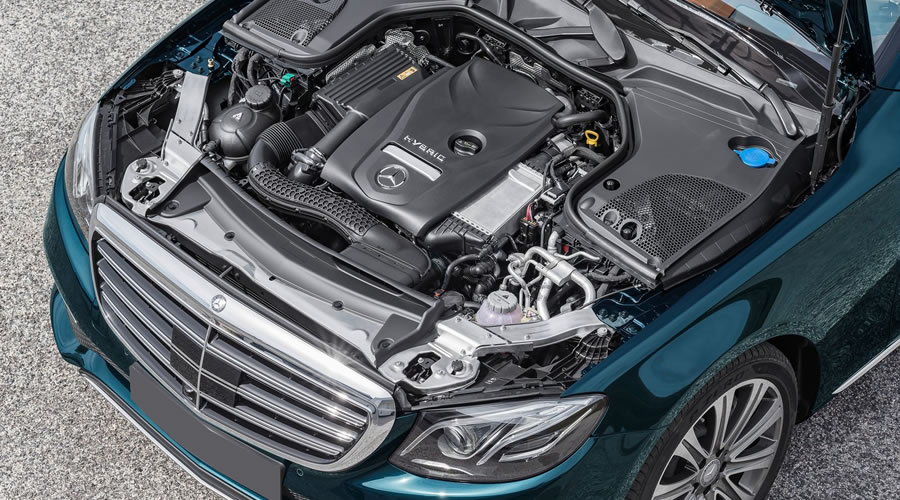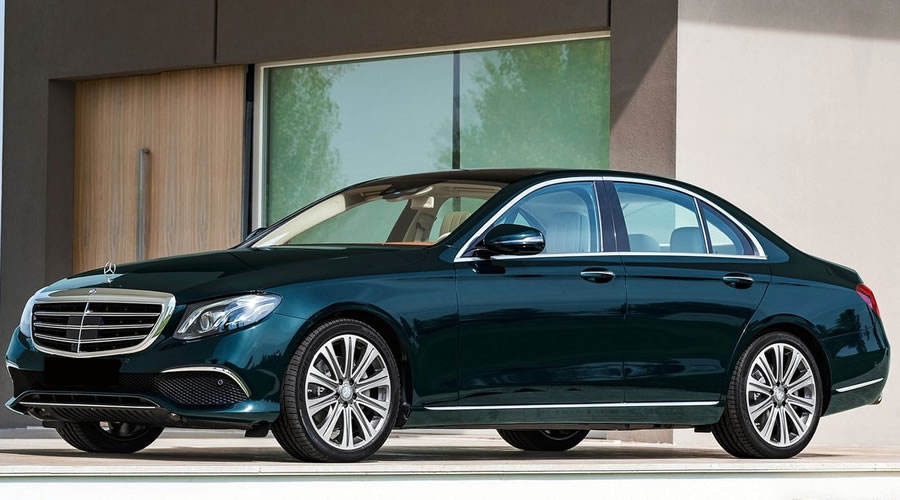
Until 1993, the prefix "E" stood for Einspritzung (fuel injection, german), and after that all the company's cars began to use injection and the name "E-class" became separate from this word. The engine is located transversely in front, rear-wheel drive or all-wheel drive (4MATIC). The body was produced as a sedan, station wagon, coupe and convertible. The main competitors are cars Audi A6, BMW 5 series, Chrysler 300C, Honda Crosstour, Infiniti M, Nissan Teana, Peugeot 607, Toyota Camry and Volvo S90.
Predecessors of the E-Class
W15 (1931−1936)
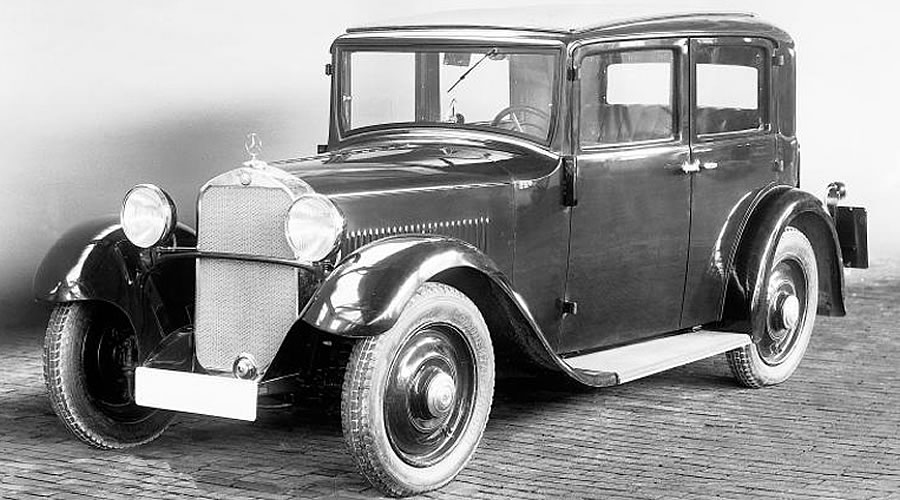
Mercedes-Benz W15 "Typ 170" - a mid-size family car, produced with a sedan or convertible body with four doors (length 3940 mm, width 1630 mm, height 1650 mm). 1.7 liter engine (1692 cm³, M15, 32 hp) with six cylinders located in a row, installed longitudinally at the front. Torque was transmitted to the rear wheels through a mechanical gearbox with four speeds. The engine had water cooling and a separate lubrication system. Consumption was 11 liters per 100 kilometers.
It was presented at the Paris Motor Show in October 1931. It was positioned as a compact and light car, standing out from the line of expensive and large cars that Mercedes-Benz mainly produced at the time. Over 13 thousand units were produced in total.
W136 (1935−1955)
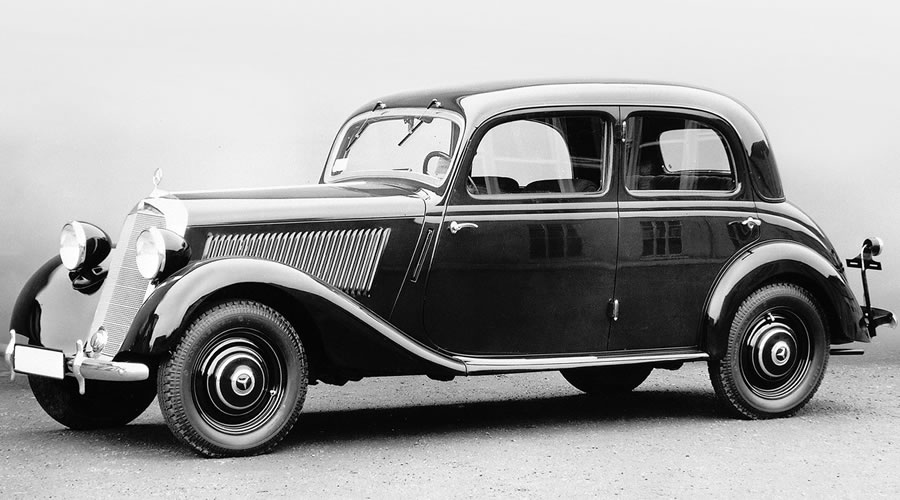
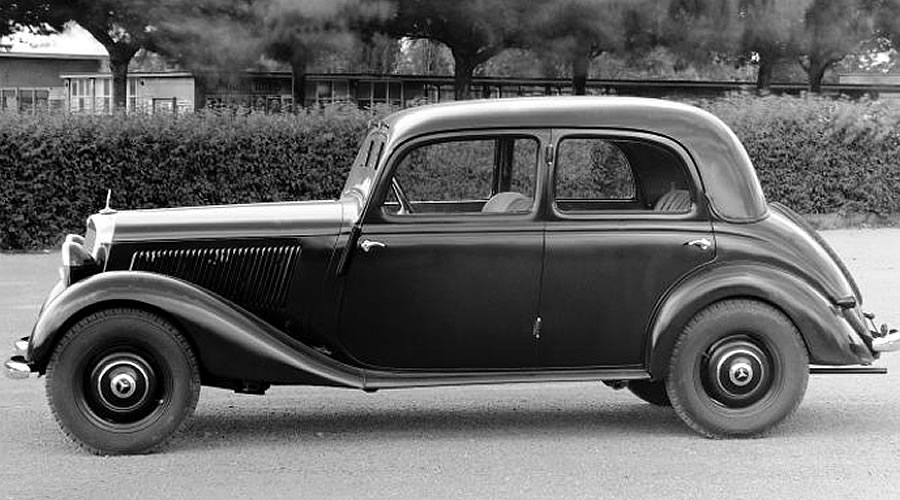
Mercedes-Benz W136 "170 V" is a mid-size family car, produced from 1935 to 1942 and from 1947 to 1955. There was a break in production due to World War II. During these periods, about 160 thousand cars were produced and it was the most popular model of the company. The body was produced in the following variations - 4-door: sedan, convertible limousine and van; 2-door: convertible, roadster and pickup. The length of the car was 4270 mm, width 1570 mm and 1630 mm (since 1950). Assembly took place in Germany and Argentina.
The engine was located longitudinally at the front, the drive was to the rear wheels through a four-speed gearbox. At first, the petrol engine had the same volume as its predecessor - 1.7 liters, but was four-cylinder (M136) and had more power - 37 hp. At the same time, consumption was reduced to 10 liters per 100 km. Since 1950, the engine volume was increased to 1.8 liters (1767 cm³), the power was 52 hp. There were also diesel engines with a volume of 1.7 liters (1697 cm³, OM636, I4, 38 hp) and 1.8 liters (1767 cm³, OM636, I4, 39 hp).
In 1950, 1952 and 1953 the car underwent significant updates, which affected the types of bodies, appearance, chassis and engines.
W120, W121 (1953–1962)
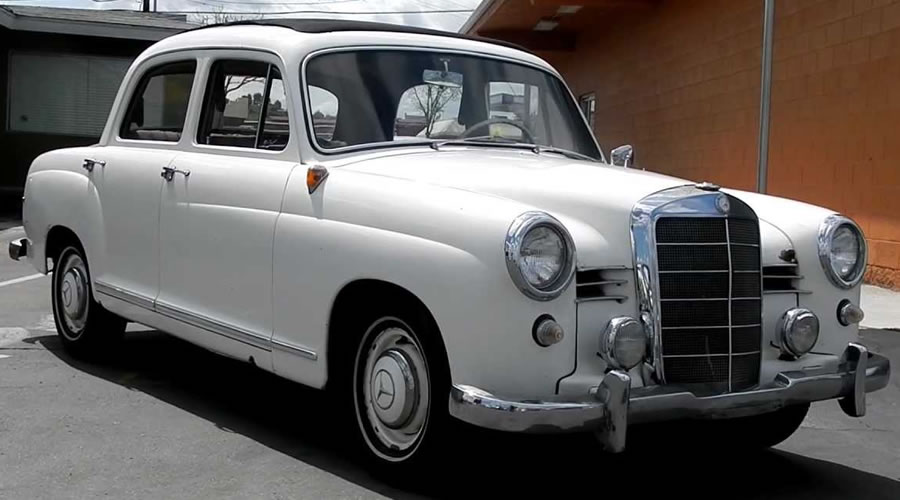
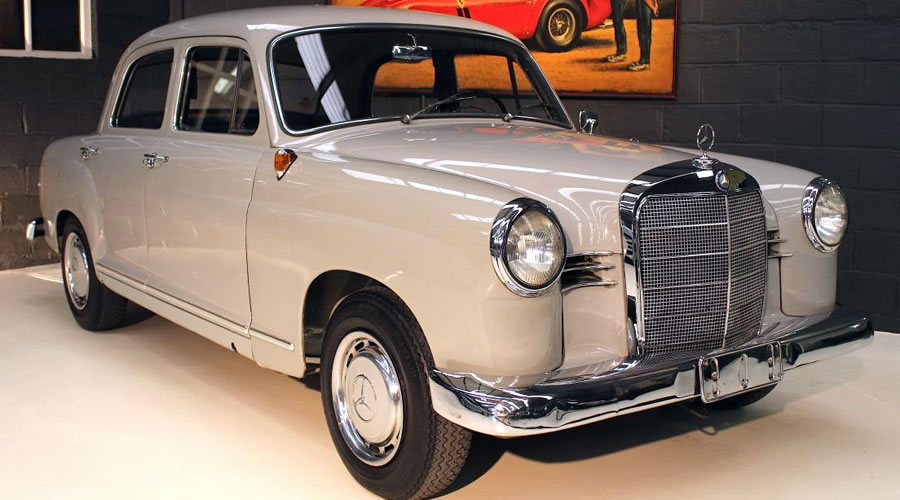
Mercedes-Benz W120 "180" and W121 "190" - executive cars of medium size, produced from 1953 to 1962. Due to the use of new and very different from their predecessors bodies, they were called "Pontons". The body was only a 4-door sedan (length 4485 mm, width 1740 mm, height 1560 mm). The engine was located longitudinally in the front, transmitting torque to the rear wheels. During the model's production, the car changed significantly both externally and mechanically. A total of about 440 thousand units were produced. Assembly was carried out in Australia, Germany and South Africa.
The "W120" was equipped with petrol engines of the following characteristics: 1.8 liters (1767 cm³, M136, I4, 55 hp) and 1.9 liters (1897 cm³, M121, I4, 75 hp). Diesel engines with a capacity of 1.8 liters were also installed (1767 cm³, OM636, I4, 43 hp) and 1.9 liters (1897 cm³, OM621, I4, 47 hp).
The "W121" was equipped with 1.9-liter gasoline engines (1897 cm³, M121, I4, 75 hp), as well as 1.9-liter diesel engines (1897 cm³, OM621, I4, 50 hp).
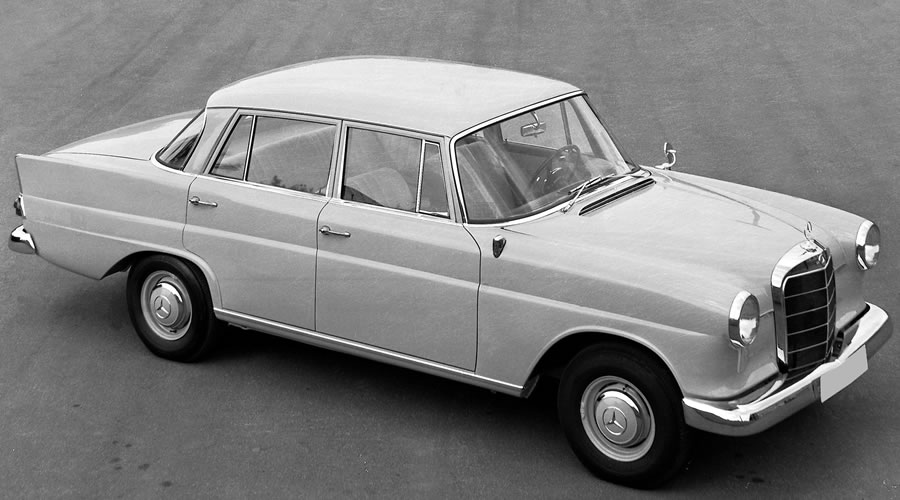
W110 (1961–1968)
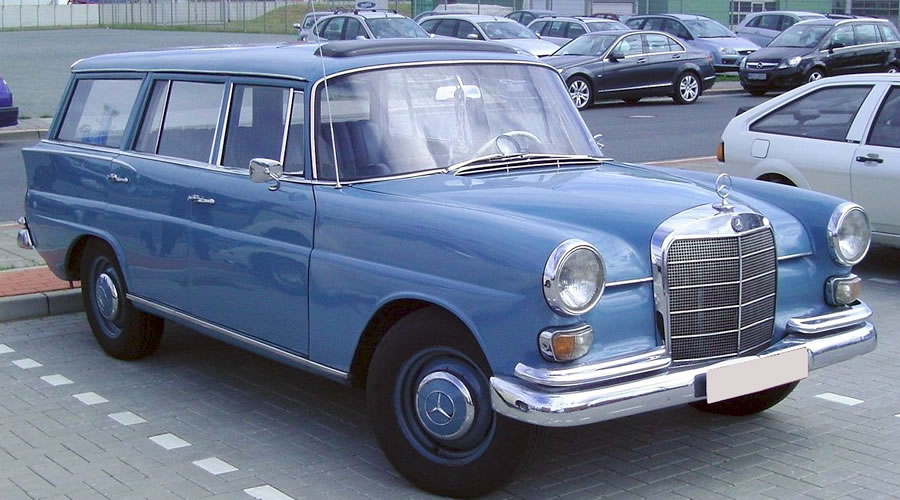
Mercedes-Benz W110 — a mid-size executive car produced from 1961 to 1968. First series models (1961-1965) were called "190c" and "190Dc", the second series (1965-1968) — "200", "200D" and "230". The letter "D" in the name means diesel engine. The engine was located in the front longitudinally, the drive was on the rear wheels. The body was in the form of a 4-door sedan (length 4680 mm, width 1770 mm, height 1440 mm) and since 1965 they have been producing a 5-door station wagon. About 630 thousand cars were produced. Assembly facilities were located in Australia, Venezuela and Germany.
The "190c" was equipped with a 1.9-liter gasoline engine (1897 cm³, M121, I4, 80 hp), the "190Dc" had a 2.0 liter diesel engine (1988 cm³, OM621, I4, 54 hp), the "200" had a 2.0 liter gasoline engine (1988 cm³, M121, I4, 95 hp), the "230" had a 2.3 liter petrol engine (2307 cm³, M180, I4, 80 hp) and the "200D" model was equipped with a 2.0-liter diesel engine (1988 cm³, OM621, I4, 54 l. With.).
W114, W115 (1968–1976)
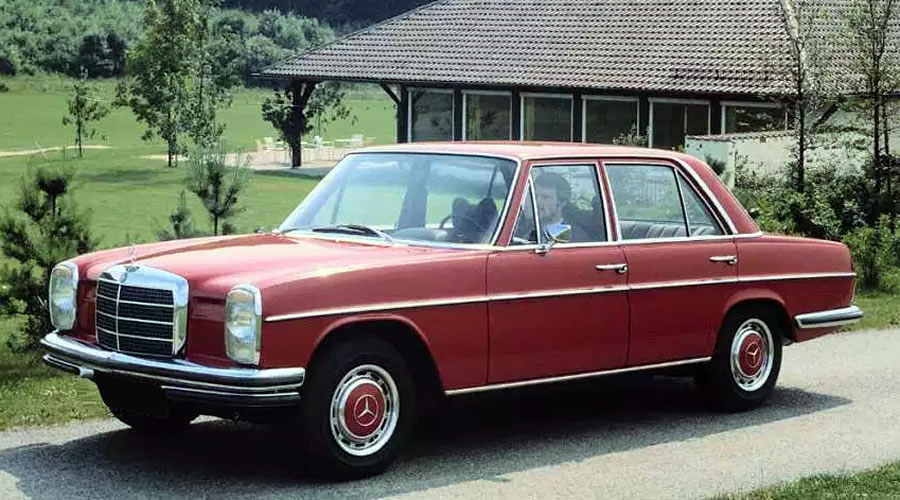
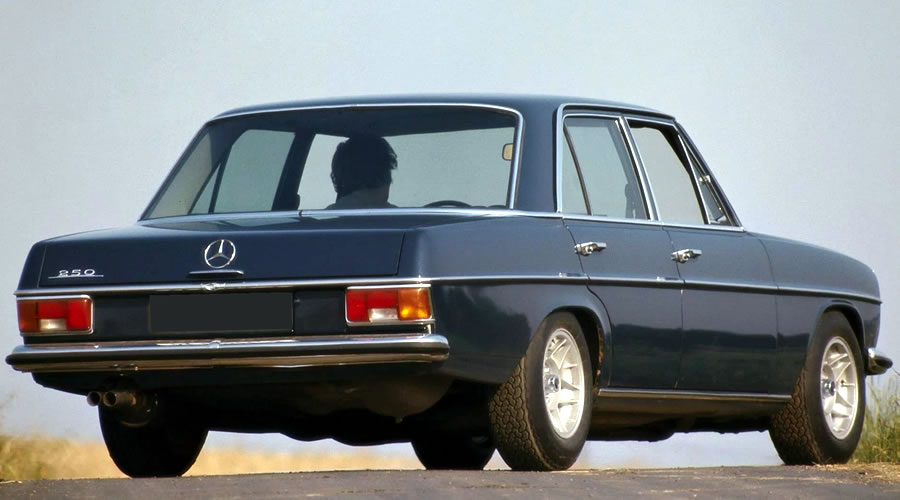
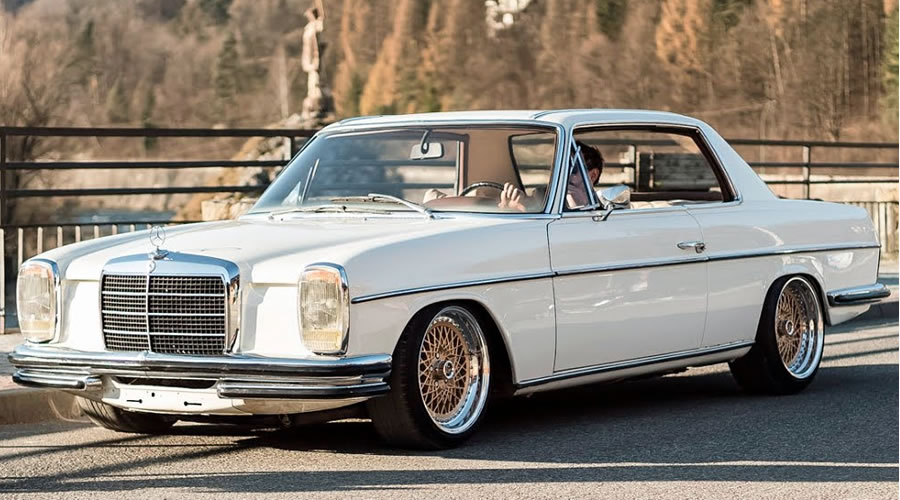
Mercedes-Benz W114 and W115 — mid-size business class cars that were produced from 1968 to 1976. The W115 models were equipped with four-cylinder engines and were called "200", "220", "230" and "240", while the "W114" model was equipped with six-cylinder engines and had the names "230", "250" and "280". The design was developed by French automobile designer Paul Braque, who used a three-block scheme that divides the car into three blocks - for the engine, for passengers and for luggage. The body was in the form of a 4-door sedan (length 4680 mm) or a limousine (length 5330 mm), as well as a 2-door coupe. The body width was 1772 mm, the height was 1441 mm. The engine was located in the front longitudinally with a drive to the rear wheels. In total, more than 1.9 million cars were produced. Assembly was carried out in Germany, Argentina, Venezuela, Portugal and South Africa.
The W114 model was equipped with six-cylinder petrol engines with the following characteristics: 2.3 liters (2292 cm³, M180, I6, 120 hp), 2.5 liters (2496 cm³, M114 and M130, I6, 130 hp), 2.5 liters (2496 cm³, M114, injector, I6, 150 hp), 2.8 liters (2778 cm³, M130, I6, 130 and 140 hp), 2.8 liters (2746 cm³, M110, I6, 160 hp) and 2.8 liters (2746 cm³, M110, injector, I6, 185 hp).
The W115 model was equipped with petrol and diesel four-cylinder engines. The petrol engines had the following characteristics: 2.0 liters (1988 cm³, M115, I4, 95 hp), 2.2 liters (2197 cm³, M115, I4, 105 hp) and 2.3 liters (2307 cm³, M115, I4, 110 hp). Diesel engines had the following volumes: 2.0 liters (1988 cm³, OM615, I4, 55 hp), 2.2 liters (2197 cm³, OM615, I4, 60 hp), 2.4 liters (2404 cm³, OM616, I4, 65 hp) and 3.0 liters (3005 cm³, OM617, I4, 80 hp).
Cars of this generation were distinguished by high reliability. The 1976 model "240D" is in the Mercedes-Benz museum with a mileage of 4.6 million kilometers. In 1969, the company first used the fully electronic Bosch D-Jetronic injection system, which was installed on the "250CE" model with a coupe body. In 1973, this generation was updated, which affected the appearance, new comfort options, improved passenger safety, and new engines appeared.
W123 (1976–1986)
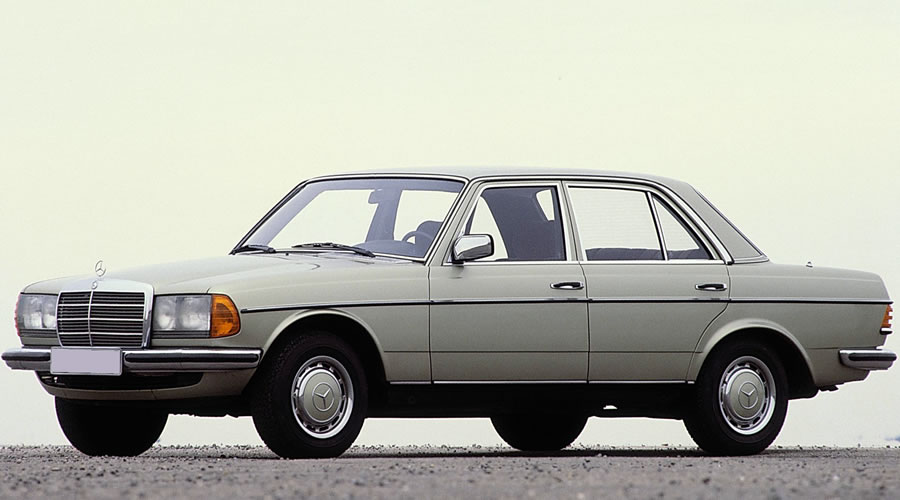
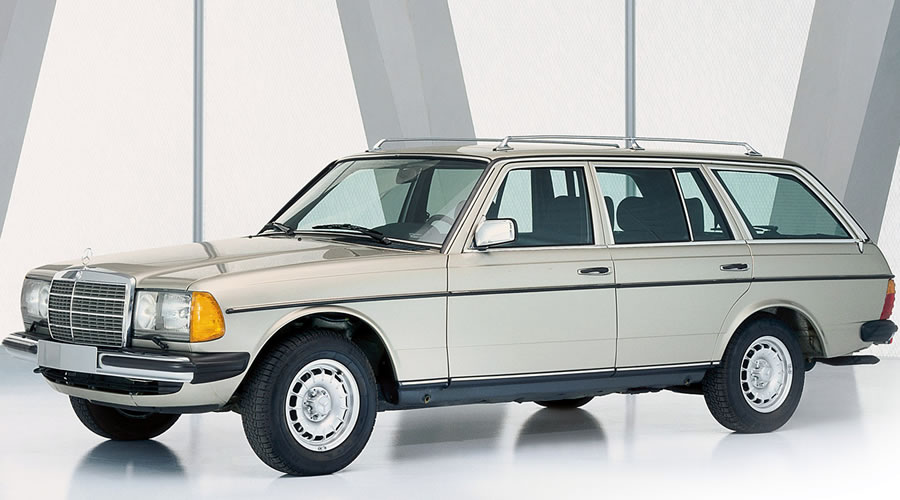
Mercedes-Benz W123 — a German executive car, produced from 1976 to 1986. During this period, about 2.7 million cars were produced. As usual, the model names were associated with the volume and type of engine, as well as the type of chassis. The letter "E" in the model name means fuel injection, "D" - diesel engine, "Turbo" - turbocharged diesel, "T" - station wagon body, "C" - coupe body. The model code "W123" means sedan, "S123" - station wagon, "C123" - coupe, "V123" - extended wheelbase (limousine) and "F123" - chassis for ambulances and other services. The length of the sedan was 4725 mm, coupe 4640 mm, limousine 5355 mm. The width of the body was 1784 mm, the height was 1435 mm. The weight of the car was 1625 kg. The engine was longitudinally mounted in the front, with rear-wheel drive only. Assembly shops were located in Germany, China and South Africa.
The range of petrol engines included the following models: 2.0 litre (1988 cm³, M115, I4, 93 hp), 2.0 liters (1997 cm³, M102, I4, 108 hp), 2.3 liters (2307 cm³, M115, I4, 108 hp), 2.3 liters (2299 cm³, M102, I4, 134 hp), 2.5 liters (2525 cm³, M123, I6, 127 and 140 hp) and 2.8 liters (2746 cm³, M110, I6, 154, 175 and 182 hp). Diesel engines had the following characteristics: 2.0 liters (1988 cm³, OM615, I4, 54 hp), 2.2 liters (2197 cm³, OM615, I4, 59 hp), 2.4 liters (2404 cm³, OM616, I4, 64 and 71 hp), 3.0 liters (2998 cm³, OM617, I5, 79 and 87 hp), 3.0 liters (2998 cm³, OM617 A, I5, turbodiesel, 123 hp). The transmission was 4- and 5-speed manual or 4-speed automatic "722.1" or "4G-TRONIC".
W124 (1984–1993)
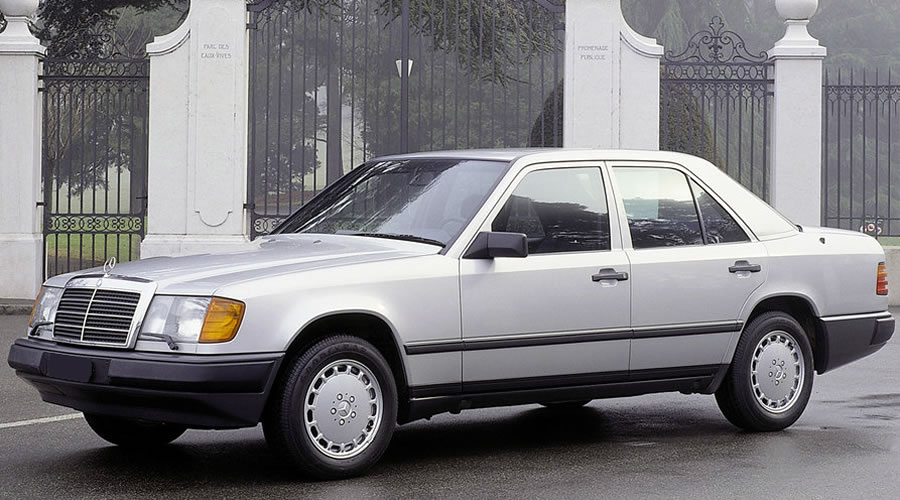
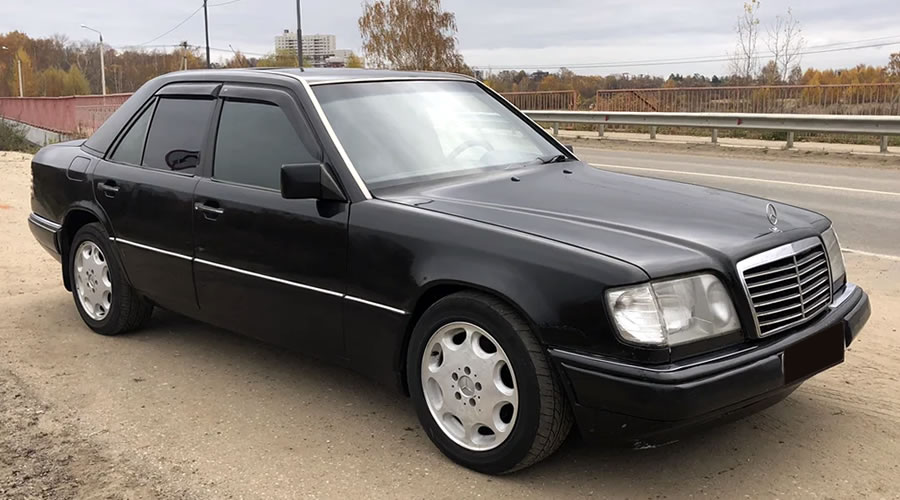
Mercedes-Benz W123 — a mid-size executive car produced in Germany from 1984 to 1995. In 1993, the name "E-Class" first appeared and the first generation of this model began this year. It was presented at the Seville Motor Show (Spain) on November 26, 1984, and sales began in January 1985. The design was developed in 1980-1981 under the direction of Italian automobile designer Bruno Sacco. In 1982, the first prototype appeared, and in March 1984, testing of experimental models began. The aerodynamic drag coefficient of the sedan (Cx) at that time was one of the best in the world and was equal to 0.28. The car was assembled in Germany, India, Indonesia, Malaysia, Mexico, Poland and South Africa.
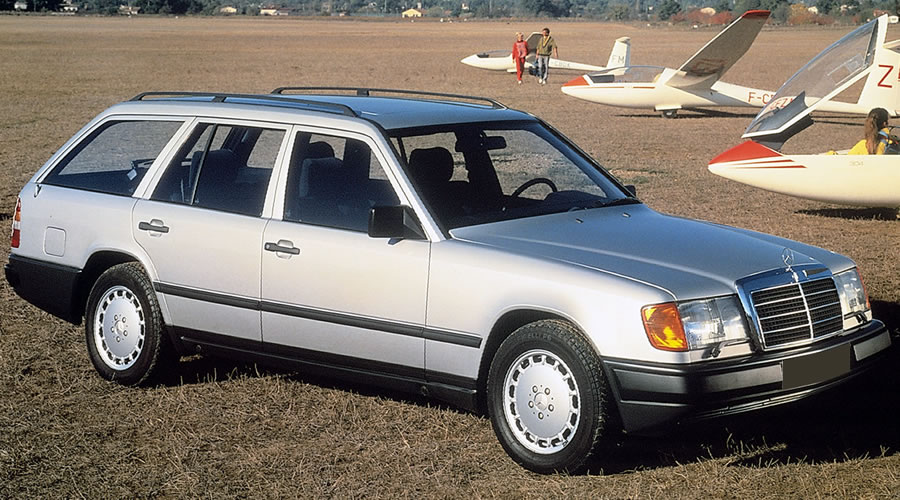
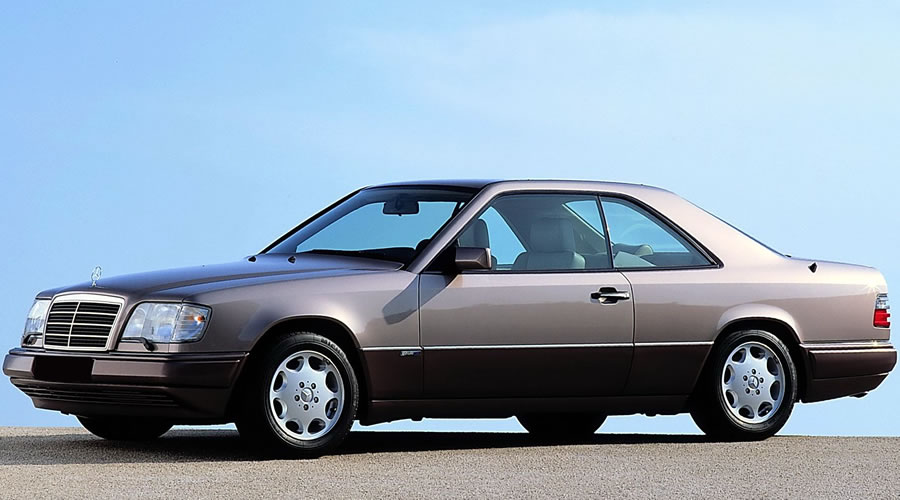
The car body was produced as a 4-door sedan (length 4755 mm, height 1430 mm), 5-door station wagon (length 4780 mm, height 1519 mm), 6-door limousine (length 5540 mm, height 1481 mm), 2-door coupes (length 4671 mm, height 1410 mm) and a convertible (length 4671 mm, height 1392 mm). The width of the car was 1740 mm. At the Frankfurt Motor Show in September 1985, the station wagon body (S124) was shown. At the Geneva Motor Show in March 1987, the coupe body (C124) was shown. In 1992, the first convertible (A124) appeared. The engine was located longitudinally in the front, the drive was on the rear wheels, and in 1987, the 4MATIC all-wheel drive system first appeared.
The car was equipped with petrol engines of the following characteristics: 2.0 liters (1998 cm³, M111, I4, 136 hp), 2.0 liters (1997 cm³, M102, I4, 109 and 122 hp), 2.2 liters (2199 cm³, M111, I4, 150 hp), 2.3 liters (2299 cm³, M102, I4, 132 hp), 2.6 liters (2597 cm³, M103, I6, 158 hp), 2.8 liters (2746 cm³, M104, I6, 193 hp), 3.0 liters (2960 cm³, M103, I6, 177 hp), 3.0 liters (2960 cm³, M104, I6, 217 hp), 3.2 liters (3199 cm³, M104, I6, 231 hp), 4.2 liters (4196 cm³, M119, V8, 275 hp), 5.0 liters (4973 cm³, M119, V8, 322 hp) and 6.0 liters (cm³, M119, V8, 376 hp).
The diesel engine lineup is as follows: 2.0 liters (1997 cm³, OM601, I4, 72 hp), 2.5 liters (2497 cm³, OM602, I5, 90 hp), 2.5 liters (2497 cm³, OM602, I5, turbo, 122 hp), 2.5 liters (2497 cm³, OM605, i5, 111 hp), 3.0 liters (2996 cm³, OM603, I6, 109 hp), 3.0 liters (2996 cm³, OM606, I6, 134 hp) and 3.0 liters (2996 cm³, OM603, I6, turbo, 143 hp). The following gearboxes were offered: 4- and 5-speed manual, 4-speed automatic "4G-TRONIC" and 5-speed automatic "722.5".
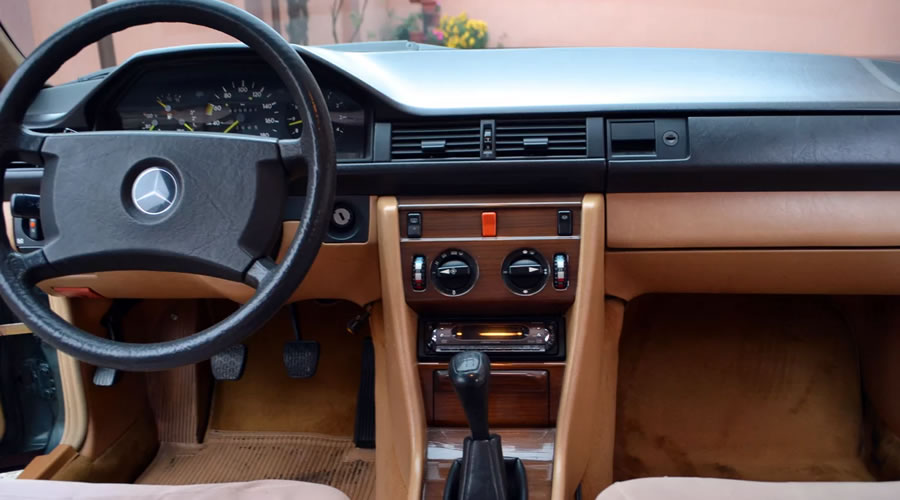
In September 1989, the car underwent a restyling, mainly affecting the exterior and interior design.
First generation (W124, 1993−1995)
In 1993, the car was also restyled. The diesel engines were upgraded, and the car was officially called "E-Class". The letter "E" in the model designation began to be placed at the beginning of the number, for example "E 200", "E 220", "E 280", "E 320". The body designation letters were cancelled, and the letter "D" denoting a diesel engine was replaced with the inscription "DIESEL" and "TURBODIESEL". The car's appearance has also undergone some changes.
Sedans were produced until 1995, station wagons and coupes until 1996, and convertibles until 1997. Over 2.5 million cars were produced during the 11-year life of the "W124" modification.
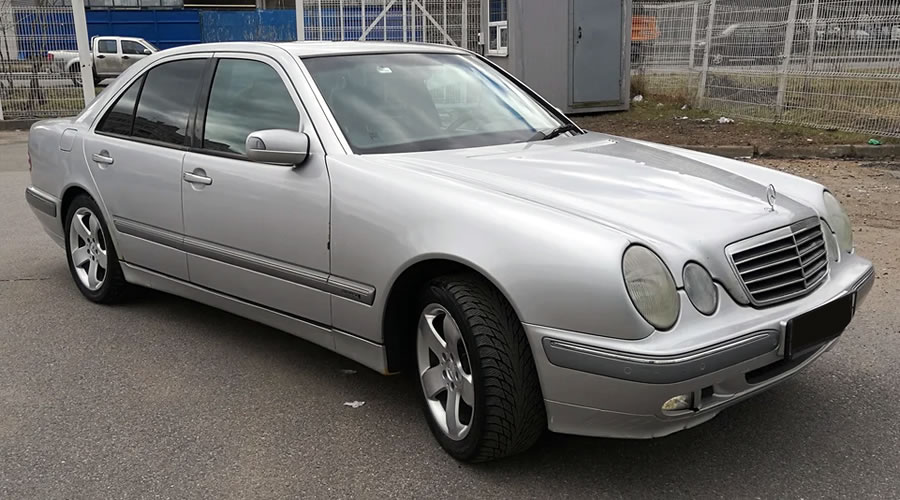
Second generation (W210, 1996−2002)
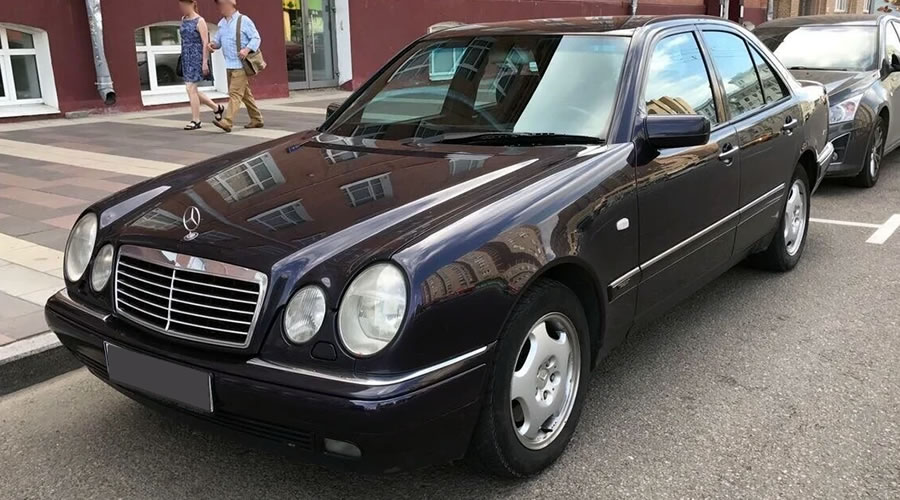
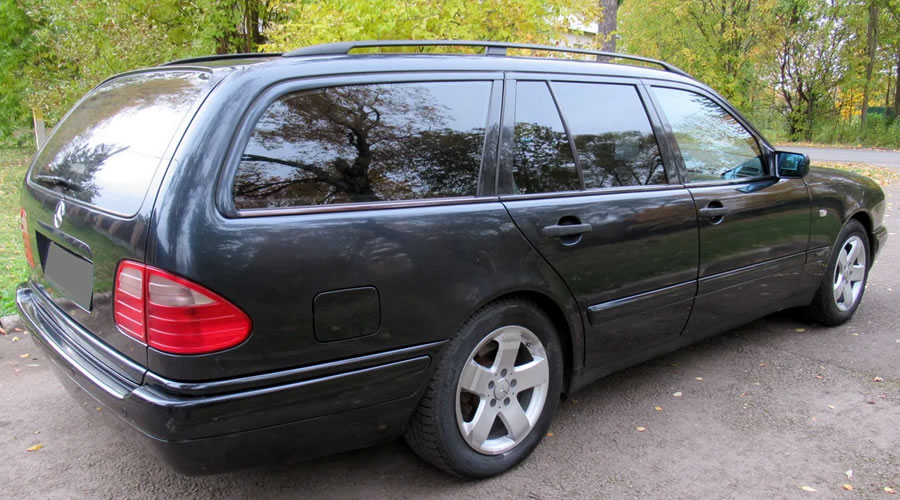
The development of the "W210" began in 1988. The appearance of the W210 E-Class, developed by British car designer Steve Mattin under the direction of designer Bruno Sacco between 1989 and 1991, marked a new design concept for Mercedes. The most important thing that catches the eye is the double oval headlights, which determined the appearance of the model for two generations. The new design was presented at the Geneva Motor Show in March 1993. The body was produced as a 4-door saloon (W210) and a 5-door station wagon (S210). The length of the car was 4818 mm, the width was 1798 mm, the height was 1417 mm. The engine was located longitudinally at the front, rear-wheel drive or all-wheel drive. Over the entire period, more than 1.6 million cars were produced. Assembly facilities were located in Germany, Austria, Egypt, India and Mexico.
The range of petrol engines consists of the following models: 2.0 liters (1998 cm³, M111, I4, 134, 150 and 161 hp), 2.3 liters (2295 cm³, M111, I4, 148 and 194 hp), 2.6 liters (2597 cm³, M112, V6, 168 hp), 2.8 liters (2799 cm³, M112, V6, 201 hp), 2.8 liters (2799 cm³, M104, I6, 190 hp), 3.2 liters (3199 cm³, M104, I6, 217 hp), 3.2 liters (3199 cm³, M112, V6, 221 hp), 4.2 liters (4196 cm³, M119, V8, 286 hp) and 4.3 liters (4266 cm³, M113, V8, 275 hp).
The diesel engine lineup is as follows: 2.0 liters (1997 cm³, OM604, I4, 87 hp), 2.2 liters (2155 cm³, OM604, I4, 94 hp), 2.2 liters (2148 cm³, OM611, I4, 101, 114, 123, 134 and 141 hp), 2.5 liters (2497 cm³, OM605, I5, 111 hp), 2.5 liters (2497 cm³, OM605, I5, turbo, 148 hp), 2.7 liters (2685 cm³, OM612, I5, 161 and 168 hp), 2.9 liters (2874 cm³, OM602, I5, 127 hp), 3.0 liters (2996 cm³, OM606, I6, 134 and 175 hp) and 3.2 liters (3222 cm³, OM613, I6, 194 hp). Four models of gearboxes were offered - 5- or 6-speed manual, 4-speed automatic "4G-Tronic" (722.3) and 5-speed automatic "5G-Tronic" (722.6).
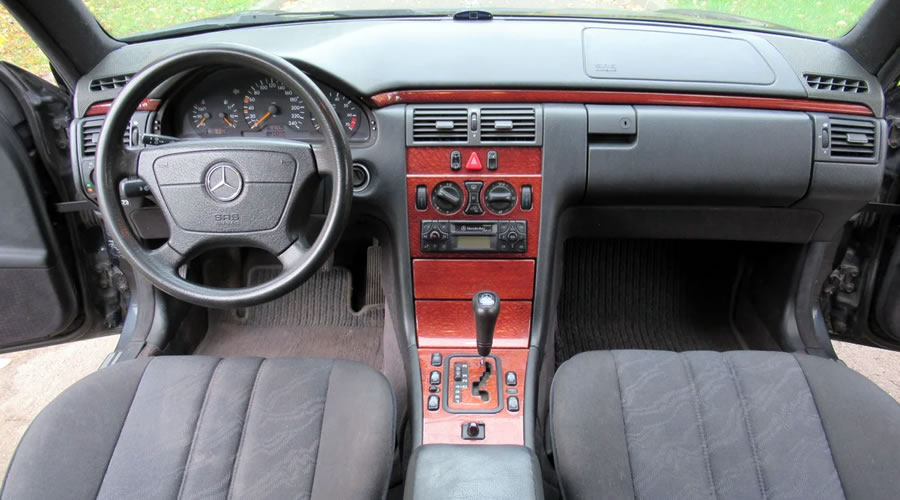
In 1999, the car underwent a significant restyling, which affected about 1800 elements. The car's appearance changed - the hood, headlights and taillights, bumpers and outside mirrors. The interior also underwent changes - an on-board computer screen appeared, as well as control buttons for the audio system, telephone and navigator on the steering wheel. The automatic transmission now had the ability to shift gears manually. The ESP function became standard (electronic stability control).

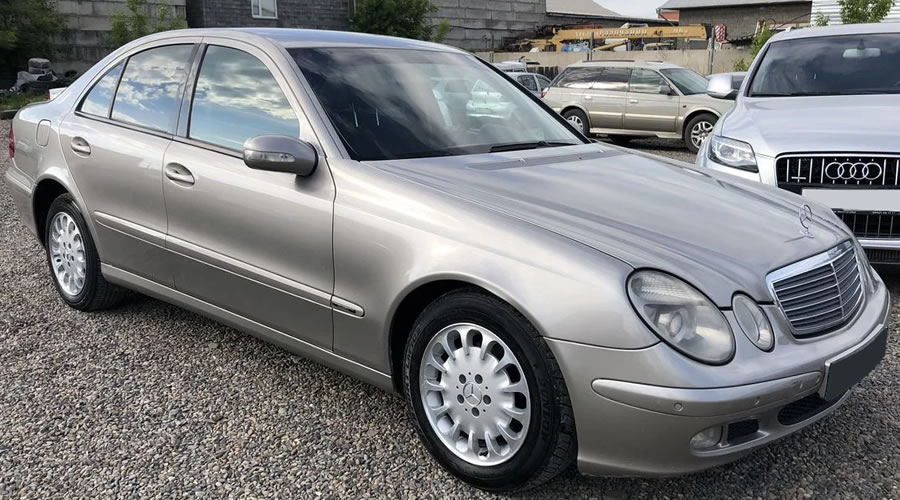
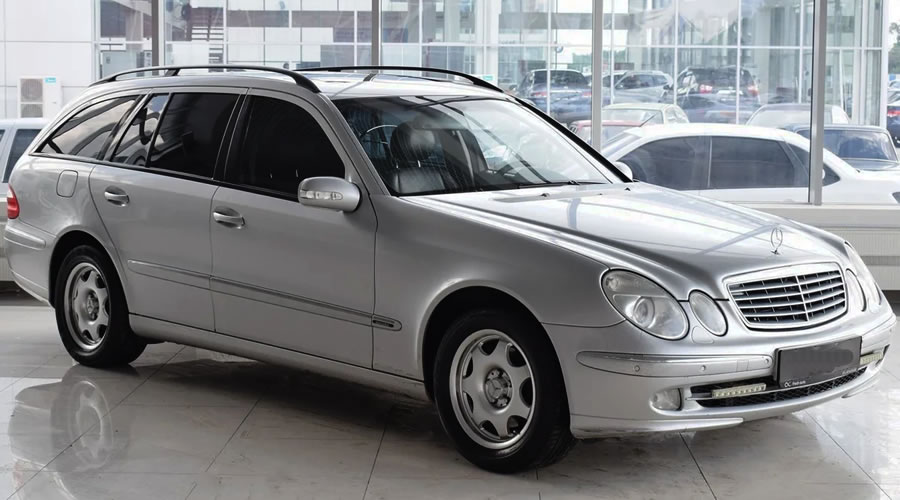
Third generation (W211, 2003−2009)
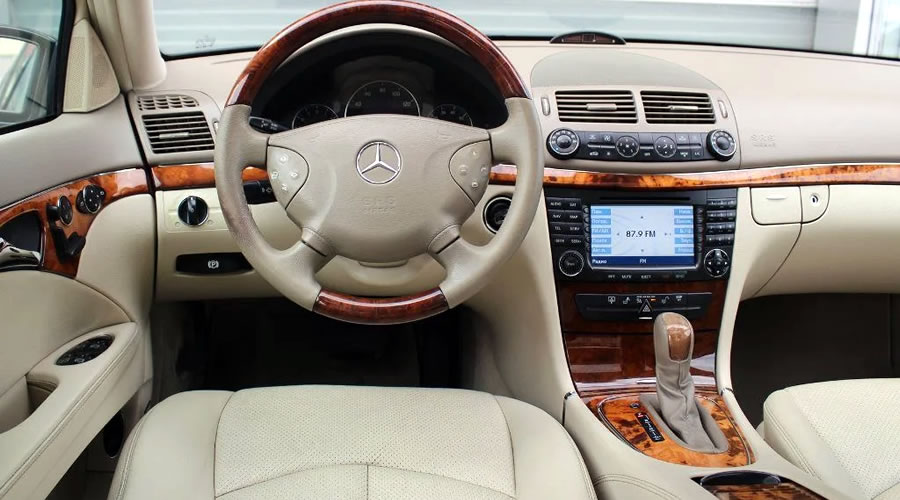
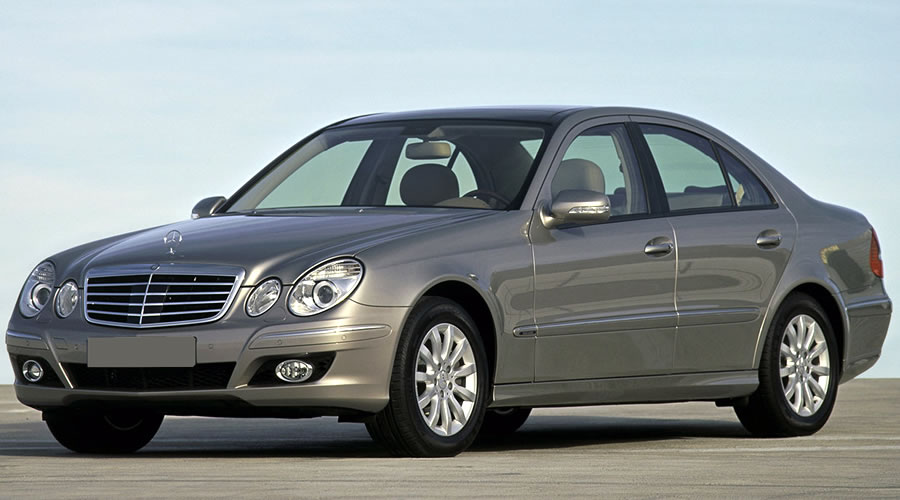
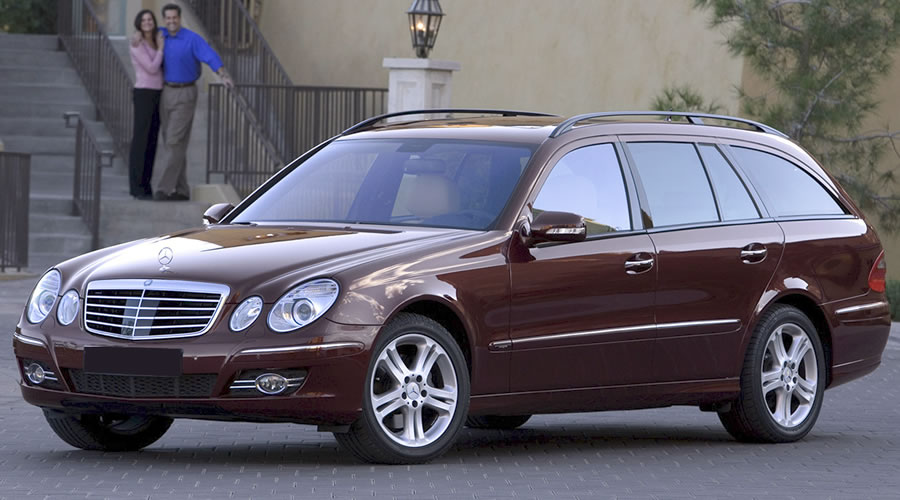
The development of the third generation began in 1997. The development was completed in 2001, with about 2 billion euros spent on it. The car was presented to the public at the European Motor Show in Brussels in January 2002. The body was in the form of a 4-door sedan (length 4818-4851 mm, width 1811-1821 mm, height 1448-1483 mm) and a 5-door station wagon (length 4869-4884 mm, width 1811-1821 mm, height 1496-1506 mm). The engine was located longitudinally in the front, rear-wheel drive or all-wheel drive (4Matic). The car was offered in three trim levels - Classic, Elegance and Avantgarde. About 1.5 million cars were produced over the entire period. In 2006, the 10 millionth E-class car was produced. Assembly was carried out in Germany, Austria, Egypt, Indonesia, Iran, China, Malaysia and Mexico.
The range of petrol engines is as follows: 1.8 liters (1796 cm³, M271 E18ML, I4, 161 and 181 hp), 2.5 liters (2496 cm³, M272 E25, V6, 201 hp), 2.6 liters (2597 cm³, M112 E26, V6, 175 hp), 3.0 liters (2996 cm³, M272 E30, V6, 228 hp), 3.2 liters (3199 cm³, M112 E32, V6, 218 hp), 3.5 liters (3498 cm³, M272 E35, V6, 268 and 288 hp), 5.0 liters (4966 cm³, M113 E50, V8, 302 hp) and 5.5 liters (5461 cm³, M273 E55, V8, 380 hp).
Diesel engines were installed with the following characteristics: 2.2 liters (2148 cm³, OM646 DE 22 LA, I4, 100, 120, 134, 150 and 170 l. With.), 2.7 liters (2685 cm³, OM647 DE 27 LA, I5, 175 hp), 3.0 liters (2987 cm³, OM642 DE 30 LA, V6, 190, 208, 210 and 221 hp), 3.2 liters (3222 cm³, OM648 DE 32 LA, I6, 201 l. With.) and 4.0 liters (3996 cm³, OM628 DE 40 LA, V8, 260 and 310 hp). There were three models of gearboxes: a 6-speed manual, a 5-speed automatic "5G-Tronic" and a 7-speed automatic "7G-Tronic".
For a comfortable and safe ride, the Sensotronic Brake Control (SBC) electro-hydraulic braking system, AIRMATIC DC air suspension, and multi-contour seats, which are brought to a safe state in critical situations, were installed.
In 2006, the car underwent a restyling, which was presented on April 12 at the New York International Auto Show. The exterior design was slightly changed and the dimensions of the car were increased, minor defects and shortcomings were corrected, new options appeared. The PRE-SAFE passenger and driver protection technology appeared, which has already proven itself in S-class and replacing SBC, headrests with NECK-PRO technology, a tire pressure monitor and flashing brake lights.
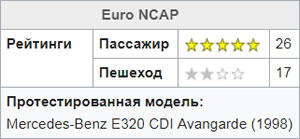
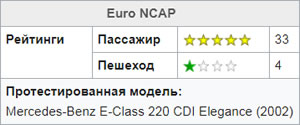
The car's safety was provided by two-stage airbags for the front seats, side airbags and curtains on the windows. For road control, the base model included ESP, ASR and ABS systems. The 2002 model passed crash tests in the European committee Euro NCAP, the results can be seen in the table. The American National Highway Traffic Safety Administration (NHTSA) also conducted its tests in 2007, the results were as follows:

- Frontal Impact (Driver) - 4 out of 5 stars
- Frontal Impact (Passenger) - 4 out of 5 stars
- Side Impact (Driver) - 4 out of 5 stars
- Side kick (rear passenger) — 5 out of 5 stars
- Car Flip - 4 out of 5 stars
Fourth generation (W212, 2009−2016)
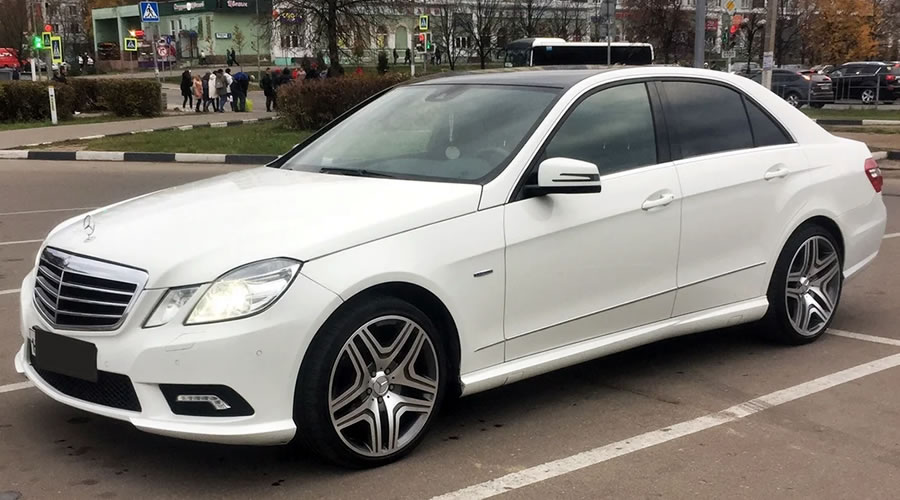
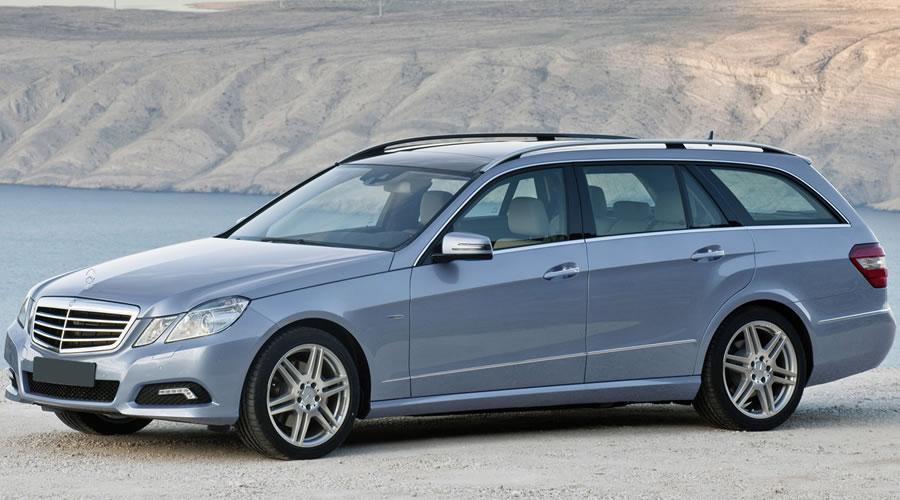
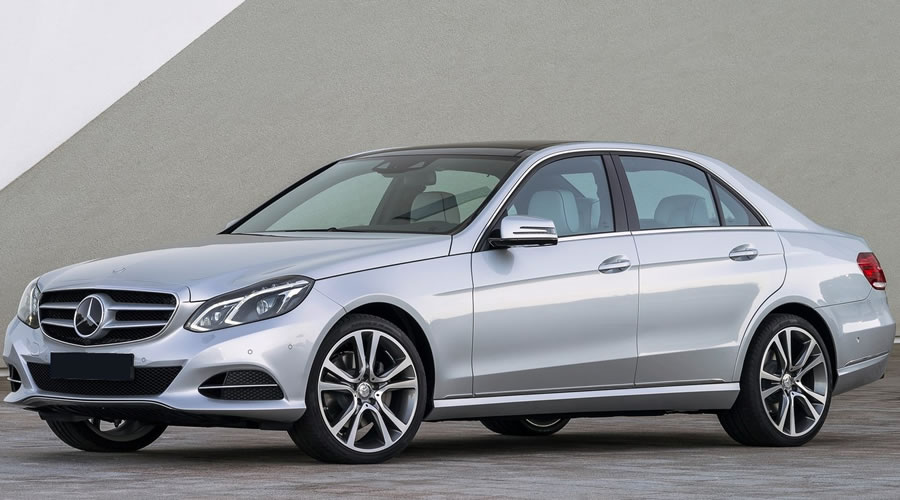
The fourth generation W212 was unveiled at the North American International Auto Show in January 2009 in Detroit for the press and for general viewing at the Geneva International Motor Show in March of the same year. The body was in the form of a 4-door sedan (W212, length 4868-4879 mm, width 1854 mm, height 1474 mm), 5-door station wagon (S212, length 4895-4906 mm, width 1854 mm, height 1474 mm), 2-door coupe (C207) or convertible (A207) (length 4698 mm, width 1786 mm, height 1402 mm). The curb weight was 1540-2000 kg. The torque drive was on the rear wheels or all-wheel drive (4Matic), the engine was located in the front longitudinally. About 1.7 million cars were produced over the entire period. Assembly was carried out in Germany, Egypt, India, Indonesia, China, Malaysia, Mexico and Turkey.
The car was equipped with petrol engines of the following models: 1.8 liters (1796 cm³, M271 DE18 LA, I4, turbo, 181 hp), 2.0 liters (1991 cm³, M274 DE20 LA, I4, turbo, 181 hp), 1.8 liters (1796 cm³, M271 DE18 LA, I4, turbo, 201 hp), 2.0 liters (1991 cm³, M274 DE20 LA, turbo, 208 hp), 3.0 liters (2996 cm³, M272 KE30, V6, 228 hp), 3.5 liters (3498 cm³, M276 DE35 red, V6, 249 hp), 3.5 liters (3498 cm³, M272 DE35, V6, 288 hp), 3.5 liters (3498 cm³, M272 KE35, V6, 268 hp), 3.5 liters (3498 cm³, M276 DE35, V6, 302 and 326 hp), 5.5 liters (5461 cm³, M273 KE55, V8, 383 hp) and 4.7 liters (4663 cm³, M278 DE46 LA red, V8, twin-turbo, 402 l. With.).
The diesel engine lineup consisted of the following models: 2.2 liters (2143 cm³, OM651 DE22 LA red, I4, 134 hp), 2.2 liters (2143 cm³, OM651 DE22 LA, I4, 168, 201 and 228 hp), 3.0 liters (2987 cm³, OM642 DE30 LA, V6, 201, 208, 228 and 261 hp). Four models of gearboxes were installed - 6-speed manual, and automatic transmissions 5-speed "5G-Tronic", 7-speed "7G-Tronic" and 9-speed "9G-Tronic".
In 2013, the model was restyled, radically changing the appearance, combining the headlights into a monoblock, and changing the hood, radiator grille and bumpers. The rear part also changed. The interior also underwent significant changes.
The car's safety has been improved by new functions such as driver fatigue monitoring, lane control, road sign recognition, active head restraints, seven airbags, seat belt pretensioners, and an active bonnet on springs to protect pedestrians. The body is made of 72% high-strength steel, the rear part has become 30% stronger, and the front part has a 4-level deformation zone. Adaptive lighting allows you to see further in the dark and not blind oncoming cars. The car is also equipped with many modern functions to assist the driver.
The U.S. Insurance Institute for Highway Safety (IIHS) has given the 2010 model year W212 a "Top Safety Pick +" (the safest). The car received top marks in frontal, side and rear impacts, as well as in rollover. The 2014 restyled model also showed the highest results.

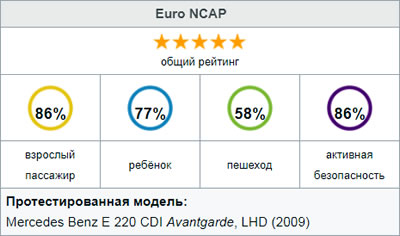
The European committee Euro NCAP conducted its tests of the 2009 model year car, the results of which you can see in the table. For the safety systems "PRE-SAFE" and "PRE-SAFE Brake" the car was given two awards "Euro NCAP Advanced".
Fifth generation (W213, 2016−present)
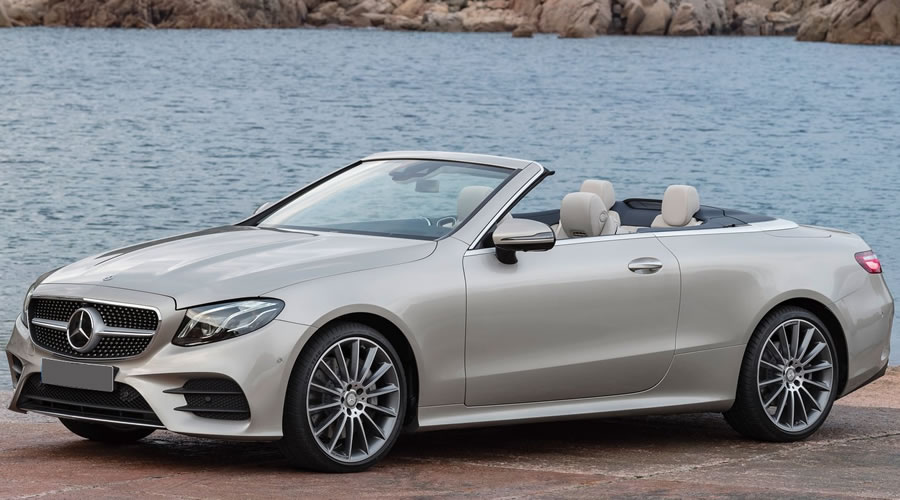
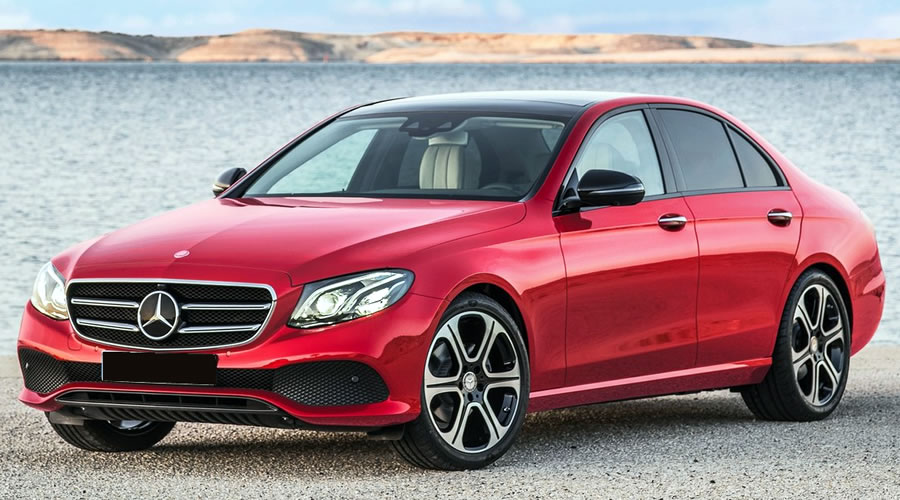
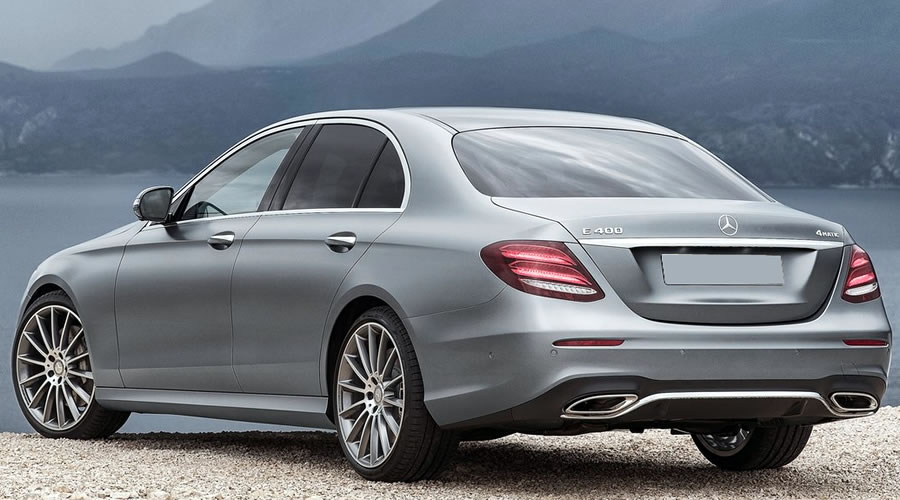
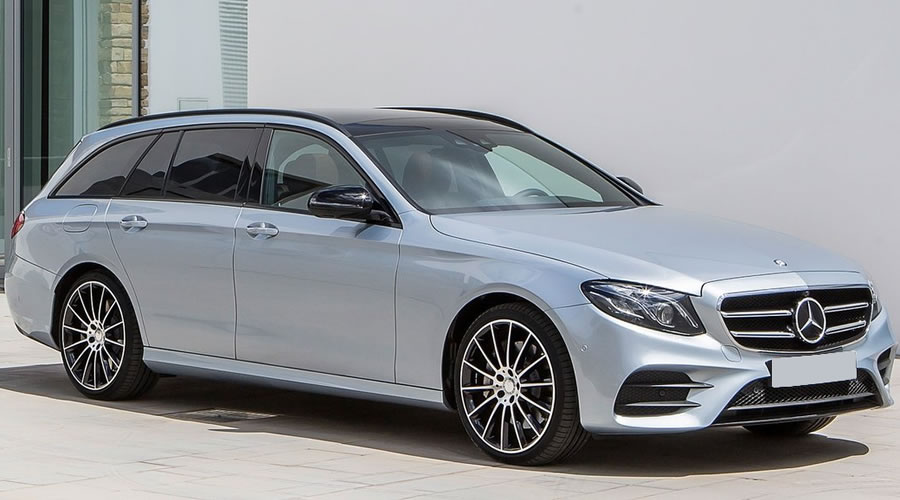
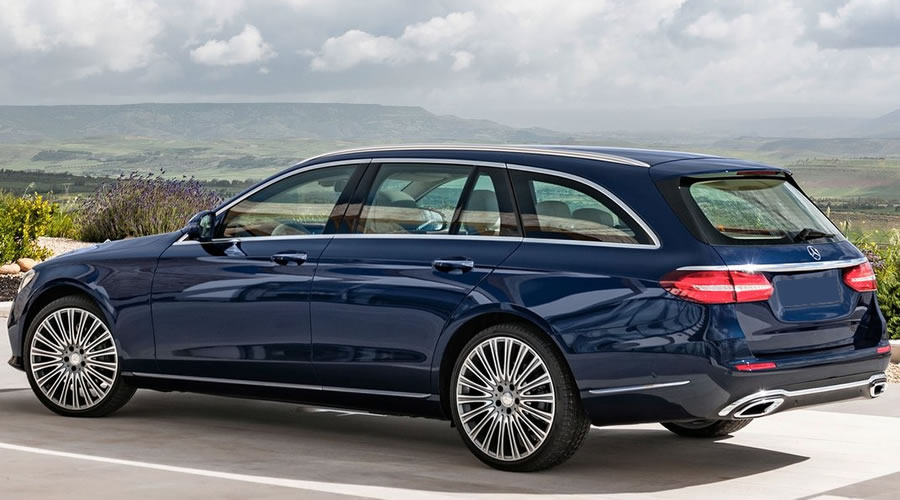
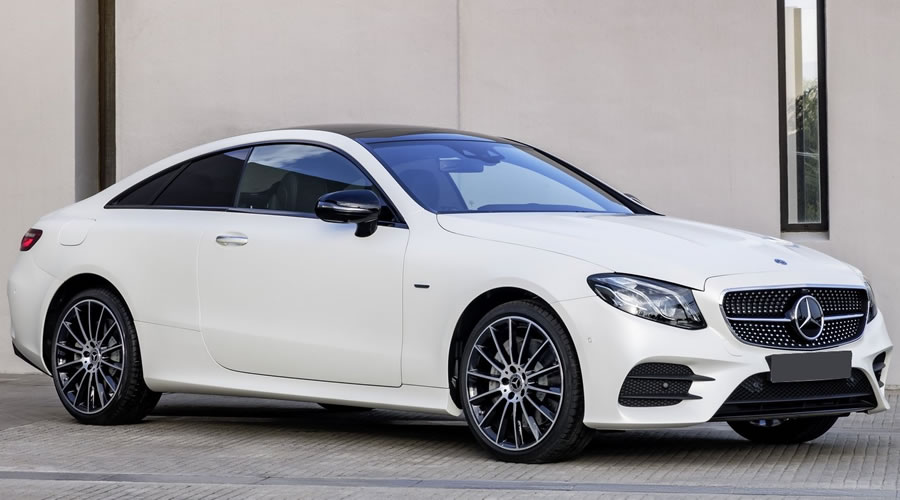
At the North American International Auto Show in Detroit in January 2016, the fifth generation of the E-Class was presented as a 2017 model. The car has become slightly larger and is equipped with the most modern safety and driver assistance systems. The body is offered as a 4-door sedan (W213, 4923 mm, width 1852 mm, height 1468 mm), 5-door station wagon (S213, length 4933 mm, width 1852 mm, height 1475 mm), 2-door coupe (C238, length 4826 mm, width 1860 mm, height 1438 mm) and a 2-door convertible (A238, length 4826 mm, width 1860 mm, height 1428 mm). The curb weight is 1605-2048 kg. The engine is located in the front, all-wheel drive (4Matic) or standard rear-wheel drive.
About 1 billion euros and 4 years were spent on developing the design and finishing the technical component of the car. During this time, about 1,200 prototypes were built, which traveled more than 12 million kilometers in a variety of climatic conditions. About 1,200 engineers worked on the new generation. The exterior of the car is similar to the design C-class and S-class. According to Mercedes-Benz representatives, the W213 will be the most technically advanced car in the world. The drag coefficient (Cx) became very low and equals 0.23.
The range of petrol engines includes the following modifications: 2.0 liters (1991 cm³, M274, I4, 181, 208, 242 and 282 hp) and 3.0 liters (2996 cm³, M276, V6, 328 and 362 hp). Diesel engines are represented by the following models - 2.0 liters (1950 cm³, OM654, I4, 150, 191 and 242 hp), 3.0 liters (2987 cm³, OM642, V6, 254 hp) and 3.0 liters (2925 cm³, OM656, I6, 335 hp). All engines are turbocharged. The gearbox was a 6-speed manual, but after 2018 only a 9-speed automatic "9G-Tronic" remained.
The W213 model is equipped with a semi-automated driving system called "Drive Pilot", which can drive the car on the motorway at speeds of up to 210 km/h and avoid slow-moving objects. The autopilot uses a video camera in the windshield, ultrasonic parking sensors, four 80-meter-long-range radars located in the corners of the car and one 250-meter-long-range radar located in the front. The computer reads road markings and signs, scans the surrounding space and controls the car based on this information. The system emits an audible signal when human intervention is needed. The car is also equipped with a function "Remote Parking Pilot", which allows you to control your car from the outside with your smartphone within the garage or parking lot. The car cannot move faster than 3 km/h.
The headlights feature adaptive LED matrix lighting "Multibeam LED" with a number of LEDs from 24 to 84. Each of them is controlled by a computer separately, which allows you to change the beam of headlights to illuminate the road better and not blind oncoming cars.
The safety systems are traditionally at a high technological level. Among the new features, the active maneuvering and braking assistance systems work in tandem to avoid a collision, for example with a suddenly running pedestrian. They can also warn of danger in advance.
Car-to-X Communication is another safety system that allows vehicles to exchange information and warn each other of possible potential hazards or accidents.