



Cooling system for diesel engines Mercedes E-Class (W210)

Cooling system — general information
Fig. 4.40. Coolant circulation diagram: 1 – radiator; 2 – expansion tank with lid; 3 – silicone element; 4 – Windscreen washer fluid reservoir (heated by coolant); 5 –...
Fig. 4.40. Coolant circulation diagram: 1 – radiator; 2 – expansion tank with lid; 3 – silicone element; 4 – Windscreen washer fluid reservoir (heated by coolant); 5 –...

Overpressure and radiator fan
Fig. 4.41. Checking the expansion tank cap: 1 – expansion tank cap; 2 – pump The cooling system is under pressure. This, and also due to the addition of antifreeze,...
Fig. 4.41. Checking the expansion tank cap: 1 – expansion tank cap; 2 – pump The cooling system is under pressure. This, and also due to the addition of antifreeze,...

Cooling liquid
The coolant consists of a mixture of antifreeze, anti-corrosion additives and water. The factory uses a concentrate, the chemical composition of which is specially...
The coolant consists of a mixture of antifreeze, anti-corrosion additives and water. The factory uses a concentrate, the chemical composition of which is specially...

Checking the cooling system for leaks
Sequence of works "15,000 km" Fig. 4.42. Checking the hoses 1. Check the tightness of the hoses on the radiator and engine (Fig. 4.42) by bending. Replace any that are...
Sequence of works "15,000 km" Fig. 4.42. Checking the hoses 1. Check the tightness of the hoses on the radiator and engine (Fig. 4.42) by bending. Replace any that are...

Coolant level indicator
When the ignition is on and the engine is off, the control lamp on the instrument panel lights up dimly (lamp control). If the coolant level is normal, the lamp goes out...
When the ignition is on and the engine is off, the control lamp on the instrument panel lights up dimly (lamp control). If the coolant level is normal, the lamp goes out...

Checking the level and topping up the coolant
Sequence of works "Daily maintenance" 1. Check the coolant level on a cold engine - the cooling system is not under pressure. Fig. 4.43. Expansion tank: 1 – safety ring;...
Sequence of works "Daily maintenance" 1. Check the coolant level on a cold engine - the cooling system is not under pressure. Fig. 4.43. Expansion tank: 1 – safety ring;...

Replacing the coolant
Warning! Burns may occur when the engine is hot. Sequence of works "120,000 km every 4 years" 1. Carefully remove the expansion tank cap. 2. Release excess pressure from...
Warning! Burns may occur when the engine is hot. Sequence of works "120,000 km every 4 years" 1. Carefully remove the expansion tank cap. 2. Release excess pressure from...


Possible malfunctions of the hydraulic tappet thermostat and their causes
Possible malfunctions of the hydraulic tappet thermostat and their causes
Possible malfunctions of the hydraulic tappet thermostat and their causes

Possible malfunctions of the cooling system, their causes and methods of elimination
Possible malfunctions of the cooling system, their causes and methods of elimination
Possible malfunctions of the cooling system, their causes and methods of elimination

Thermostat — Removal and Checking
The thermostat controls the direction of the coolant flow. A temperature-sensitive element with a spring controls two flaps as the engine heats up, which, depending on...
The thermostat controls the direction of the coolant flow. A temperature-sensitive element with a spring controls two flaps as the engine heats up, which, depending on...
Fan — Checking the serviceability
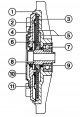
The fan serves to increase the intensity of radiator cooling with air. The more intense the blowing, the more intense the heat exchange. Depending on the model and...
The fan serves to increase the intensity of radiator cooling with air. The more intense the blowing, the more intense the heat exchange. Depending on the model and...

Replacing cooling system hoses
If you discover a hose rupture during your trip, try to fix it with insulating tape or scotch tape. At the same time, slightly unscrew the expansion tank cap to reduce...
If you discover a hose rupture during your trip, try to fix it with insulating tape or scotch tape. At the same time, slightly unscrew the expansion tank cap to reduce...

Radiator — removal and installation
Removal the radiator Before installing the radiator, check it for leaks in the workshop. Dismantle the radiator on cars with an automatic transmission at a service...
Removal the radiator Before installing the radiator, check it for leaks in the workshop. Dismantle the radiator on cars with an automatic transmission at a service...
Air filter — removal and installation
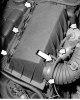
The intake air passes through the air filter, which consists of a housing, also called a discharge gas damper, and the actual filter made of pleated material. The rubber...
The intake air passes through the air filter, which consists of a housing, also called a discharge gas damper, and the actual filter made of pleated material. The rubber...
This section is available on: russian, bulgarian, belarusian, ukrainian, serbian, croatian, romanian, polish, slovak, hungarian
More similar sections for repairing other models
☛ Power unit: Cooling and heating car Mercedes W168 (1997-2004)
☛ Power unit: Cooling system car Mercedes W203 (2000-2007)
☛ Power unit: Cooling system car Mercedes W463 (1999-2019)
☛ Power unit: Cooling system car Mercedes W163 (1997-2005)
☛ Power unit: Cooling system car Mercedes W140 (1991-1998)
☛ Petrol engines 2.0 l: Cooling system car Mercedes Vito 1 (1996-2003)
Link in different formats to this section
TEXTHTMLBB Code
- General information
- Vehicle description
- Working conditions and tools
- Car care
- Diesel engines
- Engine repair
- Lubrication system
- Cooling system
- Injection system
- Supply system
- Exhaust system
- Gasoline engines
- Engine repair
- Lubrication system
- Cooling system
- Control system
- Power and exhaust system
- Transmission
- Clutch
- Mechanical gearbox
- Automatic gearbox
- Drive shafts
- Chassis
- Car suspension
- Steering
- Tires and wheels
- Brake system
- Body
- Exterior (external elements)
- Interior (internal elements)
- Doors and windows
- Heating and ventilation
- Electrical equipment
- Equipment and devices
- Power devices
- Lighting and signaling
- Electrical circuits
- General information
- Governing bodies
- Driving and operation
- Weekly care
- Maintenance (gasoline)
- Maintenance (diesel)
- Troubleshooting
- Power unit
- I4 petrol engine
- V6 petrol engine (SOHC)
- V6 petrol engine (DOHC)
- Diesel engines
- Engine overhaul
- Cooling system
- Heating and ventilation
- Fuel system (carburetor)
- Injection system «Bosch CIS-E»
- Injection system «Bosch HFM»
- Diesel fuel system
- Supply system
- Starting and charging system
- Ignition system (I4)
- Ignition system (V6)
- Preheating
- Transmission
- Clutch
- Mechanical gearbox
- Automatic gearbox
- Drive shafts
- Chassis
- Brake system
- Car suspension
- Steering
- Body
- Exterior (external elements)
- Interior (internal elements)
- Doors, locks and windows
- Electrical equipment
- Equipment and devices
- Switches
- Headlights and lighting
- Electrical circuits
- General information
- Introduction to the guide
- Power unit
- Engine device
- Repair M102 engines
- Repair M110 and M123 engines
- Cooling and lubrication (M102)
- Cooling (M110 and M123)
- Ignition system
- Power system «Stromberg»
- Power system «Solex 4A1»
- Fuel injection «K-Jetronic»
- Fuel injection «L-Jetronic»
- Transmission
- Clutch
- Mechanical gearbox
- Automatic gearbox
- Cardan and rear axle
- Chassis
- Front suspension
- Rear suspension
- Steering
- Brake system
- Body
- Exterior (external elements)
- Interior (internal elements)
- Doors, locks and windows
- Electrical equipment
- Equipment and devices
- Power devices
- Electrical circuits