



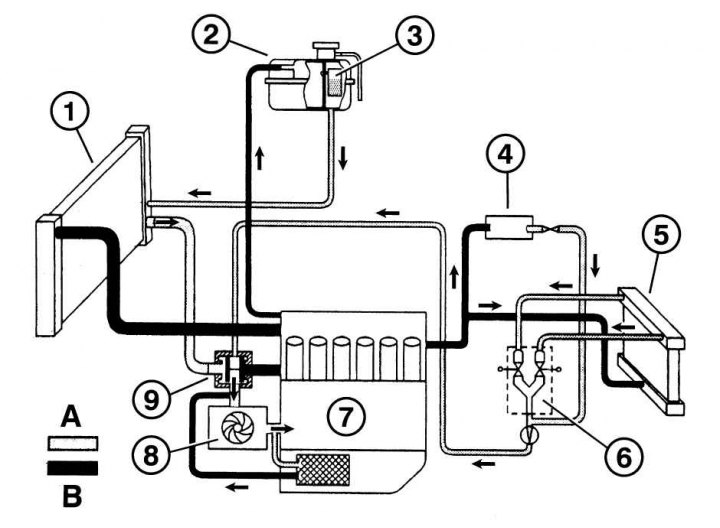
Fig. 4.40. Coolant circulation diagram: 1 – radiator; 2 – expansion tank with lid; 3 – silicone element; 4 – Windscreen washer fluid reservoir (heated by coolant); 5 – interior heater radiator; 6 – twin heating control valve; 7 – cylinder block; 8 – coolant pump; 9 – thermostat; A - feed; B - exit
The cooling system (Fig. 4.40) serves to maintain normal engine operating temperature. It includes a radiator with a thermostat; pipes and channels in the block and cylinder head in which the coolant circulates. The circulation pattern of the coolant depends on its temperature and is regulated by a thermostat.
When starting a cold engine, the coolant first circulates through a small circuit, which is limited by the engine and the heating system.
The coolant circulates in the engine. This way the engine warms up faster. The radiator is connected only when the coolant reaches a certain temperature.
As soon as the coolant temperature begins to rise, the thermostat opens the radiator and simultaneously closes the small circuit. At operating temperature, the coolant circulates through the lower cold liquid hose from the left radiator reservoir to the water pump, which forces the liquid into the engine block, oil cooler and cylinder head. Most of the liquid is then fed back through the open thermostat through the upper coolant hose to the right radiator reservoir, and the rest is fed into the radiator of the car's heating system. The cooled liquid flowing out of the bottom of the radiator warms up after passing through the circuit and enters the radiator from above in a hot state. As it passes down the radiator fins, the hot water cools. If, while the car is moving, the water temperature drops below the prescribed operating temperature, the thermostat again closes the passage through the radiator until the coolant has warmed up sufficiently.
Material created based on the website Mercedesman.ru