



Contents: Cooling system components ↡ Additional fan ↡
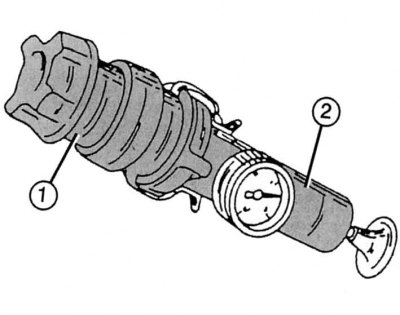
Fig. 4.41. Checking the expansion tank cap: 1 – expansion tank cap; 2 – pump
The cooling system is under pressure. This, and also due to the addition of antifreeze, increases the boiling point of the coolant to +126°C. A higher temperature contributes to more economical engine operation. The excess pressure in the cooling system is approximately 1.4–1.5 bar. If the pressure increases to a higher value when the engine is heated, the pressure reducing valve of the expansion tank in the cap is triggered (Fig. 4.41). In case of overheating, the fan is also switched on.
The engines are equipped with either a viscous coupling fan or an electric fan. These units are activated by a bimetallic thermal switch if the temperature of the flowing liquid exceeds a certain value. The switch turns off the fan when the coolant temperature drops to a safe level.
Attention! The radiator electric fan may turn on even when the ignition is off due to aerodynamic heating of the engine.
Cooling system components
Water pump. A centrifugal pump that circulates the coolant. On a 4-cylinder engine, the water pump is on the same shaft as the fan. On a 6-cylinder engine, the water pump is mounted on the left side of the engine with 4 bolts.
Radiator. All radiators are made of light alloy. Radiators, like the fan casing, have different dimensions. In cars with automatic transmission, a coolant drain tap is installed at the right water tank of the radiator.
Thermostat. This temperature-dependent controller controls the coolant circulation circuits.
Circuit at temperatures up to +85°C: the coolant circulates through a small circuit.
Normal operation circuit at temperatures of +85...+100°C: the radiator is partially opened; cold liquid from the radiator is mixed with warm coolant before it is pumped into the engine.
Maximum cooling at temperatures above +100°C: the thermostat valve is fully open, all coolant passes through the radiator.
Expansion tank. Releases steam when excess pressure occurs through the pressure reducing valve in the lid.
Radiator fan. Depending on the engine and the vehicle's equipment, a fan with a viscous coupling or an electric fan is installed.
Additional fan
If your car is equipped with an air conditioner, then two fans connected to each other by a belt are installed in front of the radiator, and the fan located on the left is equipped with an electric motor, which also operates the right fan.
(Article was obtained from the portal: mercedesman.ru)