



Brake system of the car Mercedes E-Class (W210)

Brake system — general description
The cars are equipped with two brake systems that work independently of each other - service and parking. If one of the systems fails, the car can be stopped using the...
The cars are equipped with two brake systems that work independently of each other - service and parking. If one of the systems fails, the car can be stopped using the...
Service brake system
The Mercedes E-Class is equipped with a hydraulic dual-circuit service brake system. Compared to the previous model, it has larger brake discs on both the front and rear...
The Mercedes E-Class is equipped with a hydraulic dual-circuit service brake system. Compared to the previous model, it has larger brake discs on both the front and rear...

Anti-lock braking system (ABS)
Fig. 8.1. Diagram of individual elements of the ABS system: 1 – control unit; 2 – front wheel brake mechanism with speed sensor; 3 – hydraulic block; 4 – main brake...
Fig. 8.1. Diagram of individual elements of the ABS system: 1 – control unit; 2 – front wheel brake mechanism with speed sensor; 3 – hydraulic block; 4 – main brake...
Traction control system (ASR)
The electronic anti-skid system ASR brakes the skidding wheels at start-up and redistributes torque to the non-skidding wheels. Electronics monitor the loss of traction...
The electronic anti-skid system ASR brakes the skidding wheels at start-up and redistributes torque to the non-skidding wheels. Electronics monitor the loss of traction...
Electronic throttle control
The ASR traction control system additionally ensures torque reduction. For this purpose, the engine management system is additionally equipped with electronic throttle...
The ASR traction control system additionally ensures torque reduction. For this purpose, the engine management system is additionally equipped with electronic throttle...

BAS (Brake-Assist) system
Fig. 8.4. In a modern brake system with Brake-Assist, the master cylinder and booster are equipped with electronic elements and are included in the electronic control...
Fig. 8.4. In a modern brake system with Brake-Assist, the master cylinder and booster are equipped with electronic elements and are included in the electronic control...

Electronic Stability Program (ESP)
Fig. 8.5. Elements of the Mercedes-Benz ESP system: 1 – rear wheel speed sensors; 2 – control unit; 3 – front wheel speed sensors; 4 – piston block with pressure sensor;...
Fig. 8.5. Elements of the Mercedes-Benz ESP system: 1 – rear wheel speed sensors; 2 – control unit; 3 – front wheel speed sensors; 4 – piston block with pressure sensor;...
Operation of ABS/ASR/BAS/ESP systems
In case of malfunction (for example, when a wire breaks) or low voltage in the on-board network (below 10.5 V) the safety switch in the electronic control unit is...
In case of malfunction (for example, when a wire breaks) or low voltage in the on-board network (below 10.5 V) the safety switch in the electronic control unit is...
Checking the brakes
Sequence of works Time shown is 30 min. 1. First, brake sharply when driving at low speed. 2. Equal length brake marks from the wheels indicate simultaneous operation of...
Sequence of works Time shown is 30 min. 1. First, brake sharply when driving at low speed. 2. Equal length brake marks from the wheels indicate simultaneous operation of...
Parking brake system
The parking brake system prevents the vehicle from moving when stopped. The parking brake is controlled via a cable system and acts on the rear wheels. Since disc brakes...
The parking brake system prevents the vehicle from moving when stopped. The parking brake is controlled via a cable system and acts on the rear wheels. Since disc brakes...

Checking the brake fluid level
Despite the fact that the system has only one brake fluid reservoir, if there is a leak in one of the circuits, all the fluid does not flow out, since the reservoir has...
Despite the fact that the system has only one brake fluid reservoir, if there is a leak in one of the circuits, all the fluid does not flow out, since the reservoir has...

Checking the brake system for leaks and damage
To check the brake system for leaks and damage, the underbody must be dry so that leaks can be seen. Brake fluid can also leak under a layer of dirt. Dark, damp spots or...
To check the brake system for leaks and damage, the underbody must be dry so that leaks can be seen. Brake fluid can also leak under a layer of dirt. Dark, damp spots or...

Checking the brake booster
Fig. 8.8. Brake booster device: 1 – push rod to the main brake cylinder; 2 – check valve with rubber gasket; 3 – membrane body; 4 – push rod from the brake pedal The...
Fig. 8.8. Brake booster device: 1 – push rod to the main brake cylinder; 2 – check valve with rubber gasket; 3 – membrane body; 4 – push rod from the brake pedal The...
Checking the thickness of the pads
For those who service their car's brake system themselves, this check is the most important. The front brake pads on cars with an automatic transmission wear out faster....
For those who service their car's brake system themselves, this check is the most important. The front brake pads on cars with an automatic transmission wear out faster....

Checking the condition of the brake discs
Fig. 8.11. Front wheel brake mechanism with ventilated discs: 1 – bracket; 2 – caliper bracket; 3 – bleed nipple with protective cap; 4 – inner shoe; 5 – connection of...
Fig. 8.11. Front wheel brake mechanism with ventilated discs: 1 – bracket; 2 – caliper bracket; 3 – bleed nipple with protective cap; 4 – inner shoe; 5 – connection of...

Replacing the front brake pads
Only use original or branded (for example, ATE) spare parts can guarantee the required braking distance, service life of these parts, and the absence of squeaks. The...
Only use original or branded (for example, ATE) spare parts can guarantee the required braking distance, service life of these parts, and the absence of squeaks. The...

Replacing rear brake pads
Sequence of works 1. Loosen the wheel mounting bolts, lift the vehicle, place it on supports and remove the rear wheel. 2. If a wear sensor is installed, remove its...
Sequence of works 1. Loosen the wheel mounting bolts, lift the vehicle, place it on supports and remove the rear wheel. 2. If a wear sensor is installed, remove its...

Removal the brake caliper
Sequence of works 1. Raise the car, secure it and remove the wheel. 2. On the front wheel : Release the wear sensor wire and remove its connector. 3. Open the bleed...
Sequence of works 1. Raise the car, secure it and remove the wheel. 2. On the front wheel : Release the wear sensor wire and remove its connector. 3. Open the bleed...
Removal the brake disc
Sequence of works 1. To remove the brake disc, place the vehicle on supports and secure it. 2. Remove the wheel. 3. Remove the caliper and hang it on a wire so that the...
Sequence of works 1. To remove the brake disc, place the vehicle on supports and secure it. 2. Remove the wheel. 3. Remove the caliper and hang it on a wire so that the...
Removal the brake hose
Sequence of works 1. First loosen the union nut of the corresponding brake pipe. Make sure that the pipe does not turn, holding it on the hose flanges. 2. If the brake...
Sequence of works 1. First loosen the union nut of the corresponding brake pipe. Make sure that the pipe does not turn, holding it on the hose flanges. 2. If the brake...
Removal brake pipes
It is best to replace inflexible metal brake lines at a service station, since high-quality installation requires a certain amount of experience. Sequence of works 1....
It is best to replace inflexible metal brake lines at a service station, since high-quality installation requires a certain amount of experience. Sequence of works 1....

Bleeding the brake system
Signs of air in the brake system: after repair, the brake pedal moves all the way to the floor or is pressed with dips during operation; the pedal stroke is very long...
Signs of air in the brake system: after repair, the brake pedal moves all the way to the floor or is pressed with dips during operation; the pedal stroke is very long...

Replacing brake fluid
Brake fluid must be replaced every two years of operation. At a service station, this procedure is carried out using a special filling device. If the car is equipped...
Brake fluid must be replaced every two years of operation. At a service station, this procedure is carried out using a special filling device. If the car is equipped...

Adjusting the parking brake
If the parking brake pedal drops more than five positions (clicks) and does not provide sufficient locking, adjustment is required. Adjustment is made using the...
If the parking brake pedal drops more than five positions (clicks) and does not provide sufficient locking, adjustment is required. Adjustment is made using the...

Removal the parking brake pads
If the brakes overheat and the pads are burnt, it is necessary to replace the brake pad springs and the pads themselves. Sequence of works 1. Raise and secure the...
If the brakes overheat and the pads are burnt, it is necessary to replace the brake pad springs and the pads themselves. Sequence of works 1. Raise and secure the...

Replacing the parking brake cables
Fig. 8.27. Pre-tensioning and loosening the automatic cable equalizer: 1 – brake cable equalizer; 2 – locking pin; 3 – eccentric; 4 – spring; 5 – equalizer return...
Fig. 8.27. Pre-tensioning and loosening the automatic cable equalizer: 1 – brake cable equalizer; 2 – locking pin; 3 – eccentric; 4 – spring; 5 – equalizer return...
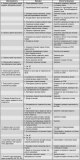
Possible malfunctions of the brake system, their causes and methods of elimination
Possible malfunctions of the brake system, their causes and methods of elimination
Possible malfunctions of the brake system, their causes and methods of elimination
This section is available on: russian, bulgarian, belarusian, ukrainian, serbian, croatian, romanian, polish, slovak, hungarian
More similar sections for repairing other models
☛ Chassis: Brake system car Mercedes W168 (1997-2004)
☛ Chassis: Brake system car Mercedes 190 (W201) (1982-1993)
☛ Chassis: Brake system car Mercedes W463 (1999-2019)
☛ Chassis: Brake system car Mercedes W163 (1997-2005)
☛ Chassis: Brake system car Mercedes W116 (1972-1980, petrol)
☛ Chassis: Brake system car Mercedes Vario 814D (1996-2003, diesel)
Link in different formats to this section
TEXTHTMLBB Code
- General information
- Vehicle description
- Working conditions and tools
- Car care
- Diesel engines
- Engine repair
- Lubrication system
- Cooling system
- Injection system
- Supply system
- Exhaust system
- Gasoline engines
- Engine repair
- Lubrication system
- Cooling system
- Control system
- Power and exhaust system
- Transmission
- Clutch
- Mechanical gearbox
- Automatic gearbox
- Drive shafts
- Chassis
- Car suspension
- Steering
- Tires and wheels
- Brake system
- Body
- Exterior (external elements)
- Interior (internal elements)
- Doors and windows
- Heating and ventilation
- Electrical equipment
- Equipment and devices
- Power devices
- Lighting and signaling
- Electrical circuits
- General information
- Governing bodies
- Driving and operation
- Weekly care
- Maintenance (gasoline)
- Maintenance (diesel)
- Troubleshooting
- Power unit
- I4 petrol engine
- V6 petrol engine (SOHC)
- V6 petrol engine (DOHC)
- Diesel engines
- Engine overhaul
- Cooling system
- Heating and ventilation
- Fuel system (carburetor)
- Injection system «Bosch CIS-E»
- Injection system «Bosch HFM»
- Diesel fuel system
- Supply system
- Starting and charging system
- Ignition system (I4)
- Ignition system (V6)
- Preheating
- Transmission
- Clutch
- Mechanical gearbox
- Automatic gearbox
- Drive shafts
- Chassis
- Brake system
- Car suspension
- Steering
- Body
- Exterior (external elements)
- Interior (internal elements)
- Doors, locks and windows
- Electrical equipment
- Equipment and devices
- Switches
- Headlights and lighting
- Electrical circuits
- General information
- Introduction to the guide
- Power unit
- Engine device
- Repair M102 engines
- Repair M110 and M123 engines
- Cooling and lubrication (M102)
- Cooling (M110 and M123)
- Ignition system
- Power system «Stromberg»
- Power system «Solex 4A1»
- Fuel injection «K-Jetronic»
- Fuel injection «L-Jetronic»
- Transmission
- Clutch
- Mechanical gearbox
- Automatic gearbox
- Cardan and rear axle
- Chassis
- Front suspension
- Rear suspension
- Steering
- Brake system
- Body
- Exterior (external elements)
- Interior (internal elements)
- Doors, locks and windows
- Electrical equipment
- Equipment and devices
- Power devices
- Electrical circuits