



Sequence of works


1. Check all connections and joints of the brake system, calipers and master cylinder.
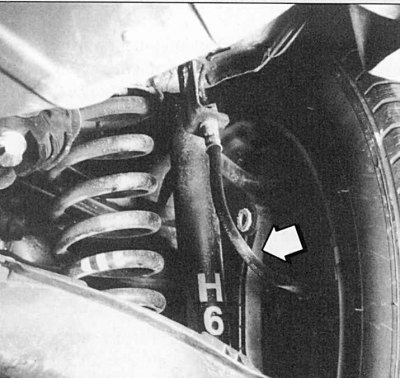
Fig. 8.7. Checking the wear of the brake hoses (arrow)
2. Inspect and feel the brake hoses for damage. They should remain flexible and should not be damp, frayed or cracked. If so, replace them at a service station. The hoses should not be twisted or overstretched (Fig. 8.7).
3. The brake system pipes are protected from corrosion by a plastic braid. If it is damaged, corrosion may occur. Therefore, do not clean the pipes from dirt with a screwdriver, a metal brush or corrosive liquids.
4. Clean the pipes with a cloth and cold cleaning agent.
Full article available on the resource (MERCEDESMAN)
5. If the protective braid is damaged, apply a primer to the exposed areas to protect against corrosion.
6. If the pipes are pinched or show signs of corrosion, replace them.
7. Check that all bleeder nipples have protective caps. They are located on the top of the brake calipers.
8. Check the pressure in the brake system as follows: press the brake pedal all the way down.
9. Even after several minutes of full load, the pedal should not "fall" further, otherwise the gasket in the master cylinder has failed.
10. A leaky gasket does not cause the brake fluid level in the reservoir to drop. But when pressure is created, the fluid passes the master cylinder piston without pressure.
11. Leaky areas in piston gaskets can only be determined by precise testing at a service station.
Brake fluid level
1. If the brake pad linings are already slightly worn, the brake fluid level begins to approach the "MIN" mark; if the linings are new, the level rises again. This is natural, since with worn linings, the pistons of the brake mechanisms extend further outward and leave more space in the caliper cylinders, which is filled with brake fluid. Experienced mechanics use this circumstance to determine the state of wear of the linings by the level of the brake fluid. Of course, this is only possible if the fluid was not added between the check cycles.
2. The brake fluid level in the reservoir is critical when it is below the "MIN" mark. Since the fluid does not evaporate or is not consumed, there is a leak. It should be detected as soon as possible. Adding fluid will not fix the problem.
3. If there is a fault in the clutch hydraulic drive system on vehicles with a manual transmission, the brake fluid level may drop significantly. Reason: the hydraulic drive working fluid is replenished by the brake fluid reservoir. The outlet from the reservoir to the clutch hydraulic drive is located high enough so that a leak in the hydraulic drive cannot affect the operation of the brake system.