



Sequence of works


1. Loosen the wheel mounting bolts, lift the vehicle, place it on supports and remove the rear wheel.
2. If a wear sensor is installed, remove its connector.
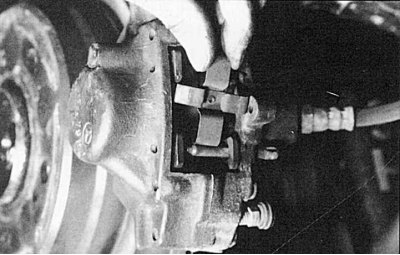
Fig. 8.18. After removing the retaining pins, the spring is removed
3. Knock out the retaining pins from the caliper and remove the springs (Fig. 8.18).
4. Place a gas wrench between the brake pad guide and the caliper and press the brake pad.
5. Using a pry bar or a large screwdriver placed between the pad and the brake disc, carefully push the old inner pad all the way out.
6. Similarly, press out the outer shoe, leaving the inner shoe installed. When pressing out the shoes, make sure that the brake fluid reservoir does not overflow.
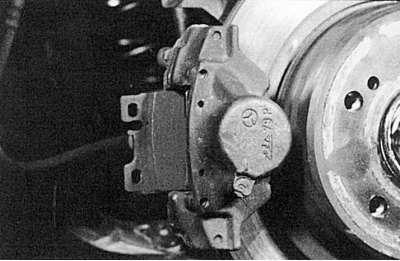
Fig. 8.19. Removing the rear brake pads
7. Press the outer shoe back enough to install a new one with a thicker lining, and remove it (Fig. 8.19). Remove the inner brake shoe. The shoes can be pulled off using pliers or a screwdriver. If the shoes are rusted, a special removal tool is used at the service station. It is best to buy original spare parts for replacement, since in this case the kit includes fastening parts such as locking pins and locking springs. When buying spare parts from other manufacturers, these parts are often missing.
8. Clean the brake shoe guides from dirt and deposits. At the same time, be careful not to damage the brake piston dust boot. Use a rag soaked in alcohol for this (do not use gasoline under any circumstances).
9. Apply a small amount of the special grease recommended by Mercedes to the new pads and carefully install them into the caliper. Install the outer pad into the caliper first.
10. Install the inner brake pad into the caliper.
11. Install the springs and retaining pins. Gently tap the pins into the caliper until they bottom out.
12. Replace the wheel, lower the car to the ground and tighten the wheel mounting bolts to 110 Nm. Replace the pads on the other rear wheel in the same way.
13. Check the brake fluid level.