



Contents: 4-cylinder engines ↡ 6-cylinder engines ↡
1. Frequent engine oil and filter changes are the most important preventative maintenance a car owner can perform. As engine oil ages, it becomes diluted and contaminated, causing premature engine wear.
2. Make sure you have all the necessary tools to begin this job. You should have enough rags or old newspapers to soak up any spilled oil. It is best to change the oil while the engine is still hot after work - dirt is suspended in it and will drain easily with the hot oil. At the same time, be careful not to touch the exhaust pipe and other hot parts of the engine when working under the car. To avoid burns and skin irritation from contact with used oil, wear rubber gloves. Access to the underside of the car is greatly improved if the car can be raised on a lift, driven onto a ramp, or jacked up and supported (see "Lifting and Supporting the Car"). Regardless of the method of lifting the car, be sure the car is level or, if at an angle, that the drain plug is at the lowest point. Where necessary, remove splash guards from under the car.
3. Working in the engine compartment, locate the oil filter housing in the left rear corner of the engine, behind the intake manifold.
4. Place a rag or cloth around the base of the housing to collect any spilled oil.
5. Depending on the engine type, do the following.
4-cylinder engines
Models with a dismountable oil filter
Note: A new local filter housing cover and through bolt o-rings will be required for installation. A new drain plug seal will also be required.
6 Loosen the through bolt, then remove the bolt together with the oil filter housing cover. Remove the O-rings from the bolt and cover and discard them when installing - new ones will be required (see fig. 3.6).
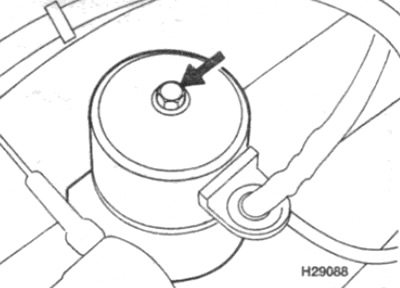
Fig. 3.6. Through bolt of oil filter housing cover (shown by arrow) — 4-cylinder models with a detachable filter
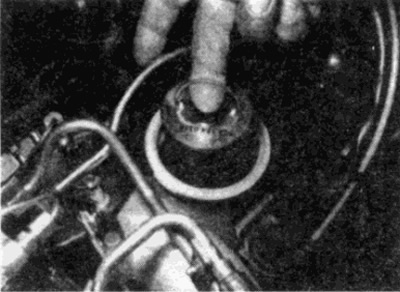
Fig. 3.7. Remove the oil filter element using the handle provided for this purpose - 4-cylinder models with a disassemblable filter
7. Remove the oil filter element from the housing (using the existing handle) and dispose of it (see fig. 3.7).
8. Working from underneath the car, loosen the drain plug by about a turn. Place an oil collector under the hole and unscrew the plug completely. If possible, try to press the plug against the pan on the last two threads when unscrewing by hand.
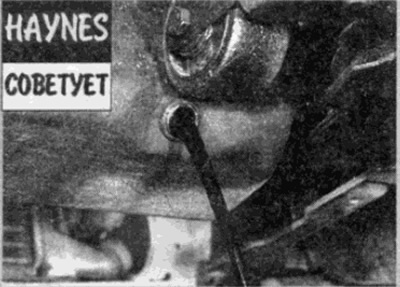
Once the plug is unscrewed from the hole thread, remove it quickly so that the stream of leaking oil gets into the oil receiver, and not into your sleeve.
9. Remove the sealing ring from the plug.
10. Wait a while for the old oil to drain out of the crankcase, keeping in mind that you may have to move the oil receiver so that the dripping stream gets into it.
11. Once all the old oil has been drained, wipe the plug with a clean rag. Replace the sealing washer. Clean the area around the drain hole, then install and tighten the plug.
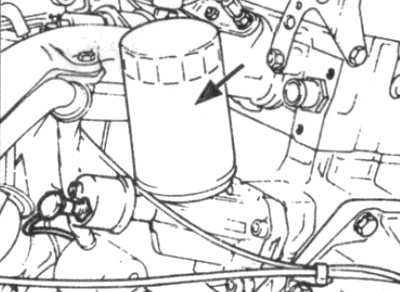
Fig. 3.20. Location of the oil filter (shown by arrow) - 4-cylinder models with non-removable filter
12. Remove the old oil and all tools from under the car, then lower the car to the ground (if required).
13. Wipe the oil filter housing and cover with a clean cloth. Then install the new filter element into the housing (holding the element handle up). Install new O-rings and through bolt on the housing cover (see fig. 3.13).
14. Install the cover and tighten the through bolt to the required torque.
15. Remove the dipstick, then unscrew the oil filler cap on the cylinder head cover. Fill the engine with the required oil (see "Weekly checks"). To reduce oil loss, you can pour in oil in a thin stream or use a funnel. First, pour in half the required amount of oil, then wait a few minutes for the oil to drain to the pan. Continue adding oil in small portions until the level reaches the lower mark on the dipstick. Then add oil to the required level of the upper mark on the dipstick. Insert the dipstick and close the oil filler cap.
16. Start the engine and warm it up for a few minutes; check for leaks around the oil filter housing and drain plug. Note that it may take a few seconds after starting the engine for the oil pressure warning light to go out.
17. Turn off the engine and wait a few minutes for the engine oil to drain into the pan. Check the oil level again and add oil if necessary.
18. Where provided, install shields on the bottom of the engine.
19. Dispose of old oil safely.
Models with non-separable oil filter
Note: A new O-ring will be required during installation.
20. Using an oil filter remover, first loosen the filter, then unscrew it by hand - be prepared for oil to spill (see fig. 3.20). Drain the oil from the filter into the oil receiver.
21. Using a clean cloth, wipe away any old oil and dust from the oil filter seal area on the engine. Check the old filter to make sure the rubber seal is not stuck to the housing. If it is, gently pry it off.
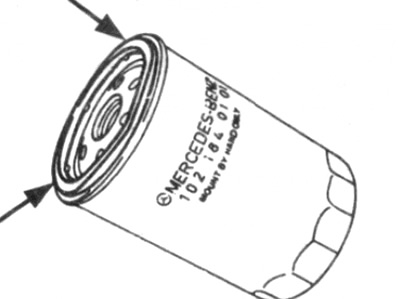
Fig. 3.26. Apply a layer of engine oil to the filter seal (shown by arrows)
22. Apply a thin layer of engine oil to the O-ring of the new filter, then screw it into the housing. Tighten the filter firmly by hand - do not use tools.
23. Perform the actions described earlier in paragraphs 8-19 for a disassemblable filter, skipping paragraphs 13 and 14.
6-cylinder engines
Note: A new O-ring will be required during installation.
24. Using an oil filter remover, loosen the filter, then unscrew it by hand. Drain the oil from the filter into the oil pan.
25. Using a clean cloth, wipe away any old oil and dust from the oil filter seal area on the engine. Check the old filter to make sure the rubber seal is not stuck to the housing. If it is, gently pry it off.
26. Apply a thin layer of engine oil to the sealing ring of the new filter, then screw it into the housing (see fig. 3.26). Tighten the filter firmly by hand - do not use tools.
27. Perform the actions described earlier in paragraphs 8-19 for a 4-cylinder engine, skipping paragraphs 13 and 14 (see fig. 3.27).
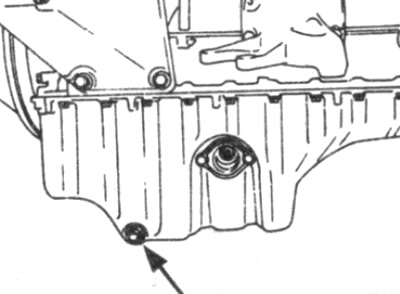
Fig. 3.13. Install new sealing rings (1) and through bolt (2) on the housing cover - 4-cylinder engine with disassemblable filter
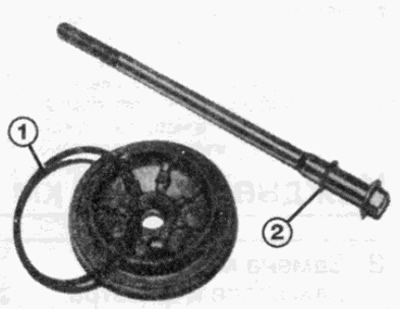
Fig. 3.27. Drain plug (shown by arrow) - 6-cylinder engine