



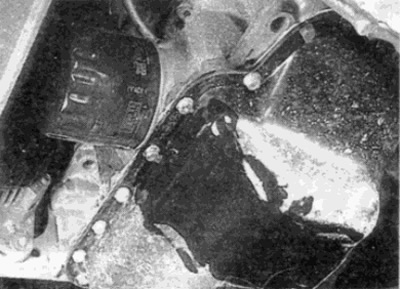
2. Also check the tightness and condition of all engine tubes and hoses. Make sure all clamps and clips are in place and in good condition. Clamps that are broken or missing can cause the hoses, tubes or wires to swell or harden, which can cause more serious problems in the future.
3. Carefully inspect the radiator hoses and heater hoses along their entire length. Replace any hoses that are cracked, swollen or damaged. Cracks are more visible on a compressed hose. Pay attention to the hose clamps that secure the hoses to the cooling system components. Clamps can pinch and tear the hoses, which will manifest itself in leaks in the cooling system.
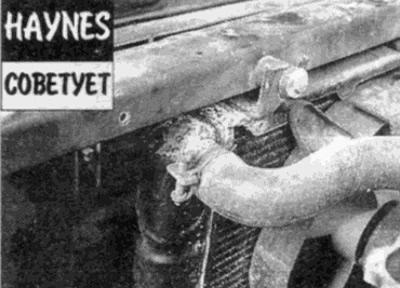
4. Inspect the cooling system components (hoses, connections, etc.) for leaks. A leak in the cooling system usually becomes noticeable by the formation of white or rusty deposits around the leak (see advice from Haynes). If anything is found, replace the system component or gasket, referring to Chapter 3.
5. Check the automatic transmission heat exchanger hoses (if it is installed) for leaks and damage.
6. After raising the car, check the gas tank and filler pipe for punctures, cracks and other damage. Pay special attention to the connection between the neck and the gas tank. Sometimes, if the clamp is lost or the rubber is damaged, the rubber part of the filler neck or the connecting filler hose will leak.
7. Carefully inspect all rubber hoses and metal tubes leading from the gas tank. Check for loose connections, damaged hoses, corrugated lines, and other damage. Pay special attention to vent tubes and hoses, which are often twisted around the filler neck and may be clogged or pinched. Carefully inspect the fuel lines all the way to the front of the car. Replace damaged sections if necessary.
8. Carefully inspect the metal tubes that run along the bottom of the car. If they show signs of significant corrosion or are damaged, the tubes should be replaced.
9. In the engine compartment, check the fuel hoses and pipes for tightness. Inspect the fuel and vacuum hoses for kinks and signs of wear or decomposition.
10. Check the condition of the hoses and tubes of the power steering system (where it is installed).