
Cars BMW Cars Volkswagen Cars Chevrolet Cars Land Rover Cars Lada Cars Honda Cars Peugeot
English Русский
Български
Беларускі
Український
Српски
Hrvatski
Română
Polski
Slovenský
Magyar
Bookmark News and articles Sitemap Feedback Site search
MercedesMan.ru


A-Class C-Class E-Class G-Class M-Class S-Class Others
190 (W201) (1982-1993) W202 (1993-2000) W203 (2000-2007)
  • Main
  • C-Class
  • W201 (1982-1993)
  • General information
  • Maintenance (gasoline)
  • Replacing spark plugs

Replacing spark plugs (Mercedes-Benz C-Class W201)

0
1. Reliable spark plug operation is critical to realizing the engine's full potential. The most important factor in ensuring this requirement is the use of spark plugs that are appropriate for the engine type (a list of such candles is given at the beginning of this chapter). If the correct type of spark plugs are used and the engine is in good condition, the spark plugs do not require any maintenance and can operate until the scheduled replacement. Cleaning of spark plugs is rarely required. This requires a special tool, otherwise the electrodes can be damaged.

2. If the marks on the high-tension wires are not visible, mark them from 1 to 4, in accordance with the cylinder numbers (The 1st cylinder is located on the engine side of the gearbox). Remove the spark plug wires by holding the wire tip, not the wire itself. Otherwise, the tip may come off the wire (see fig. 4.2).
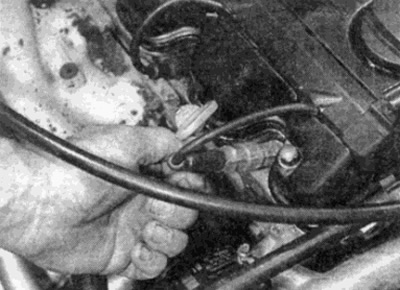
Fig. 4.2. Removing high-voltage wires from spark plugs

Fig. 4.2. Removing high-voltage wires from spark plugs


3. To prevent dirt from getting into the cylinders, before removing the spark plugs, it is recommended to clean the spark plug sockets with a clean brush, vacuum cleaner or air jet (see fig. 4.3).
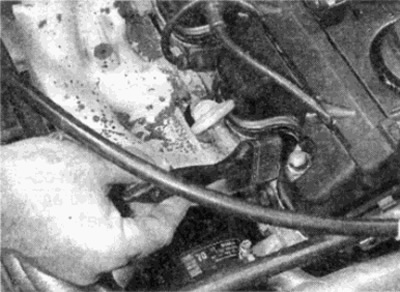


Fig. 4.3. Brush away dust from the recesses under the candles

Fig. 4.3. Brush away dust from the recesses under the candles


4. Remove the spark plugs using a spark plug socket wrench. Keep the socket wrench aligned with the spark plug - if it is skewed, the porcelain insulator may be damaged (see fig. 4.4). After removing each spark plug, inspect it carefully.
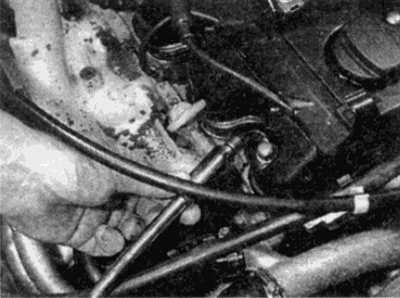
Fig.4.4. Unscrewing the spark plug

Fig.4.4. Unscrewing the spark plug


5. Inspecting the spark plugs will help determine the condition of the engine. If the internal insulator of the spark plug is white and clean without deposits, this means that the engine was running on a lean mixture or that the spark plug is too hot (a hot spark plug transfers heat from the electrodes slowly, while a cold spark plug transfers heat quickly).

6. If the electrode and inner insulator of the spark plug are coated with a hard black layer, it means the mixture is too rich. If the spark plugs are coated with black oil deposits, it most likely means the engine is worn out or running on too rich a mixture.


7. If the inner insulator is covered with a thin layer of light brown deposits, then the working mixture has a normal composition and the engine is in good condition.

8. The spark gap between the spark plug electrodes is of great importance for the correct operation of the engine. If the gap is too large or too small, the spark power, and with it the efficiency, is significantly reduced. The required gap values are given in the section "Technical data" at the beginning of this chapter.

9. To set the gap, measure it with a flat feeler gauge, and then bend the outer electrode to the required value (see fig. 4.9). The gap is set correctly if the correct size feeler gauge passes between the electrodes with friction. Never bend the center electrode, as this may cause the internal porcelain insulator to break and the spark plug will have to be discarded.

Fig. 4.9. Determining the spark plug gap using a flat feeler gauge

Fig. 4.9. Determining the spark plug gap using a flat feeler gauge


10. Special devices for adjusting spark plug gaps can be purchased at most auto parts stores or from spark plug manufacturers (see fig 4.10).
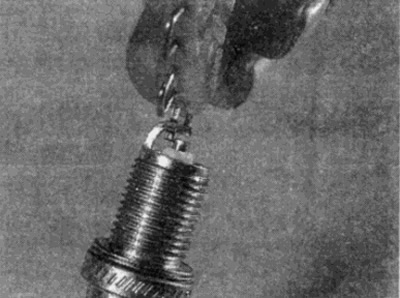
Fig. 4.10. Set the spark plug gap by carefully bending the outer electrode using the adjusting…

Fig. 4.10. Set the spark plug gap by carefully bending the outer electrode using the adjusting device


11. Before installing the spark plugs, make sure (see Haynes advises), that the tips (at the end of the candle) tightly screwed in, and the outer surface and threads of the spark plugs are cleanly wiped.
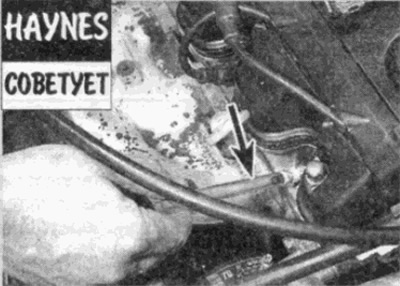


It is often difficult to insert the spark plug correctly into the head hole without damaging the…

It is often difficult to insert the spark plug correctly into the head hole without damaging the threads. To make this task easier, place a piece of flexible hose on the top end of the spark plug. The flexible hose works like a key with a universal joint and helps to easily align the spark plug thread with the thread in the head. If there is a mutual distortion, the hose will slip and will not allow the thread in the head to be damaged.


12. Remove the rubber hose (if it was used) and tighten the spark plug to the required torque (see Technical data). Install the remaining candles in the same way.

13. Connect the high-tension wires in the correct order and install all the parts removed to improve access to the spark plugs.
This article is available at: russian, bulgarian, belarusian, ukrainian, serbian, croatian, romanian, polish, slovak, hungarian
The article has been verified: Lukyanov Nikita Ilyich
Share with friends:
◀ Previous
C-Class 190 (W201) / Maintenance (gasoline)
Next ▶

Engine oil and filter change
Regular maintenance
Maintenance Procedures — Introduction
Location of vehicle maintenance points
Maintenance intervals
Lubrication of the throttle linkage
Checking the fluid level in the automatic transmission
Underhood/Underneath Vehicle Parts and Hoses — Check for Leaks
Accessory Drive Belts — Checking, Replacing and Adjusting
Checking the air conditioning system
More similar articles for repairing other models

☛ Spark plugs — removal and installation Mercedes W168 (1997-2004)
☛ Replacing breaker contacts Mercedes W123 (1976-1985)
☛ Checking and replacing spark plugs, checking the condition of… Mercedes W463 (1999-2019)
☛ Checking and replacing spark plugs, checking the condition of… Mercedes W163 (1997-2005)
☛ Checking and replacing spark plugs, checking the condition of… Mercedes W140 (1991-1998)
☛ Replacing spark plugs Mercedes Vito 1 (1996-2003)
Link in different formats to this article
Comments and feedback from visitors
No comments yet


How much will 10 + 43 ?


W203 (2000-2007) 
  • General information
  • Introduction to guide
  • User manual
  • Maintenance
  • Power unit
  • Gasoline engines
  • Diesel engines
  • Cooling system
  • Ventilation and heating
  • Supply system
  • Injection system (gasoline)
  • Injection system (diesel)
  • Exhaust system
  • Ignition and control system
  • Charge and launch systems
  • Transmission
  • Mechanical gearbox
  • Automatic gearbox
  • Clutch and drive shafts
  • Differential
  • Chassis
  • Brake system
  • Car suspension
  • Steering
  • Body
  • Exterior (external elements)
  • Interior (internal elements)
  • Electrical equipment
  • Equipment and devices
  • Lighting system
  • Electrical diagrams (2000)
  • Electrical diagrams (since 2001)
W202 (1993-2000) 
  • General information
  • User manual
  • Driving a car
  • Car care
  • Maintenance
  • Power unit
  • Gasoline engines
  • Diesel engines
  • Lubrication system
  • Cooling system
  • Heating and ventilation
  • Ignition system
  • Fuel system
  • Injection system (gasoline)
  • Injection system (diesel)
  • Exhaust system
  • Transmission
  • Clutch
  • Car gearbox
  • Chassis
  • Suspension, wheels and tires
  • Steering
  • Brake system
  • Body
  • Exterior (external elements)
  • Interior (internal elements)
  • Doors and windows
  • Electrical equipment
  • Equipment and devices
  • Power devices
  • Lighting system
  • Electrical circuits
190 (W201) (1982-1993) 
  • General information
  • Introduction to the guide
  • Operation and care
  • Maintenance (gasoline)
  • Maintenance (diesel)
  • Troubleshooting
  • Power unit
  • Petrol engine I4
  • Petrol engine V6
  • Diesel engines
  • Engine overhaul
  • Cooling and heating
  • Power system (carburetor)
  • Injection system (gasoline)
  • Injection system (diesel)
  • Exhaust system
  • Charge and start system
  • Ignition system (I4)
  • Ignition system (V6)
  • Diesel heating system
  • Transmission
  • Clutch
  • Mechanical gearbox
  • Automatic gearbox
  • Cardan shaft and axle shafts
  • Chassis
  • Brake system
  • Car suspension
  • Steering
  • Body
  • Exterior (external elements)
  • Interior (internal elements)
  • Doors, locks and windows
  • Electrical equipment
  • Equipment and devices
  • Electrical circuits
 
MercedesMan.ru © 2017–2026 · Mobile version · Read about Mercedes · Sitemap: EN BG BY UA RS HR RO PL SK HU · Feedback · Site search · Bookmark A-Class (W168) · C-Class (W201) · C-Class (W202) · C-Class (W203) · E-Class (W123) · E-Class (W124) · E-Class (W210) · G-Class (W463) · M-Class (W163) · S-Class (W116, petrol) · S-Class (W126, petrol) · S-Class (W140) · S-Class (W220) · Sprinter · Vito 1 · Vito 2 · Vario 814D ·
 
We only use cookies without which some of the site's features may not be available.