



Note: See also Section Spark plugs Chapters Engine electrical equipment.
Caution! Replace spark plugs only when the engine is cold or slightly warm. If the spark plugs are removed when the engine is hot, the threads of the cylinder head, made of light metal, may be damaged.
Depending on the type, spark plugs are replaced every 96,000 km or 160,000 km. Before starting work, prepare all the necessary tools (some spark plug manufacturers supply special tools for measuring spark plug gaps):
- Spark plug wrench 16 mm, for example, HAZET 900AKF. Mercedes-Benz service stations use spark plug wrench 3122B for this.
- Additionally, it is recommended to purchase special pliers, for example, HAZET 1849, which make it easier to unscrew the spark plugs. Mercedes-Benz uses the 3277A assembly key for this.
- Depending on the number of engine cylinders, the required number of spark plugs. The spark plugs used are listed in Specifications. Two spark plugs are used for each cylinder.
The best way to replace spark plugs is to first purchase new plugs, adjust their gap, and replace each plug one at a time. When purchasing spark plugs, it is very important to choose the correct spark plugs for your vehicle's engine. Information about them is provided in Specifications.
With new spark plugs on hand, allow the engine to cool completely before removing the old ones. During this time, you can inspect the new spark plugs for defects and check the spark plug gaps.
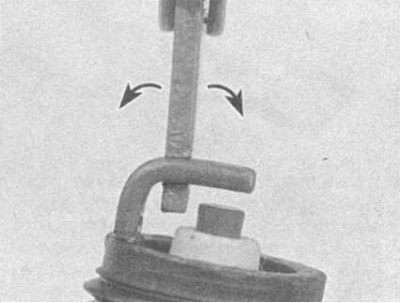
The spark plug gap is checked by inserting a gauge of the required thickness between the electrodes at the end of the spark plug. The gap should match that specified in Specifications. The wire should just touch each of the electrodes. If the gap is not correct, slightly bend the curved part of the electrode using the notched adjuster until the required gap is achieved.
Note: When adjusting the gap of a new spark plug, bend only the base of the ground electrode, not the end. If the ground electrode is offset from the center electrode, use a notched adjuster to align them. Check the porcelain insulator for cracks, indicating that the spark plug should be replaced.
Engines of the M104/120 series produced since 10/01/93.
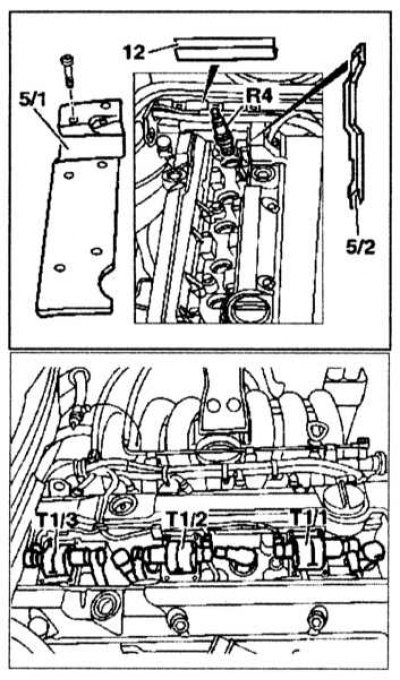
Replacing spark plugs on engines of the 104 series since 10/01/93.
5/1 - Spark plug cover
5/2 - Guide
12 — Cable pipeline
R4 — Spark plug
T1-T3 — Ignition coils
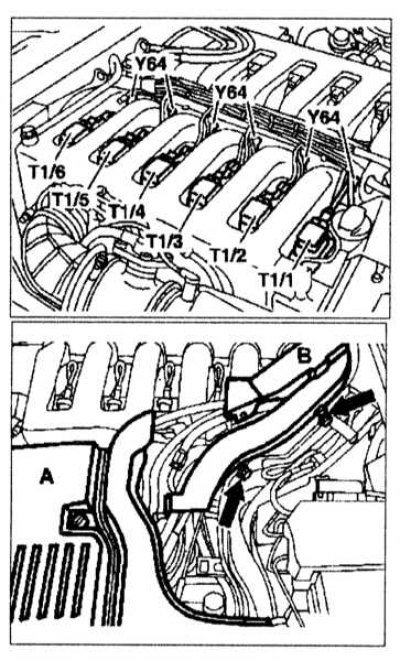
Replacing spark plugs on 120 engines produced since 10/01/93.
T1/1-T1/6 — Ignition coil connectors
A — Lid
B - High voltage wires
1. Turn off the ignition.
2. Disconnect the cable conduit (12). On 120.980 engines, the cable conduit must be disconnected when replacing the spark plugs.
3. Remove the rubber cover seals (A) and the wiring connectors (B) (see accompanying illustration).
4. Remove the ignition coils. On 104 engines, remove the ignition coils T1/1, T1/2, T1/3 with the control drives and high-voltage ignition wires.
5. Disconnect the spark plug caps by gently twisting. Check the inside of the high-voltage wire caps for side sparks (color changes) and check the seals for damage.
6. Wipe the tips and blow them with compressed air.
7. Replace the spark plugs. Use a rubber tube to prevent damage to the threads when tightening the spark plug (inner diameter 5/16 inch), placed on its insulator. If you try to screw the spark plug in incorrectly, the rubber tube will start to rotate on the insulator, preventing damage to the thread.
8. Install the tips and make sure they are seated correctly.
Engines of the M119.97/98 series
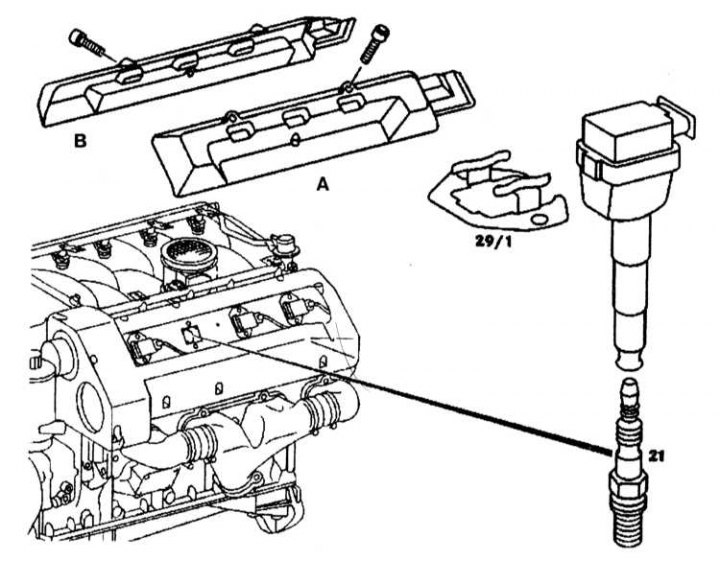
Replacing spark plugs on engines 119.97/98
A, B - Lids
21 — Spark plug
29/1 — Fastening element
1. Remove covers (A) and (B).
2. Remove the spark plugs (21).
3. Use spark plugs recommended by the manufacturer. Check the gap between the electrodes 0.8 mm.
Examination
1. Compare the removed candle with those shown in Chapter Engine electrical equipment.
2. Check the interelectrode distance with a feeler gauge. The required gap value is given in Specifications.
Note: New spark plugs usually have the correct gap setting.
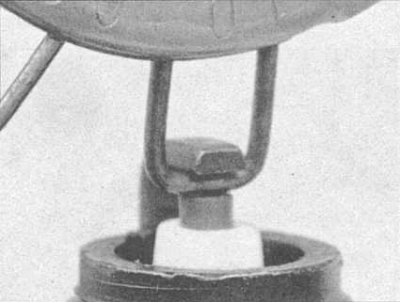
3. If the spark plug thread is damaged, it must be replaced. There is a suitable tool and repair kit for this, in particular BERU. The old threaded hole can be drilled using a special drill. The cylinder head does not need to be removed for this. A new thread can then be cut in the cylinder head and the spark plug can be screwed in using a special threaded insert. The threaded inserts sit securely and hermetically. 4. To set the distance between the contacts, bend the corresponding ground electrode. To do this, tap the ground electrode from the side. When bending, rest a small screwdriver on the edge of the thread. Never lean on the central electrode, as this can be damaged.
5. Apply a small amount of copper anti-seize compound to the threads of the new spark plug. Install the spark plug into the cylinder head and screw it in with your fingers until it stops, then tighten it with the socket of a spark plug wrench. If possible, use a torque wrench to tighten the spark plug to ensure that it is installed correctly. The tightening torque for the spark plugs is included in Specifications.
Note: To prevent the spark plug from being screwed in incorrectly, place a small piece of rubber hose or plastic tube on the spark plug stem. The flexible tube will act as a universal joint, aligning the spark plug with the spark plug socket, and if the spark plug starts to become warped, the hose will slide on it, preventing the threads from being stripped.
6. Before connecting the high-voltage (HV) wire to the spark plug, carefully inspect it for damage, corrosion of the internal contact and measure the resistance. If it significantly exceeds 30 kOhm/m, replace the entire set of wires.
7. Connect the wire to the installed new spark plug, again using a twisting motion and holding the connector until it is fully seated on the spark plug.
8. Repeat the above procedure for the remaining spark plugs in sequence to avoid incorrect connection of the spark plug wires.
(Article was borrowed from the website: www.mercedesman.ru)