



Carburetor engines
1. Remove the air cleaner as described in Chapter 4, then check that the carburetor throttle lever rests on the idle speed adjustment screw. If not, proceed as follows (see fig. 4.1):
- a) Start the engine.
- b) Clamp the throttle actuator vacuum hose so that the throttle lever rests on the idle speed adjustment screw.
- c) Stop the engine.
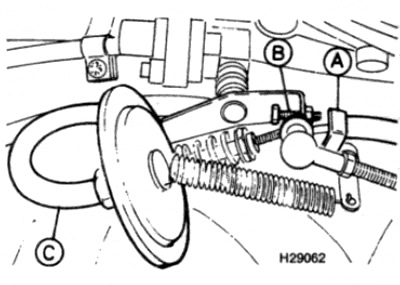
Fig. 4.1. Adjusting the pressure control cable - carbureted models
A Throttle Lever
In the idle speed adjustment screw.
With Vacuum Hose
2. Disconnect the end of the pressure control cable from the ball joint on the throttle linkage.
3. Push the cable sheath back into the cable housing (i.e. push it towards the gearbox), then pull it out again until you feel a slight resistance.
4. At the point where resistance begins to be felt, it is necessary to install the end of the cable on the ball joint of the linkage. If the cable is too long or short, turn the adjuster of the case as much as necessary to easily install the end of the cable on the ball joint (see fig. 4.4).
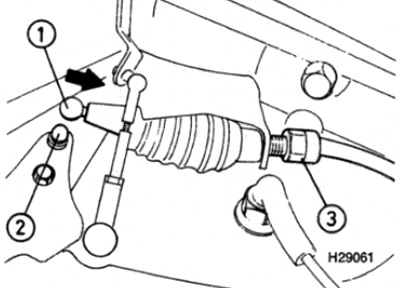
Fig. 4.4. Remove the end of the cable (1) from the ball joint (2), then push it in the direction of the arrow. If necessary, turn the cable housing adjuster (3) - carburetor models
5. Once the adjustment is complete, install the air cleaner.
4-cylinder fuel injected engines
Models with cable connection plate
6. Remove the air cleaner as described in Chapter 4.
7. Loosen the clamp screw on the pressure control cable connector plate (see fig. 4.7).
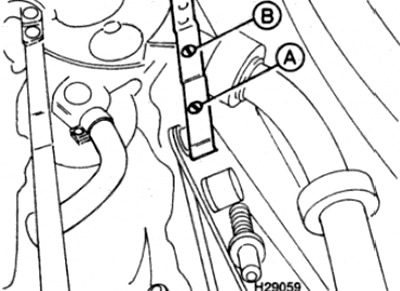
Fig. 4.7. Pressure Control Cable Adjustment - 4-Cylinder Fuel Injected Engines with Cable Connector Plate
A Connection board
In the clamp screw
8. Pull out the connector board, then pull it back until you feel a slight resistance, then tighten the clamp screw.
9. Install the air cleaner as described in Chapter 4.
Models with knurled adjustment wheel and pointer
10. Turn the adjustment wheel until there is approximately 1.0 mm of play between the cable end and the sleeve at the end of the adjuster.
11. Turn the adjusting wheel back until the tip of the pointer is positioned exactly over the groove in the center of the adjusting wheel (see fig. 4.11).
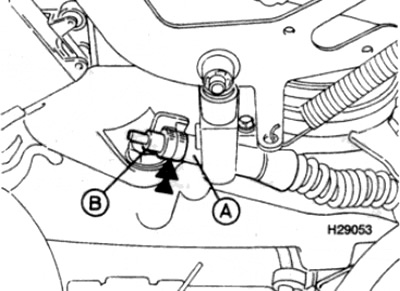
Fig. 4.11. Pressure Control Cable Adjustment - 4-Cylinder Fuel Injected Engines with Knurled Adjusting Nut and Pointer
A Adjusting wheel
In the Bushing
The groove on the adjusting wheel is shown by the arrow
Models with a regulator on the cable case
12. Disconnect the end of the cable from the ball joint on the linkage.
13. Pull the cable to feel resistance to movement.
14. At the point where resistance begins to be felt, it is necessary to install the end of the cable onto the ball joint of the linkage. If the cable is too long or short, turn the adjuster of the housing as much as necessary to easily install the end of the cable onto the ball joint (see fig. 4.14).
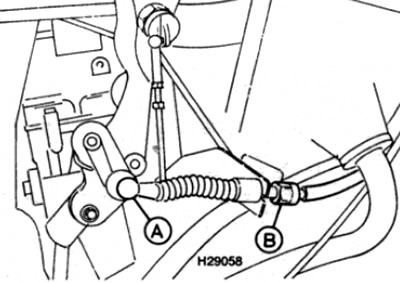
Fig. 4.14. Pressure Control Cable Adjustment - 4-Cylinder Fuel Injected Engines with Cable Boot Adjuster
A Cable tip
In Cable Case Regulator
6-cylinder petrol engines
Models with a regulator on the cable case
15. Perform the actions described in paragraphs 12-14.
Models with knurled adjustment wheel and pointer
16. Perform the actions described in paragraphs 10 and 11.
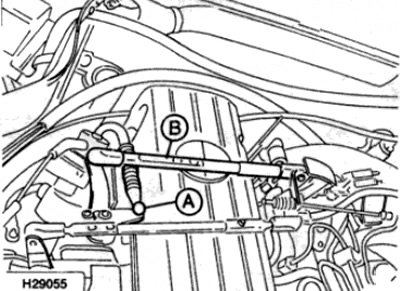
Fig. 4.18. Adjusting the pressure control cable - diesel engines
A Pressure control cable tip
B Throttle Lever Connecting Plate
19. Tighten the pressure control cable until you feel a slight resistance to movement.
[Material borrowed from an online resource: www.mercedesman.ru]
20. At the point where resistance begins to be felt, it is necessary to install the cable end onto the ball joint of the linkage. If necessary, adjust the length of the connecting plate so that the cable end can be easily put on the ball joint.