



Contents: Removal ↡ Installation ↡
Removal
1. Raise the hood and position a thin sheet of metal (approximately 300 mm in area) at the rear of the engine compartment bulkhead to protect the bulkhead insulation during subsequent work.
2. Disconnect the negative battery terminal.
3. On models equipped with an auxiliary heater, be careful not to damage the coolant hose at the rear of the engine compartment when performing the following steps: Remove the transmission oil dipstick tube bolts from the cylinder head.
4. Disconnect the transmission pressure control cable from the throttle linkage on the intake manifold.
5. Apply the parking brake, then raise the vehicle and place it on stands (see "Lifting the car and placing it on supports"). The vehicle must be raised high enough to allow the gearbox to be pulled out from underneath. Remove the underbody protection where it is installed, as described in Chapter 11.
6. Where required, unscrew the cross member bolts (located in front of the gearbox sump) and remove it. Discard the mounting bolts as new ones must be used during installation.
7. Place a suitable container under the transmission main drain hole, then remove the plug and drain the transmission fluid (see Chapter 1).
8. Move the container under the torque converter hole in the transmission housing. Using a wrench, turn the crankshaft by the shaft pulley / vibration damper hub so that the torque converter drain plug is visible in the hole (see fig. 6.8). Unscrew the plug and drain the fluid from the torque converter.
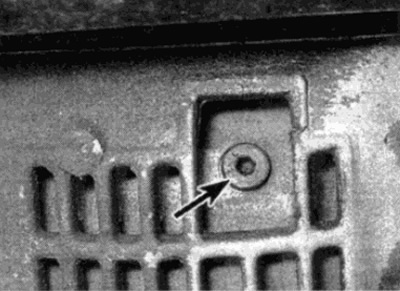
Fig. 6.8. Torque converter drain plug (shown by arrow), combined with a hole in the gearbox
9. Pry off the plastic plug from the gearbox bell housing to gain access to the torque converter mounting bolts to the drive faceplate (see fig. 6.9).
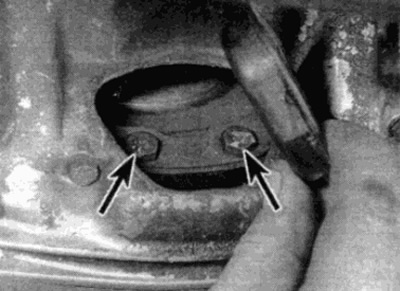
Fig. 6.9. Pry off the plastic plug to expose the torque converter mounting bolts to the drive faceplate
10. Loosen the six bolts securing the torque converter to the drive faceplate by turning the crankshaft.
11. Place a small block of wood between the engine sump and the welded cross member on the bottom of the car.
12. Remove the entire exhaust system as described in Chapter 4.
13. Where provided, unbolt and remove heat shields from the underbody of the vehicle to gain access to the propeller shaft intermediate bearing (see fig. 6.13).
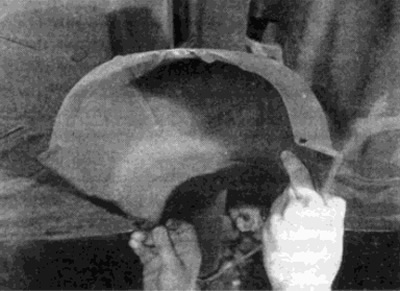
Fig. 6.13. Remove the heat shield to gain access to the driveshaft
14. Turn away from the bottom (under the cardan shaft) and from the gearbox, remove the mounting bolts and remove the exhaust system support brackets (see fig. 6.14). Where provided, unclip the wires from the bracket on the gearbox.
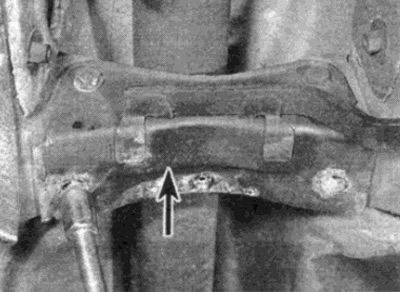
Fig. 6.14. Loosen the bolts and remove the support bracket (shown by arrow) from the bottom of the car
15. Disconnect the propeller shaft from the gearbox flange as described in Chapter 8.
16. Loosen the clamp nut on the intermediate bearing of the propeller shaft, then loosen (but don't take it off) intermediate bearing mounting nuts and push the shaft back as far as possible (see fig. 6.16).
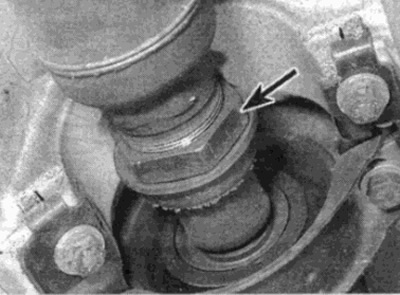
Fig. 6.16. Loosen the driveshaft clamp nut (shown by arrow)
17. Support the gearbox using a jack on wheels and an intermediate wooden spacer.
18. Loosen the bolts of the rear powertrain bracket on the gearbox and the bottom of the car and remove the bracket (see fig. 16.18).
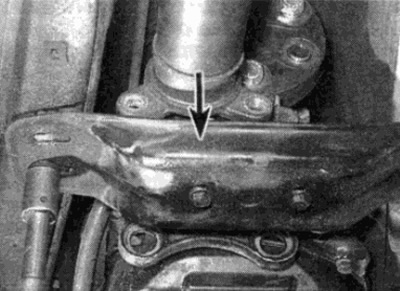
Fig. 6.18. Loosen the bolts and remove the powertrain rear support bracket (shown by arrow)
19. Disconnect the wire plug from the downshift switch solenoid at the rear right corner of the transmission (see fig. 6.19).
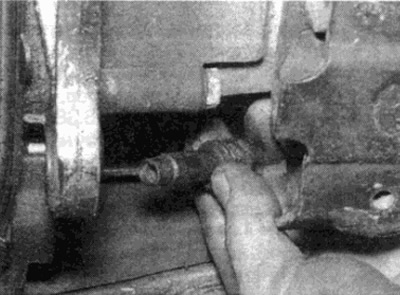
Fig. 6.19. Disconnect the plug from the downshift solenoid
20. Loosen the clamp bolt and pull the speedometer cable out of the gearbox as described in Chapter 12 (see Fig. 6.20, a, b). Where provided, loosen the clamps securing the cable to the gearbox.
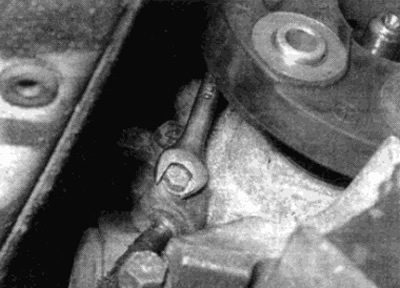
Fig. 6.20, a. Unscrew the tie bolt...
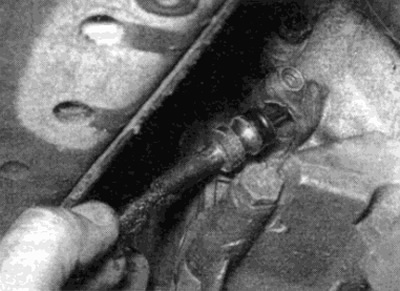
Fig. 6.20, b....and pull out the speedometer cable
21. Release the starter interlock switch/reversing light switch connector from the retainer. Carefully pry the switch connector with a screwdriver (see fig. 6.21).
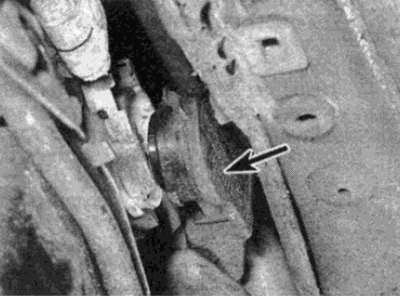
Fig. 6.21. Disconnect the starter interlock switch/reverse light switch connector (shown by arrow)
22. Where provided, unscrew the locking ring with knurling and disconnect the wire plug from the left side of the gearbox (see fig. 6.22).
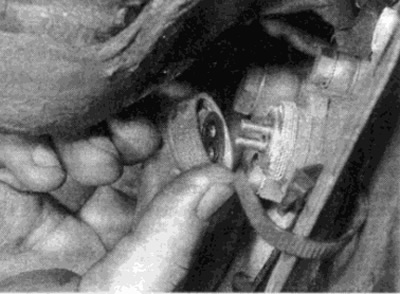
Fig. 6.22. Unscrew the knurled locking ring and disconnect the wire plug
23. Disconnect all remaining electrical connectors on the transmission. Release the wires from the clamps and/or brackets on the transmission housing and move the wires away from the transmission.
24. Disconnect the vacuum pipes from the vacuum unit on the left side of the transmission (see fig. 6.24). Disconnect all remaining vacuum lines. Release all lines from clamps and/or brackets on the transmission case and move the lines away from the transmission. Note that on some models it may be necessary to disconnect certain lines from the intake manifold to allow them to be moved away from the transmission.
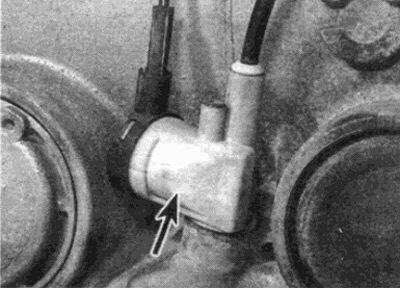
Fig. 6.24. Disconnect the vacuum lines from the vacuum unit (shown by arrow)
25. Remove the metal clips and disconnect the shift rod from the gear selector lever on the transmission and the shift lever, referring to the paragraph 3. Remove the shift rod.
26. Loosen the fitting bolts and disconnect the supply and return pipes of the transmission fluid heat exchanger from the transmission (see fig. 6.26). Remove the O-rings and plug or cap the open ends of the tubes and gearbox to keep out dirt.
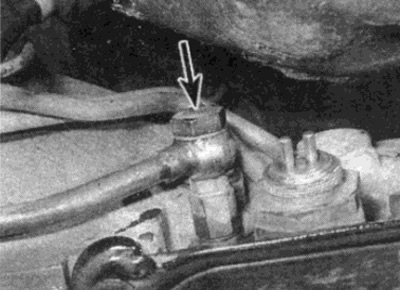
Fig. 6.26. Disconnect the transmission fluid heat exchanger tubes
27. Remove the transmission fluid heat exchanger tube bracket bolts from the transmission and engine and move the tubes out of the way of removing the transmission.
28. Pull the retainer up and remove the transmission fluid level dipstick.
29. Remove the clamp bolt securing the dipstick guide tube/filler tube to the transmission case. Where provided, remove the transmission-to-engine mounting bolt that holds the dipstick tube bracket to the transmission bell housing. Pull the dipstick tube/filler tube out of the transmission (see fig. 6.29).
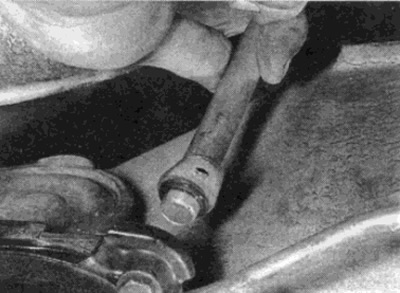
Fig. 6.29. Removing the dipstick tube/filler tube
30. Remove the starter as described in Chapter 5A.
31. Make sure the transmission is securely supported, then lower the engine as far as possible so that the engine rests on a block of wood between the pan and the crossmember. Be careful not to touch the hydraulic pipes or other components at the rear of the engine bay near the bulkhead, as the cylinder head may rest against the bulkhead.
32. Remove all transmission-to-engine bolts, leaving one bolt on each side of the transmission. The top bolts are very difficult to access even with the unit raised. Several ratchet wrench extensions may be required. On some engines (especially on 6-cylinder) the top bolt cannot be unscrewed from below and is more easily accessible with an open-end wrench from the right side after performing the following steps:
- a) Remove the heat shields from around the steering gear housing to gain access to the exhaust system mounting nuts.
- b) Unscrew the mounting nuts and remove the exhaust manifold (rear) from the cylinder head, remove the gasket.
Note the location of the ground bus and all brackets that are held in place by the transmission-to-engine mounting bolts (see fig. 6.32).
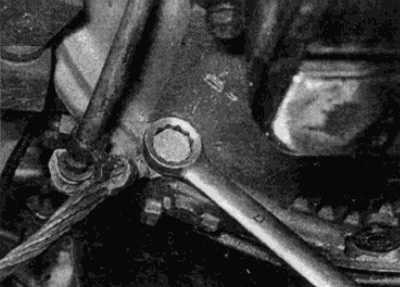
Fig. 6.32. Loosen the engine mounting bolts to the gearbox, remembering the location of the ground bus
33. Once the upper gearbox-to-engine mounting bolts are removed, lift the gearbox so that the power unit is horizontal.
34. On models with diesel engines, when removing the gearbox, it is necessary to hold the torque converter, otherwise there is a risk of it falling out of the housing (other models have a plastic retainer built into the bell-shaped body). The best way to hold the torque converter is by inserting a suitable rod through the hole in the bell housing into the torque converter drain hole (see item 8).
35. Remove the remaining two mounting bolts, then slide the transmission back as far as possible and lower it down using the jack. Be careful not to let the torque converter fall out.
Warning: The gearbox is heavy!
36. To remove the torque converter, follow these steps: (see fig. 6.36):
- a) Hold the gearbox on wooden blocks in a vertical position with the bell housing and torque converter installed vertically upwards.
- b) Using an 8.0 mm Allen key, turn the plastic rod holding the torque converter a quarter turn counterclockwise, then remove the retaining rod (on diesel models, remove the pin inserted when removing the transmission).
- c) Attach two lifting handles to the torque converter using long bolts screwed into the mounting holes on the faceplate. Using the handles, pull the torque converter out of the gearbox. You can screw two long bolts into the bolt holes that hold the torque converter to the faceplate and use them to lift the torque converter out of the gearbox. Be prepared for some fluid to spill.
- d) Store the torque converter in a safe place where it cannot be damaged.
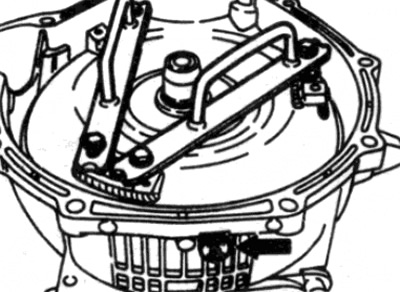
Fig. 6.36. Handles for lifting the torque converter. The arrow shows the retaining rod
Installation
37. Where required, install the torque converter as follows:
- a) Apply a small amount of grease to the torque converter drive flange. Motykot grease is recommended.
- b) Using the two bolts, install the torque converter into place. Push the torque converter as far as possible to ensure that the teeth engage the transmission input shaft.
- c) Where provided, fit the retaining plastic rod and turn it a quarter turn clockwise (on diesel models, align the torque converter retaining pin with the drain hole in the converter as you did when removing it).
- d) Turn the torque converter so that two holes for the bolts securing the torque converter to the drive faceplate are located at the bottom of the base of the bell-shaped housing of the gearbox.
38. Support the transmission with a jack on the wheels and a wooden spacer as for removal. Then, raise the transmission to the required height under the car.
39. Move the gearbox forward until the bell housing is pressed against the engine.
40. Install and tighten the mounting bolts, making sure the ground bar and all brackets are in place.
41. Further actions are the reverse of those during removal, taking into account the following points:
- a) Use new O-rings when connecting the transmission fluid heat exchanger tubes.
- b) Connect the propeller shaft as described in Chapter 8.
- c) Where required, tighten all fasteners to the required force.
- d) Check that all wires and vacuum hoses are properly connected and routed as they were before removal.
- d) Install the exhaust system as described in Chapter 4.
- e) Fill the gearbox with the required fluid as described in Chapter 1.
- g) When finished, check the pressure control cable adjustment as described in paragraph 4.