



Basic Provisions
1. On all models, the exhaust system is made up of three sections (not counting the exhaust manifold) - a receiving pipe in which a catalytic converter is mounted (if installed), an intermediate muffler and a tail section that contains the rear muffler.
2. The system is suspended along its entire length on rubber supports, which are attached to the bottom of the car body using metal brackets. The intake pipe is attached to the gearbox using a bracket and a metal clamp.
3. The exhaust manifold and the inlet pipe are connected by flanges through a gasket using nuts or bolts. The connections between the inlet pipe, catalytic converter (where it is installed) and the intermediate muffler also by means of flanges, which are equipped with conical seals. A clamping ring, secured with a bolt, is used to connect the intermediate muffler to the tail section of the system.
Removal
4. Each section can be removed separately, or the entire exhaust system can be removed.
5. Before removing any of the system components, raise the front or rear of the vehicle and support it on supports (see "Lifting the car and placing it on supports"). You can install the car over an inspection pit or on an overpass.
Intake pipe
6. Place wooden blocks under the catalytic converter or the lowest point of the downpipe. Refer to Chapter 4B and unscrew the Lambda probe from the exhaust pipe. If the exhaust pipe will still be used, disconnect the Lambda probe connector.
7. Loosen and remove the nuts securing the exhaust pipe or catalytic converter (depending on what is required) to the intermediate muffler (see fig. 7.7). Loosen the bolts and remove the conical seal from the connection.
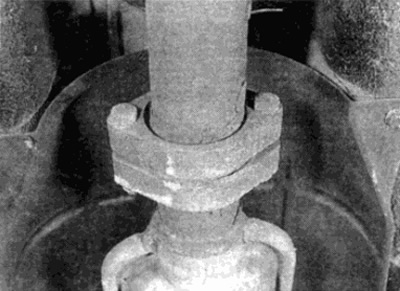
Fig. 7.7. Connection of the inlet pipe to the intermediate muffler
8. Loosen and remove the bolts that secure the exhaust pipe bracket to the base of the clutch basket.
9. Loosen the nuts or bolts (depending on what is used) and separate the downpipe from the exhaust manifold/turbocharger (see fig. 7.9). Remove the gasket, then remove the exhaust pipe from under the vehicle.
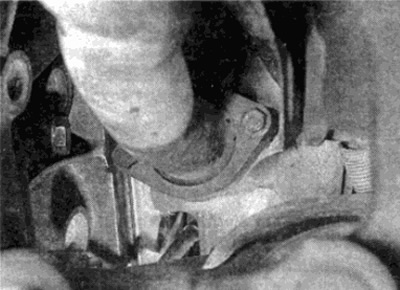
Fig. 7.9. Connection of the inlet pipe to the manifold
Catalytic converter
10. Loosen and remove the nuts securing the downpipe to the catalytic converter. Remove the bolts and remove the cone seal from the connection.
11. Loosen the clamp nut and the bolt securing the catalytic converter to the intermediate pipe.
12. Separate the catalytic converter from the intermediate pipe, then remove it from under the vehicle.
Intermediate muffler
13. Loosen the clamping ring nut and bolt securing the exhaust pipe or catalytic converter (depending on what is installed) to the intermediate muffler.
14. Loosen the clamping ring nut and bolt and disconnect the tail pipe from the intermediate muffler.
15. Remove the intermediate muffler, then pull it out from under the vehicle.
Rear pipe
16. Loosen the clamping ring bolts and separate the rear pipe from the intermediate muffler.
17. Unhook the rear pipe from the rubber mounts and remove it from the car (see fig. 7.17).
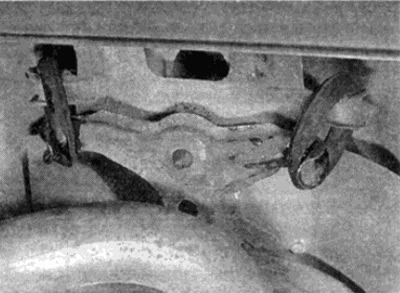
Fig. 7.17. Rear supports of the exhaust system
Note: Where provided, the tail silencer can be carefully cut away from the exhaust system using a hacksaw and replaced separately: please consult your Mercedes-Benz dealer or an exhaust specialist for advice.
The whole system
18. Disconnect the exhaust pipe from the manifolds as described earlier in this paragraph. Where provided, disconnect the Lambda probe wire plug from the connector.
19. With the help of an assistant, disconnect the system from all rubber mounts and remove it from under the vehicle.
Installation
20. Installation of each section is carried out in reverse order, taking into account the following points.
- a) Ensure that all traces of corrosion have been removed from the flanges and replace all necessary gaskets.
- b) Check the rubber bearings for signs of damage or destruction and, if found, replace them.
- c) Replace the conical seals at the connection of the intermediate muffler to the inlet pipe.
- d) For connections secured with tension rings, apply a sealant for exhaust system connections to the mating surfaces of the connections to ensure a seal. Tighten the tension ring nuts securely.
- d) Before tightening the exhaust system fasteners, check that there is sufficient clearance between the system components and the underbody of the vehicle.