



- disconnect the gearbox from the engine. When removing the gearbox, be careful not to bend its input shaft;
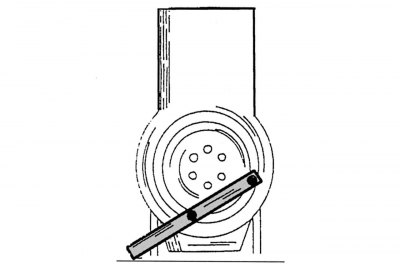
Figure 72. Securing the flywheel from turning
- secure the flywheel from turning and unscrew the clutch mounting bolts crosswise. Sometimes these bolts come loose without securing the flywheel with an Allen key. To do this, you need to put the auxiliary lever on the handle of the key and, holding the key in the head of the bolt with one hand, hit the upper end of the auxiliary lever with the other hand. In most cases, such blows to the key cause the bolts to loosen. To secure the flywheel, you can use a piece of metal strip drilled at two points and secured to the flywheel with two bolts, as shown in the figure 72. Having completed this operation, you can unscrew all the remaining flywheel mounting bolts in order. Before removing the clutch, it is necessary to use a center punch to make a mark on the pressure plate and flywheel so that during subsequent assembly the parts can be installed in the same position. Without removing the retainer from the flywheel, unscrew the belt pulley mounting bolt on the opposite end of the crankshaft, from the front side of the engine. Removing the drive disc of the automatic transmission is performed in a similar manner;
- remove the cylinder head following the instructions given earlier;
- remove the camshaft drive mechanism cover (see subsection 2.5);
- remove the oil pan;
- when removing only the crankshaft, the pistons and connecting rods may remain inside the cylinder block. Otherwise, remove the pistons and connecting rods according to the instructions in subsection 2.6.1. If the pistons and connecting rods remain inside the engine, then when removing the bearing caps and liners, do not forget to mark them as belonging to specific connecting rods and relative to each other;
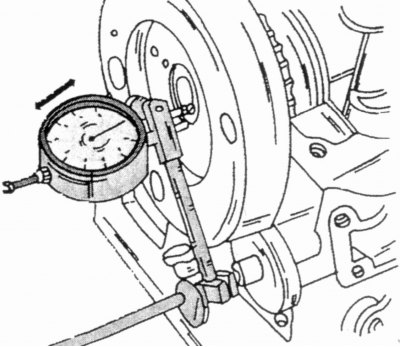
Figure 73. Checking the crankshaft axial clearance
- from the front end of the cylinder block, install a measuring indicator on a stand so that its probe rests on the crankshaft flange, as shown in the figure 73. Using a screwdriver, push the crankshaft to one side, move the indicator probe to the journal and set the indicator pointer scale to zero. Then, from the other side, push the crankshaft in the opposite direction and record the indicator readings. The axial clearance of the crankshaft established in this way must be maintained during its subsequent assembly. If it exceeds the value of 0.30 mm, then this must be taken into account during subsequent installation. The middle main bearing of the crankshaft is equipped with adjusting thrust half rings, two pieces on each side, to compensate for axial clearance. If the gap becomes too large, new half rings can be installed, but they must be of the same thickness on both sides;
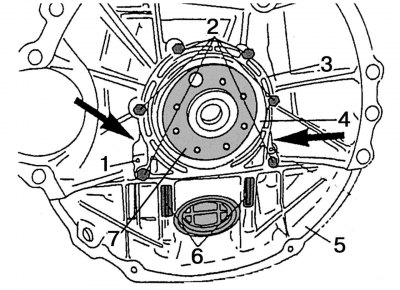
Figure 74. Rear part of the engine crankcase: 1 - spring tension pin; 2 — M6x22 mm bolts for fastening the rear crankshaft oil seal holder; 3 — holder of the rear crankshaft seal; 4 — rear crankshaft oil seal; 5 - oil pan; 6 — bolt M6x85 mm; 7 — rear flange of the crankshaft
- unscrew the bolts securing the rear crankshaft oil seal holder and carefully separate it from the cylinder block. Its fastening is shown in the figure 74;
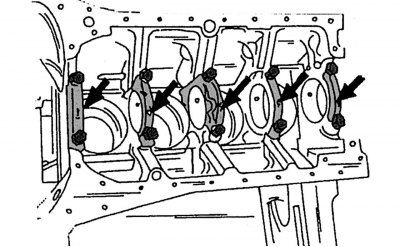
Figure 75. Locations for applying digital markings on crankshaft main bearing caps
- evenly and crosswise, unscrew the mounting bolts and remove the crankshaft bearing caps. Make sure the bearing cap numbers are clearly visible. They have a sequential digital marking from 1 to 5. Cover No. 1 is located on the belt pulley side. The marking is applied to the middle part of the bearing caps (figure 75);
- remove the crankshaft bearing shells and place them next to their caps. All bearings also have a digital marking on the back side indicating the bearing number;
- carefully lift the crankshaft from the cylinder block;
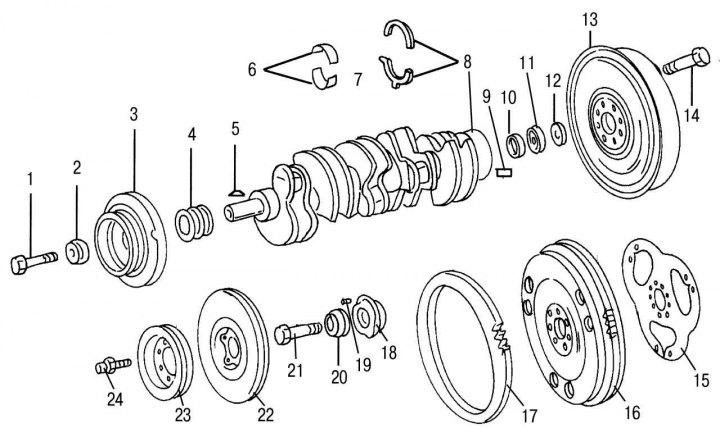
Figure 76. Crankshaft and its mating parts using the example of engine 602 (similar parts are used on the 601 engine): 1 - bolt for fastening the chain drive sprocket to the crankshaft; 2 — washer of the chain drive sprocket mounting bolt; 3 - torsional vibration damper (if it is installed); 4 - twin drive sprocket; 5 — key; 6 — crankshaft bearing shells; 7 — crankshaft; 8 - adjusting thrust half rings, 5 size groups; 9 — landing pin; 10 - spacer washer; 11 - radial ball bearing; 12 - washer; 13 - combined dual mass flywheel; 14 — flywheel mounting bolt; 15 - locking plate; 16 - flywheel, standard version; 17 — flywheel ring gear; 18 — vibration damper hub (if it is installed); 19 - mounting pin; 20 - washer; 21 — bolt securing vibration damper/belt pulley to hub (if it is installed); 22 — vibration damper hub (if it is installed); 23 - Belt pulley (if it is installed); 24 — bolt for fastening vibration damper and belt pulley
- remove the liners remaining in the cylinder block sockets and place them next to the corresponding liners and crankshaft bearing caps. These liners have holes and grooves for supplying oil to the crankshaft journals, and during subsequent assembly they are installed first in the cylinder block sockets. Figure 76 shows the crankshaft and bearing components, excluding the main bearing caps.