



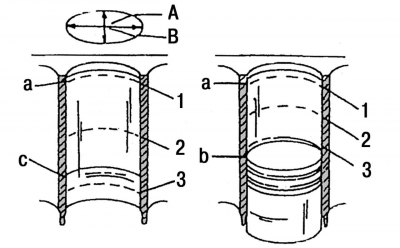
Figure 55. Cylinder liner hole measurement locations: A - measurement in the longitudinal axis of the engine; B - measurement in the transverse axis of the engine; a - the upper stopping point of the upper piston ring; b — lower piston stopping point; c — lower stopping point of the oil scraper ring; 1, 2, 3 — measurement points
Using a bore gauge, measure the cylinder diameter as shown in the figure 55.
Measurements are taken in the longitudinal and transverse axes of the engine cylinder block and at equal cylinder depths. All six results are carefully recorded. The difference in the measurement results obtained at the top and bottom of the cylinder indicates its taper. The difference in the results obtained from measurements in the longitudinal axis and from measurements in the transverse axis indicates the ovality of the cylinder bores. At none of the 6 measurement points should the cylinder diameter deviate from the specified value by more than 0.12 mm.
Each engine is equipped with replaceable cylinder liners, which should be pressed into the cylinder block at a service station. The mating surface of the cylinder block should be checked for deformations similar to the mating surface of the cylinder head. Take measurements in the longitudinal, transverse and diagonal directions under a ruler installed on the mating surface of the cylinder block. A feeler gauge thicker than 0.10 mm should not pass under the ruler at any point on the surface.