
Cars BMW Cars Volkswagen Cars Chevrolet Cars Land Rover Cars Lada Cars Honda Cars Peugeot
English Русский
Български
Беларускі
Український
Српски
Hrvatski
Română
Polski
Slovenský
Magyar
Bookmark News and articles Sitemap Feedback Site search
MercedesMan.ru


A-Class C-Class E-Class G-Class M-Class S-Class Others
Sprinter (1995-2000, diesel) Vito 1 (1996-2003) Vito 2 (2003-2014, diesel) Vario 814D (1996-2003, diesel)
  • Main
  • Mercedes-Benz
  • Sprinter (1995-2000)
  • Power unit
  • Engine repair
  • Rear crankshaft oil seal and its holder

Rear crankshaft oil seal and its holder (Mercedes-Benz Sprinter 903)

0
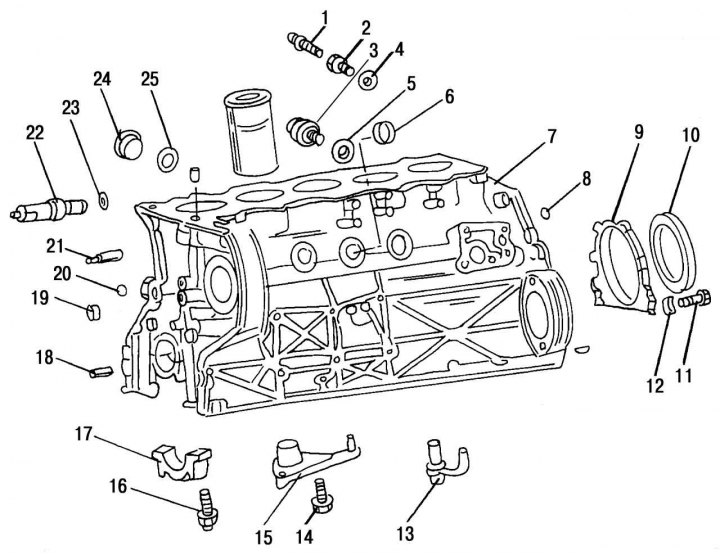
Figure 65. Parts installed on the cylinder block: 1 — connecting nipple; 2 - threaded nozzle; 3 -…

Figure 65. Parts installed on the cylinder block: 1 — connecting nipple; 2 - threaded nozzle; 3 - connecting nipple for draining coolant, on the right side; 4, 5 - sealing rings; 6 — cylinder block plug; 7 — cylinder block; 8 - ball blocking the oil line at the rear; 9 — flange of the rear crankshaft seal; 10 — rear crankshaft oil seal; 11 — bolt for fastening the flange of the rear crankshaft seal to the cylinder block; 12 - elastic washer; 13 - Oil spray nozzle for piston cooling system, new design; 14 - Hexagon head bolt; 15 — oil spray nozzle of the piston cooling system, obsolete design; 16 — main bearing cap mounting bolt; 17 — main bearing cap; 18 — seat bushing of the camshaft drive mechanism cover; 19 - plug for closing the oil channel in front; 20 - ball that locks the oil line in front; 21 — nipple for connecting the chain lubrication supply tube; 22 — chain lubrication supply tube; 23 — sealing ring of the oil spray nozzle on the block; 24 - screw plug on the left side; 25 - sealing ring


The rear crankshaft seal is assembled in a holder, which is bolted to the rear end wall of the cylinder block, and represents its cover. Figure 65 shows the crankshaft oil seal holder on the right side. The correct position of the holder relative to the crankshaft axis is determined by two mounting pins located on each side. The seal of the holder on the cylinder block is provided by the sealant Loctite. When replacing the holder or the cuff, it is necessary to perform the following operations:


  • remove gearbox;
  • remove the flywheel or the drive disk of the torque converter (subsection 2.8.4);
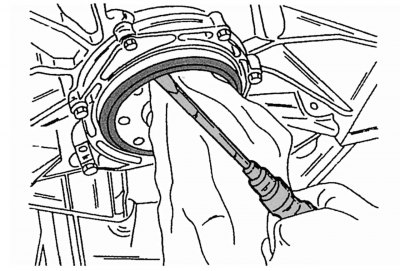
Figure 92. Removing the rear crankshaft oil seal

Figure 92. Removing the rear crankshaft oil seal

  • if it is necessary to replace only the cuff, it is removed using a screwdriver, as shown in the figure 92. A piece of thick cloth should be placed under the screwdriver's support point to avoid damaging other parts;
  • unscrew the mounting bolts along the outer perimeter of the holder and two bolts from the bottom;
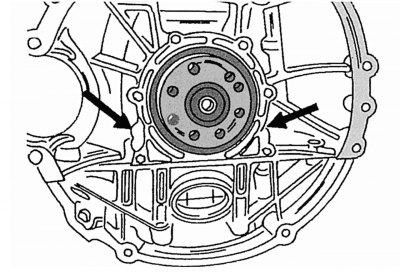
Figure 93. Removing the crankshaft oil seal holder

Figure 93. Removing the crankshaft oil seal holder

  • insert two screwdrivers under the flange of the holder in the places indicated by the arrows in the figure 93, and carefully press it away from the cylinder block;
  • if necessary, the cuff can be removed with a screwdriver without causing damage to the holder;
  • thoroughly clean the mating surfaces on the cover and cylinder block;
  • insert a new cuff into the holder if it was removed from it. The sealing lip of the new ring is offset by 3mm, so it will not sit on the crankshaft flange at the same point as the old ring. The space between the sealing and dust-catching edges should be filled with approximately 1 g of plastic grease;
  • apply sealant to the sealing surface of the cover and attach it to the cylinder block so that the mounting pins fit into the holes provided for them. Tap the lid gently from above to make it fit more tightly. At the Mercedes-Benz service station, a special clamping tool is used for these purposes;
  • tighten the two lower bolts, and then all the others to a torque of 10 Nm;
  • then carry out the work in the reverse order of removal.
This article is available at: russian, bulgarian, belarusian, ukrainian, serbian, croatian, romanian, polish, slovak, hungarian
The article has been verified: Levin Kirill Glebovich
Share with friends:
◀ Previous
Mercedes Sprinter / Engine repair
Next ▶

Belt pulley and torsional vibration damper of the crankshaft
Flywheel or drive disc (automatic transmission models)
Installing the crankshaft
Checking the crankshaft
Removal the crankshaft
Front crankshaft oil seal
Camshaft Drive Mechanism — General Description
Removal and installation the camshaft drive chain tensioner
Dismantling and installation of the camshaft drive chain
Removal and installation the chain tension shoe
More similar articles for repairing other models

☛ Rear Window Wiper Blade Holder — Removal and Installation Mercedes W168 (1997-2004)
☛ Rear Hub Holder — Removal and Installation Mercedes 190 (W201) (1982-1993)
☛ Replacing the front crankshaft oil seal Mercedes W123 (1976-1985)
☛ Removal and installation rear ventilation flaps Mercedes W463 (1999-2019)
☛ Removal and installation the end cover, replacing the rear crankshaft… Mercedes W163 (1997-2005)
☛ Rear Crankshaft Oil Seal and Cover Mercedes W116 (1972-1980, petrol)
Link in different formats to this article
Comments and feedback from visitors
No comments yet


How much will 25 + 19 ?


Vario 814D (1996-2003, diesel) 
  • General information
  • Maintenance
  • Power unit
  • Engines 602.984/985
  • Engines 904.908/914/923/936
  • Transmission
  • Clutch
  • Manual gearbox 711.613
  • Manual gearbox 710.64/66
  • Manual gearbox 715.051
  • Automatic gearbox 723.345
  • Power take-off box
  • Chassis
  • Front suspension
  • Rear suspension
  • Steering
  • Brake system
  • Body and electrical equipment
  • Interior (internal elements)
  • Exterior (external elements)
  • Heater and air conditioner
  • Electrical diagrams
Vito 2 (2003-2014, diesel) 
  • General information
  • User manual
  • Maintenance
  • Diesel engine OM646
  • Engine repair
  • Cooling and lubrication system
  • Power and exhaust system
  • Transmission
  • Clutch
  • Car gearbox
  • Chassis
  • Front suspension
  • Rear suspension
  • Steering
  • Brake system
  • Body
  • Body elements
  • Electrical equipment
  • Equipment and devices
  • Security systems
  • Electrical circuits
Vito 1 (1996-2003) 
  • General information
  • User manual
  • Maintenance
  • Petrol engines 2.0 l
  • Engine repair
  • Lubrication system
  • Cooling system
  • Power and control system
  • Petrol engines 2.8 l
  • Engine repair
  • Lubrication system
  • Cooling system
  • Power and control system
  • Diesel engines 2.3 l
  • Engine repair
  • Cooling system
  • Lubrication system
  • Turbocharging and recycling
  • Power and control system
  • Diesel engines 2.2 l
  • Engine repair
  • Cooling system
  • Lubrication system
  • Turbocharging and recycling
  • Power and control system
  • Transmission
  • Clutch
  • Mechanical gearbox
  • Automatic gearbox
  • Chassis
  • Front suspension and wheels
  • Rear suspension
  • Steering
  • Brake system
  • Body
  • Exterior (external elements)
  • Interior (internal elements)
  • Electrical equipment
  • Equipment and devices
  • Heater and air conditioner
  • Electrical circuits
Sprinter (1995-2000, diesel) 
  • General information
  • Introduction to the guide
  • Maintenance
  • Power unit
  • Engine repair
  • Lubrication system
  • Cooling system
  • Power and exhaust system
  • Transmission
  • Clutch
  • Mechanical gearbox
  • Automatic gearbox
  • Front axle
  • Rear axle and cardan
  • Chassis
  • Car suspension
  • Steering
  • Brake system
  • Tires and wheels
  • Electrical equipment
  • Equipment and devices
  • Headlights and lighting
  • Power devices
  • Electrical circuits
 
MercedesMan.ru © 2017–2026 · Mobile version · Read about Mercedes · Sitemap: EN BG BY UA RS HR RO PL SK HU · Feedback · Site search · Bookmark A-Class (W168) · C-Class (W201) · C-Class (W202) · C-Class (W203) · E-Class (W123) · E-Class (W124) · E-Class (W210) · G-Class (W463) · M-Class (W163) · S-Class (W116, petrol) · S-Class (W126, petrol) · S-Class (W140) · S-Class (W220) · Sprinter · Vito 1 · Vito 2 · Vario 814D ·
 
We only use cookies without which some of the site's features may not be available.