



- disconnect the ground wire from the battery;
- drain the coolant from the cooling system;
- remove the radiator grille and cross member to provide better access to engine components;
- cut the fastening clamps holding the engine wiring harness;
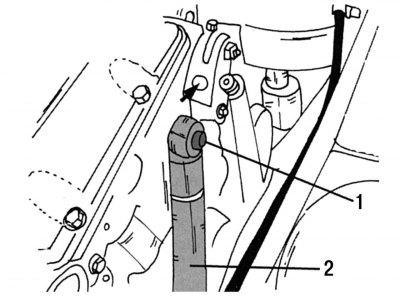
Figure 23. Engine drive belt tensioner: 1 - bolt; 2 — belt tensioner damper
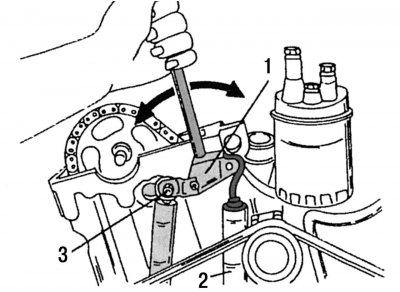
Figure 24. Unloading the drive belt tensioner: 1 — damper; 2 - tension spring; 3 — drive belt tensioner mount
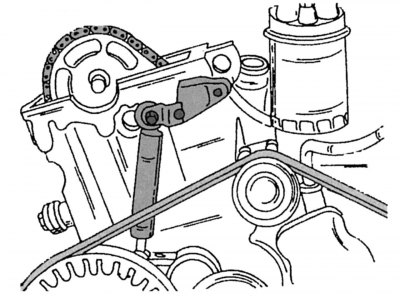
Figure 25. Disconnecting the drive belt tensioner damper
- remove the drive belt from the end of the engine. Figure 23 shows the tensioner for this belt. Bolt 1 holds damper 2 of the belt tensioning mechanism. To remove the belt, unscrew the nut on the flange and insert the mandrel (diameter 12 mm and length 180 mm) into the hole in the spring tension lever indicated by the arrow. Using this mandrel, move the tensioner to the left (figure 24). Remove the load from the hex bolt to the extent that the bolt can be removed, and then slowly release the drift so that the tension spring moves toward the intake manifold and can be removed. Unscrew bolt 1 of damper 2 (see figure 23) belt tensioner from the cylinder head (figure 25) and remove the fastening elements (see also further description). After this, remove the poly V-belt;
- loosen the coolant hose clamps and disconnect the wire from the coolant temperature sensor;
- disconnect the engine control rod system;
- disconnect the vacuum lines from the vacuum pump. Remove the hose and unscrew the union nut;
- tie the fuel lines with a suitable clamp and disconnect them from the coarse fuel filter or remove the fuel filter and put it aside so that it does not interfere with the work process.
On a four-cylinder engine
Remove the high-pressure fuel lines of the first, second and third cylinders together with the fastening element, and the fuel line of the fourth cylinder without the fastening.
On a five-cylinder engine
The high pressure lines for the fourth and fifth cylinders are held in place by two plastic clips. Remove the return fuel line from the injector of the first cylinder. To prevent dirt from getting in, you need to close its opening (for example, with a bolt of a suitable diameter);
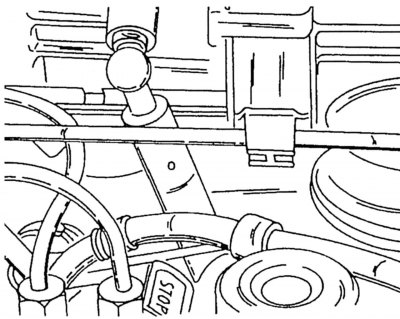
Figure 26. Engine speed controller damper
- disconnect the speed controller damper from the intake manifold. It is located in the location shown in the picture 26th place;
- disconnect the vacuum hose from the thermovalve;
- disconnect the wires from the glow plugs;
- disconnect the protective box of the electrical wiring from the intake manifold and pull it forward;
- disconnect the heating system supply pipe mount from the oil filter;
- disconnect the intake pipe flange from the exhaust manifold, as well as the intake pipe mounting clamp from the gearbox;
- remove the air duct connecting the air filter to the intake manifold;
- remove intake manifold;
- remove the cylinder head cover. It is secured with six bolts from the top of the engine. First remove the engine crankcase ventilation hose. On vehicles with an automatic transmission, it is necessary to first disconnect the fuel control rod, which passes above the cylinder head cover;
- remove the viscous coupling secured with bolts from the end face of the engine (the viscous coupling cannot be placed on the impeller, it can only be placed on its side);
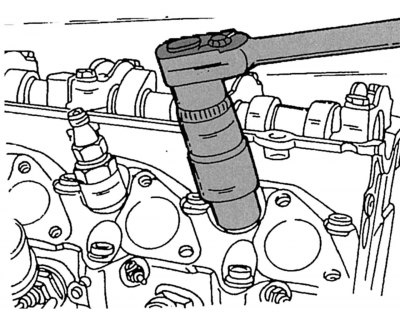
Figure 27. Removing the fuel injection nozzle
- unscrew the fuel injection system injectors (figure 27) and remove the sealing rings located underneath them;
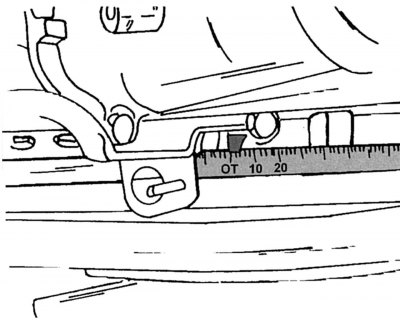
Figure 28. Location of marks when the piston of the first cylinder is at TDC
- turn the engine until the piston of the first cylinder is set to TDC, to do this it is necessary to align the installation marks shown in the figure 28. The engine can be turned using a 27 mm socket wrench installed on the belt pulley nut and a ratchet. The crankshaft should only be turned in the direction of working rotation;
- remove the chain tensioner (see the corresponding subsection.). Unscrew the tensioner nut using a large Allen key. This nut is located above the water pump and thermostat cover;
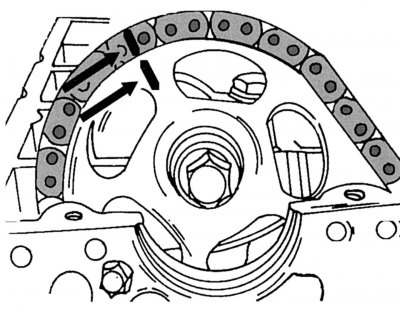
Figure 29. Marking the position of the piston of the first cylinder at TDC
- the camshaft drive sprocket and drive chain should be marked relative to each other. To do this, apply two stripes of paint to the camshaft drive sprocket and to the drive chain, as shown in the figure 29;
[Original published on the website MercedesMAN.ru]
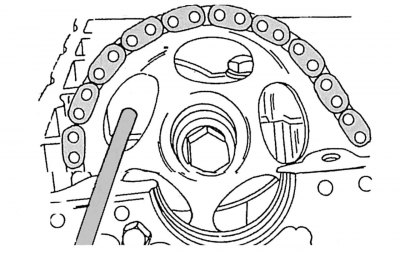
Figure 30. Locking the camshaft drive sprocket
- unscrew the bolt securing the camshaft drive sprocket. To prevent the camshaft from turning, block the camshaft drive sprocket with a large screwdriver or bolt as shown in the figure 30;
- carefully remove the sprocket from the camshaft, without allowing the drive chain to disengage from the crankshaft sprocket. This means that the chain must be kept taut at all times and tied down appropriately;
- remove the camshaft as described in subsection. 2.12.6. Loosen the bearing cap mounting bolts evenly;
- remove the chain guide from the cylinder head (subsection 2.12.4);
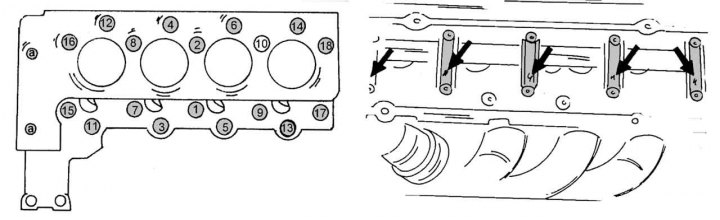
Figure 31. Cylinder head bolt tightening sequence for a 2.3L engine
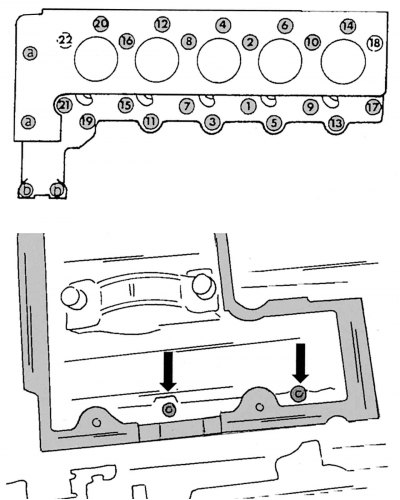
Figure 32. Cylinder head bolt tightening sequence for a 2.9L engine
- now you can unscrew the cylinder head bolts. To prevent deformation of the head, its bolts should be unscrewed in the reverse order shown in the figure 31 and 32. To unscrew these bolts you will need a so-called polygonal insert key. In the Mercedes-Benz specification it is listed under the number 601 589 00 10 00. Using a regular Allen key may damage the bolt heads. Don't forget to unscrew the two small bolts in the chain case, which are shown in the lower part of the figure 32. These bolts are often forgotten. Immediately after unscrewing all the bolts, it is necessary to measure their length from the lower edge of the bolt head to the end of the threaded section in order to determine the degree of their elongation. If the measurement results show that the bolt length values, depending on the installation location, exceed 83.6; 105.6 and 118.5 mm, then these bolts must be replaced with new ones, the dimensions of which are 80; 102 and 115 mm. Tighten the bolts in the reverse order;
- in the upper part of the chain housing, unscrew two M8 bolts with heads for an internal hexagon (shown on the lower part of the figure 32). The Allen key number is 8 mm. In order to get to these bolts, you need to use an extension for the above key;
Note: We recommend that you mark the bolts according to the numbers in the figure before unscrewing them 31 for the purpose of their correct subsequent installation: they have different lengths, since some of them secure the camshaft bearing housings together with the cylinder head. They are shown by arrows in the figure 32.
- remove the cylinder head. To make this work easier, you can use a lifting device by securing the head to the lifting eyes;
- after removing the cylinder head, thoroughly clean the mating surfaces of the head and cylinder block. If necessary, repair the cylinder head according to the instructions in subsection. 2.4.3;
- if it is necessary to replace only the gasket, the head must be installed on the engine;
- place a new cylinder head gasket on the joint surface;
- install the cylinder head, making sure that the guide bushings are in place. They are located on the same side;
- lubricate the threaded part and the contact areas of the cylinder head mounting bolts with engine oil. This is done after measuring the length of all bolts and replacing any bolts that have stretched too much.
Installation and initial tightening of the bolts to a torque of 15 Nm must be carried out in the sequence shown in the figure 31 and 32. Then, in the same sequence, all bolts are tightened to a torque of 35 N·m, after which it is necessary to wait a pause of 10 minutes. The cylinder head mounting bolts have different lengths, so they must be installed in strict accordance with the marking and length.
After a pause, tighten each bolt by 90° in the same sequence. There is no need to use a torque wrench to perform this work.
After this, it is necessary to tighten all the cylinder head mounting bolts again by 90°, starting with bolt 1, taking into account the specified sequence.
Two M8 Allen head bolts shown at the bottom of the figure 32, must be tightened to a torque of 25 Nm. Once a certain mileage has been reached for this vehicle, there is no longer any need to tighten the cylinder head fasteners. A similar requirement existed previously for other types of vehicles.
Note: The cylinder head design may be subject to modification. For this reason, you should not purchase a used cylinder head until you are sure that it is a perfect match to the one installed on your vehicle.
- install the chain guide on the cylinder head;
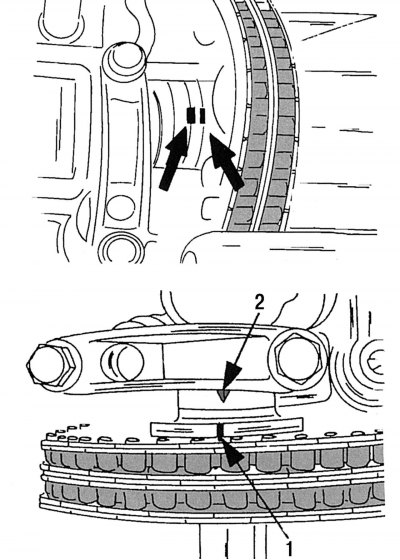
Figure 33. Location of the camshaft guide pin (top). Location of the timing marks corresponding to the position of the piston of the first cylinder at TDC (bottom): 1 - mark on the camshaft sprocket; 2 - mark on the cover of the first camshaft bearing
- place the drive sprocket together with the chain on the camshaft
- yu, paying attention to the fact that the marks made with paint are located on the same line (see figure 29), and the shaft mounting pin coincided with the hole in the sprocket. There is a drawing on the top 33 shows where to check the engagement of the landing pin;
- tighten the camshaft drive sprocket mounting bolt to 45 N·m, holding it from turning with a large screwdriver or bolt as shown in the figure 30;
- install the chain tensioner, tightening its fastening to a torque of 80 Nm;
- check the alignment of the marks on the camshaft in the position of the piston of the first cylinder, which is at TDC. There is a mark on the camshaft, which, when the piston of the first cylinder is at TDC, should be opposite the cast arrow on the bearing cover. This arrangement of marks is shown at the bottom of the figure 33;
- connect the wiring to the glow plugs;
- install intake manifold;
- connect fuel lines to injectors;
- connect the inlet pipe to the exhaust manifold;
- install the fuel filter and connect the fuel lines to it;
- install the drive belt tensioner, performing all operations in the reverse order of disassembly;
- install cylinder head cover;
- connect the wire to the temperature sensor to display readings in the instrument cluster.
All other work should be performed in the reverse order of removal.