



Arrangement of parts when installing the piston in the caliper
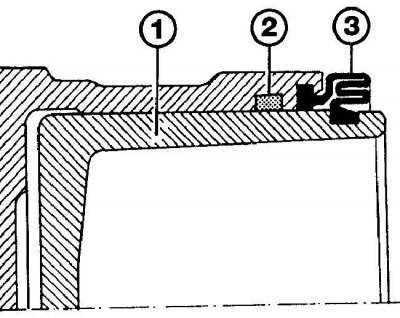
1 – piston;
2 – piston sealing ring;
3 – piston dust cover
1. Carefully clean the caliper of brake dust and dirt.
2. Remove the piston from the caliper, which can be done by using low-pressure air supplied to the brake cylinder through the hole for connecting the brake hose. In this case, install a wooden block instead of brake pads.
3. Using a small screwdriver, remove the sealing ring from the groove in the caliper bore.
4. Wash all parts in methylated spirits or clean brake fluid and wipe them dry. Use compressed air to clean pipes and holes.
5. Check the condition of all caliper parts and replace worn or damaged parts. Check the condition of the guide pins.
6. Pay special attention to the cylinder and piston. If there are scratches, marks, wear or pitting, the piston and cylinder must be replaced, which means the caliper assembly must be replaced.
7. Regardless of the condition, replace all rubber seals.
8. When repairing the caliper, make sure that all parts are clean and dry.
9. Dip the piston and new piston seal ring in brake fluid and apply a thin layer of brake fluid to the piston bore in the caliper.
10. Install the sealing ring into the groove in the caliper bore.
11. Install the dust boot on the piston so that the inner diameter of the boot fits into the groove of the piston. Carefully and while turning, insert the piston into the caliper and at the same time insert the outer edge of the dust boot into the caliper until it locks into place (see picture).
12. When installing new guide pins, lubricate their surface with special grease and install the guide pin protective boots into the grooves of the pins. Insert the guide pins into the caliper holder and simultaneously insert the protective boots into the grooves of the caliper holder.
Models with a fixed two-piston caliper
(Text republished from the website: www.MercedesMan.ru)
Warning! Do not unscrew the bolts that hold the two parts of the caliper together. This may cause a loss of sealing and the caliper will leak.
1. Carefully clean the caliper of brake dust and dirt.
2. Mark the location of the pistons in the caliper so that they can be installed correctly in their places.
3. Remove the pistons from the caliper, which can be done by using low-pressure air supplied to the brake cylinder through the brake hose hole. In this case, install a wooden block instead of brake pads. Remove the dust covers from the pistons.
4. Using a small screwdriver, remove the O-rings from the grooves in the caliper bores.
5. Wash all parts in methylated spirits or clean brake fluid and wipe them dry. Use compressed air to clean pipes and holes.
6. Check the condition of all caliper parts and replace worn or damaged parts.
7. Pay special attention to the cylinder and piston. If there are scratches, marks, wear or pitting, the piston and cylinder must be replaced, which means the caliper assembly must be replaced.
8. Regardless of the condition, replace all rubber seals.
9. When installing, make sure all parts are clean and dry and that each piston fits into its own hole.
10. Dip the pistons and new piston seals in brake fluid and apply a thin layer of brake fluid to the piston bores in the caliper.
11. Install the sealing rings into the caliper holes.
12. Install the dust boots onto the pistons so that the inner diameter of the boot fits into the piston groove.
13. Install the dust boot on the piston so that the inside diameter of the boot fits into the groove of the piston. Carefully and by turning, insert the piston into the caliper and at the same time insert the outer edge of the dust boot into the caliper until it locks.
14. Install the second piston into the caliper in the same manner.
Installation
1. Using a suitable tap, clean the threads in the guide pin bore.
2. Screw the caliper onto the brake hose connector.
3. On single piston sliding caliper models, install the caliper onto the caliper bracket and install a new upper guide pin bolt. Tighten the guide pin bolt to the specified torque while using a thin wrench to prevent the guide pin from turning. Be careful not to damage the guide pin boot.
4. On models with a fixed dual piston caliper, reinstall the caliper and secure it with new bolts, tightening them to the specified torque.
5. On all models, tighten the brake hose connector to the caliper. Remove the clamp that pinches the brake line.
6. Install the brake shoes and bleed the hydraulic brake system. If all precautions have been taken when working on the hydraulic brake system, then only the corresponding front brake needs to be bled.
7. Install the wheel, then lower the vehicle to the ground and tighten the wheel mounting bolts to the specified torque. Check the brake fluid level.