



Checking the flatness of the cylinder head
Measuring the protrusion of the swirl chamber from the cylinder head
Carefully inspect the cylinder head for cracks and other damage. If cracks are present, the head must be replaced.
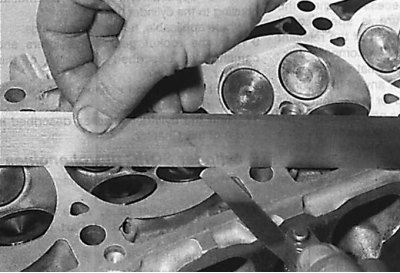
Using a metal ruler and feeler gauge, check the flatness of the mating surface of the cylinder head. If the flatness is more than 0.1 mm, the head must be re-ground, while its height must meet the requirements.
Check the condition of the valve seats. If they are burnt, worn or defective, they must be replaced. If the valve seat is slightly worn, they must be ground in. Check the valve guides for wear by inserting the valve stem into them and moving it to the side. The movement should be insignificant. If the movement is excessive, remove the valve and measure the diameter of the valve stem. Replace the valve if necessary. If the valve stem is not worn, the guide is worn and must be replaced. Replace the valve guides at a service station.
If the valve seats need to be reground, this operation must be performed after installing new valve guides.
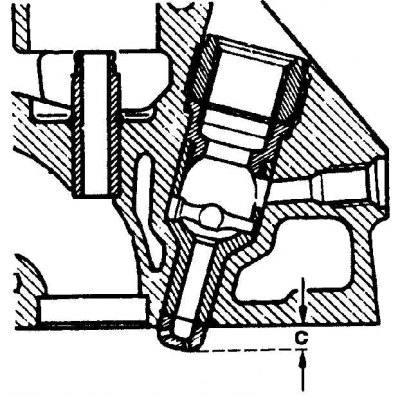
On diesel engines, inspect the swirl chambers for damage and cracks. Small cracks are acceptable. Swirl chambers must be replaced if they are badly burned and deformed, or if their fit in the cylinder head has become loose. Have a specialist replace the swirl chamber. Check the protrusion of the swirl chamber from the cylinder block. To check the protrusion, install a bracket with a dial indicator on the mating surface of the cylinder head. Place the measuring tip of the indicator on the surface of the head. Set the indicator to 0, then move the tip of the indicator to the swirl chamber. Read the protrusion of the swirl chamber on the indicator scale. Check the protrusion of the remaining swirl chambers in the same way.