



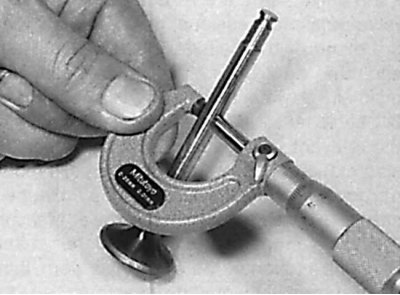
Measuring the valve stem diameter
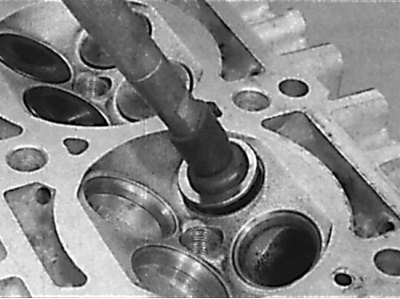
Lapping valves
1. Check each valve head for localized corrosion, burns, cracks, and general wear. Check the valve stem for wear and bending. Check the end of the valve stem for wear. If any defects are present, the valve must be replaced.
2. Using a micrometer, measure the valve stem diameter at several points along the stem. Any significant difference in the readings indicates valve stem wear and a mandatory valve replacement.
3. If the valves are in satisfactory condition, they should be inserted into their seats and lapped in. If the valve plates or seats are badly worn, they should be machined or even replaced before lapping.
4. The valve grinding is performed as follows: Install the cylinder head with the combustion chambers facing upwards on wooden blocks.
5. Lubricate the lapping paste on the valve plate and valve seat, install the valve in place and install the suction cup with the holder (handle) on the valve plate. Rotate the valve with the suction cup in different directions, lap the valve, and periodically lift the valve to redistribute the lapping paste.
6. If a coarse lapping paste is used, lap until a uniform matte surface appears on the valve seat and valve. Then wipe off the paste composition used and repeat the lapping process with a fine paste. Lapping should be performed until a light gray-matte color appears.
7. Carefully remove traces of lapping paste using a suitable solvent.
Valve elements
1. Check the valve springs for signs of damage.
Original can be found on the website [MercedesMan.ru]
2. Install the springs with one of the ends on the frame, check the deviation of the spring axis from the vertical plane and the length of the springs. If one of the springs is damaged, all springs in the set must be replaced.
3. Replace the valve stem seals regardless of their condition.