



Contents: Engine oil ↡ Engine coolant ↡ Brake fluid ↡ Power steering system fluid (GUR) ↡ Windscreen/Headlight Washer Fluid ↡
Note: The following describes the procedure to be performed on a monthly basis. Descriptions of other fluid level checks can be found further in the relevant Sections devoted to specific maintenance procedures. Regardless of the intervals specified in the Schedule, try not to ignore the occurrence of fluid leaks under the vehicle - such signs indicate the presence of faults that require immediate correction.
Attention! When checking the level of any working fluid, the car must be positioned strictly horizontally!
Fluids are an integral part of lubrication, cooling, braking and windshield washing systems. Due to normal consumption and tendency to contamination during vehicle operation, periodic checks of condition/levels and replacement of working fluids should be performed - please read the requirements of the Specifications for the types of compounds used and the filling volumes of the relevant systems.
Engine oil
Visual inspection of leaks
1. If the power unit is noticeably oiled and there is a high oil consumption, carefully inspect the areas where leaks are most likely to develop:
- Engine oil filler cap seal - check for cracks and other mechanical damage;
- Components of the crankcase ventilation system (in particular, the ventilation hose running from the cylinder head cover to the intake air duct);
- Cylinder head cover(s) gasket;
- Cylinder head gasket(s);
- Sealing element of the drain plug of the engine oil pan;
- Oil filter gasket - carefully examine the place where the filter fits to the mounting flange;
- Oil pan gasket;
- Front and rear crankshaft oil seals.
2. Wrap the generator in plastic, spray the engine with a regular cold cleaner, then, after a short time, wash the unit at a car wash.
3. Sprinkle the joints of the mating surfaces and the sealing elements of the power unit from the outside with lime or talc.
4. Check the oil level and make adjustments if necessary (see below).
5. During the short (about 30 km) trips (preferably on the expressway) warm up the engine to normal operating temperature - hot oil is more fluid and seeps through leaks more easily.
6. Park the car in a safe place and, using a lamp, examine the engine to locate the sources of oil leaks. Eliminate the causes of leaks.
Checking the level
Note: The maximum permissible engine oil consumption is 1l/1000 km, the actual level of oil consumption depends on driving style - frequent driving with high engine speeds leads to increased oil consumption.
Note: Information on the operating principle of the engine oil level warning lamp is provided in Section Instrument cluster, gauges and control lamps and indicator lights.
1. A warning lamp built into the ignition switch assembly warns the driver of a dangerous drop in engine oil level (see Section Instrument cluster, gauges and control lamps and indicator lights). The oil level/temperature/quality sensor is located under the car, in the right front corner of the engine oil pan (see accompanying illustration).
Note: ML 230 models use an oil level switch (S43).
2. Check the engine oil level using a dipstick inserted into the guide tube and lowered into the engine to the bottom of the oil pan. Check the oil level before the first trip of the day or about 5 minutes after stopping the engine. If you check immediately after turning off the engine, the results will not adequately reflect the situation, since some of the oil will be distributed across the internal galleries and components of the engine.
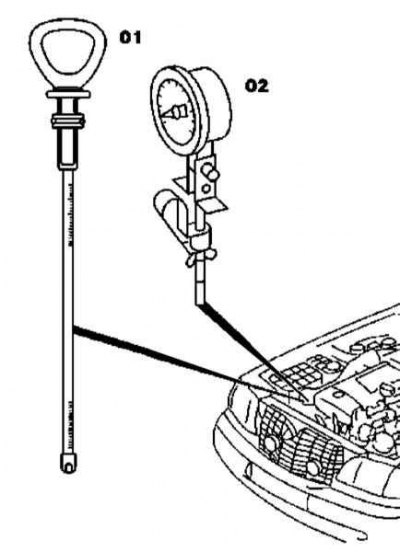
Checking the engine oil level
3. Remove the dipstick from the guide tube and wipe the blade dry with a clean rag or paper towel. Insert the dipstick back into the tube until it stops, then remove it again. Inspect the dipstick blade and estimate the size of the area wetted with oil. The oil level should be between the upper and lower marks on the dipstick blade. If necessary, add the appropriate amount of oil of the required grade to the engine.
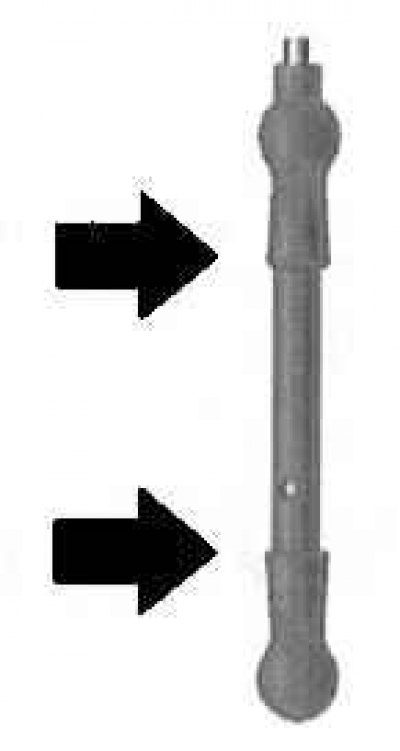
The oil level should be between the lower (MIN) and upper (MAX) marks on the dipstick blade
4. Lowering the level beyond the lower limit of the permissible range leads to the development of oil starvation of the engine, which is fraught with serious mechanical damage to the latter. Also try not to overfill the oil above the upper mark, as this can lead to spark plugs being thrown or failure of the power unit seals due to excessive pressure increase.
5. To fill the engine with oil, remove the threaded cap of the filler neck. To avoid splashing oil when pouring it into the engine, use a funnel or an oiler with a long spout. After filling the engine with oil, screw on and tighten the filler neck cap securely, then start the engine and carefully inspect the drain plug and the surface of the oil filter mating with the block for signs of leaks. Turn off the engine, wait 5-10 minutes for the oil to drain into the pan, then check its level again.
Note: Excess oil must be drained or pumped out of the crankcase - excessive engine oil level can cause failure of the catalytic converter. Make sure the filler cap is securely tightened.
6. Checking the engine oil level is an important preventive maintenance procedure for the engine. A constant decrease in the level indicates the presence of oil leaks due to failure of seals, damage to sealing gaskets, wear of piston rings or valve guides. If the oil is milky in color or consistency, or if there are drops of water in it, this indicates possible damage to the cylinder head gasket, or the formation of cracks in the body of the head(s) or block. The check must be done without delay. When measuring the oil level, always also check its condition. Use your thumb and forefinger to remove traces of oil from the dipstick blade - if there are small metal particles in it, the oil must be replaced (see Section Changing engine oil and oil filter).
Engine coolant
Warning! Do not allow antifreeze to come into contact with exposed areas of the body or painted surfaces of the vehicle. Wash away accidental splashes immediately with plenty of water. Remember that antifreeze is a highly toxic liquid and its ingestion, even in small quantities, can have the most serious consequences, including death. Never leave antifreeze stored in a loosely closed container; immediately collect any coolant spilled on the floor. Remember that the sweet smell of antifreeze can attract the attention of children and animals. Consult with local authorities about methods of disposal of used coolant - in many regions of the world, special collection points for various types of waste have been set up. Never pour old coolant into the sewer or onto the ground!
Note: Non-toxic grades of antifreeze have been developed in recent years, but they must still be disposed of in an orderly manner.
1. All vehicles covered by this Manual are equipped with a compensating cooling system that operates under excess pressure. The white plastic expansion tank is located in the engine compartment and is connected to the radiator by a hose. As the engine warms up during operation, the expanding coolant fills the tank. When the engine cools down, the coolant automatically flows back into the cooling system, which ensures that its level is maintained at a constant value. A warning lamp included in the instrument cluster warns the driver of a dangerous drop in the coolant level (see Section Instrument cluster, gauges and control lamps and indicator lights). The coolant level switch sensor is located at the bottom of the expansion tank of the cooling system.
2. Checking the coolant level in the tank should be done regularly, with the car in a strictly horizontal position and the engine turned off. When cold, the coolant level should reach the mark "COLD LEVEL", applied to the translucent wall of the tank. After the engine warms up, the coolant level rises by approximately another 1.0 -1.5 cm. If necessary, make the appropriate adjustments - add only the liquid of the required composition (see Specifications).
3. After driving the car for a short time, measure the coolant level again - minor adjustments can be made by adding distilled water, however, it should be remembered that frequent additions of water lead to dilution of the antifreeze, so it is wiser to always add a mixture of the required composition to the system.
4. Regularly arising need to adjust the coolant level indicates the presence of coolant leaks (external or internal), - carefully examine the external condition of the radiator, connecting hoses, filler cap, drain plugs and water pump (see Section Checking the functioning of the cooling system and frost resistance of the coolant, replacing the liquid). If you cannot identify the source of the leak, check the tightness of the expansion tank and radiator caps at a service station.
5. Removing the covers of the cooling system components should be done after the engine has completely cooled down. Wrap the cover in a rag and unscrew it to the first point of weakening resistance - if steam or coolant starts to escape from under the cover, let the engine cool down a little more, and only then remove the cover completely.
6. It is also necessary to check the condition of the coolant, it should be relatively clean. If the liquid has a reddish-brown color, it must be drained, then the cooling system tract must be flushed and filled with a fresh mixture of the required composition. Even if the coolant looks normal, the corrosion inhibitors included in its composition lose their effectiveness over time, so the replacement in any case should be carried out in accordance with Schedule of current maintenance.
7. The resistance of the coolant to freezing is checked using a hydrometer.
Brake fluid
Warning! Brake fluid can cause eye damage and damage painted surfaces, so be extremely careful when handling it. Do not use brake fluid that has been open for a long time or that is more than one year old. Brake fluid tends to absorb moisture from the air, which can lead to a dangerous loss of braking efficiency. Use only the recommended type of brake fluid. Mixing different types of fluid can cause brake failure.
1. The brake master cylinder is installed in the rear left corner of the engine compartment. The driver is warned of a drop in the brake fluid level by the activation of a warning lamp built into the instrument cluster (see Section Instrument cluster, gauges and control lamps and indicator lights), the float switch of which is built into the cover of the reservoir of the main brake cylinder (MBC).
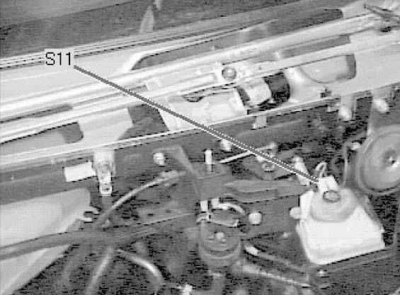
The brake fluid level switch is built into the brake master cylinder reservoir cap
2. The brake fluid level is checked visually and should be between the "MAX" and "MIN" marks on the translucent walls of the master cylinder reservoir. If necessary, make the appropriate adjustment by adding the required amount of fresh fluid through the reservoir neck - before unscrewing the cap, wipe the reservoir from the outside to prevent dirt from getting into the hydraulic tract.
Note: Do not overfill the tank with liquid.
3. With the cap removed, check the fluid and the walls of the brake master cylinder reservoir for signs of contamination. If rust particles, dirt or water droplets are detected, the fluid should be replaced and the brake system should be bled.
4. After completing the adjustment/replacement, check that the tank cap is seated evenly and tightened securely.
5. A gradual decrease in the fluid level in the brake master cylinder reservoir is due to wear of the brake pads. There is no need to add fluid if its level does not fall below the "MIN" mark, - if necessary, check the condition of the friction linings of the pads, - replacing the pads will automatically equalize the level.
6. If the need to adjust the brake fluid level arises regularly, you should carefully check the hydraulic tract of the brake system for signs of developing leaks - carefully examine the condition of the calipers/wheel cylinders, the brake master cylinder, brake pipes, hoses and their nipple connections (see Sections Checking the brake system and Checking the condition and replacing engine compartment hoses, localizing leaks).
[Material created based on the website www.MercedesMan.ru]
7. When the fluid level in the brake master cylinder reservoir drops below the "MIN" mark, the brake system should be "bled" (see Chapter Brake and auxiliary systems).
Power steering system fluid (GUR)
Caution! If the fluid level in the reservoir has dropped below the zone corresponding to the current temperature range, the power steering must be checked in a specialized workshop, since there is a loss of fluid - a simple adjustment of the level in this case is not enough!
The power steering fluid level is checked at a temperature of about 20°C. The fluid level should be between the "MIN" and "MAX" marks on the walls of the power steering system reservoir. The full volume of the reservoir is 1.2 l.
Windscreen/Headlight Washer Fluid
Warning! Windscreen washer concentrate is highly flammable! When handling windscreen washer concentrate, the use of fire, open flame and smoking are prohibited.
1. The windshield washer fluid reservoir is located in the left front corner of the engine compartment, behind the left headlight, and is equipped with a filler neck with a bayonet-type cap. The capacity of the reservoir is approximately 7.6 liters (see Fig. Specifications).
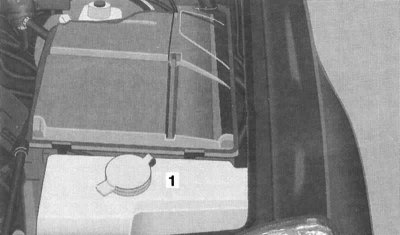
Location of windshield/headlamp washer fluid reservoir in engine compartment (for all models)
2. The driver is warned of a drop in the fluid level by the activation of a control lamp built into the instrument cluster - the control lamp switch sensor is mounted in the upper part of the washer fluid reservoir.
3. In areas with a moderate climate, the system can be filled with ordinary water, but it is recommended to add glass cleaning products to the water (summer concentrate MV has the S marking). The reservoir should be no more than two-thirds full to allow for expansion of the water when it freezes. In cold climates, a special windshield washer concentrate should be used (w marking), which lowers the freezing point of the liquid, which can be purchased at any car accessory store. It is usually sold in concentrated or ready-made form. If you purchased concentrated antifreeze, mix it with water according to the manufacturer's instructions on the package.
Warning! Do not use antifreeze in the cooling system - it will damage the painted surfaces of the car!