



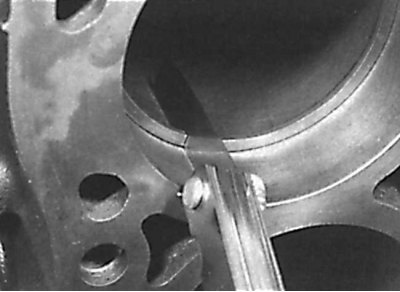
Measuring the gap in the piston ring lock
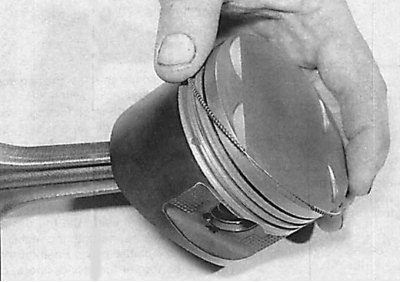
Installing an oil scraper ring expander on the piston
The arrangement of piston rings on the piston
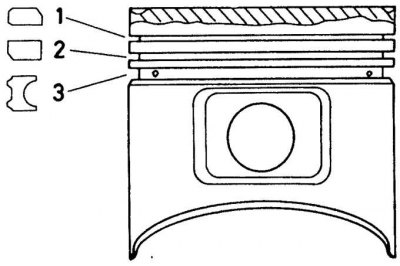
1 – upper sealing ring;
2 – middle sealing ring;
3 – oil scraper ring
1. Before installing new piston rings, check the ring end gap.
2. Position the pistons and piston rings according to the cylinders they will operate in.
3. Install the top sealing ring into the first cylinder and use the bottom of the piston to push it into the cylinder to the base of the cylinder.
Attention! The upper and middle sealing rings are different, the outer surface of the middle ring is conical.
4. Using a feeler gauge, measure the gap in the ring lock.
5. Repeat the measurement process with the ring installed on top of the cylinder and compare the measurement results with the technical data.
6. If the gap is too small, it must be increased by grinding the ends of the ring.
7. If the ring gap is too large, check that the rings are properly matched to your engine.
8. Repeat the checking operation for each ring in the first cylinder and then for the rings in the remaining cylinders.
9. Install the piston rings on the pistons in the same manner as when removing them.
10. When installing the oil scraper ring, first install the expander, then the ring, moving the ring lock 180° from the expander protrusion. Make sure that the TOP marking on the rings is facing upwards (see fig. Location of piston rings on the piston). Position the upper and middle compression ring locks at a 120° offset from the oil scraper ring lock. Make sure that the piston ring locks do not align with the piston pin axis.