
Cars BMW Cars Volkswagen Cars Chevrolet Cars Land Rover Cars Lada Cars Honda Cars Peugeot
English Русский
Български
Беларускі
Український
Српски
Hrvatski
Română
Polski
Slovenský
Magyar
Bookmark News and articles Sitemap Feedback Site search
MercedesMan.ru


A-Class C-Class E-Class G-Class M-Class S-Class Others
190 (W201) (1982-1993) W202 (1993-2000) W203 (2000-2007)
  • Main
  • C-Class
  • W201 (1982-1993)
  • Power unit
  • Engine overhaul
  • Piston rings — installation

Piston rings — installation (Mercedes-Benz C-Class W201)

0
1. Before inserting the rings into the piston grooves, check the gaps in the track locks by inserting new rings into the cylinders.

2. Lay out the pistons and connecting rods and new track sets so that the groups of parts are together during and after checking the joint clearances. Lay the cylinder block on its side to allow access to the cylinders from both above and below.

3. Take the top compression ring of piston #1 and insert it into the first cylinder from above. Push it down with the piston crown - this will ensure that the ring is perpendicular to the cylinder walls. Position the ring at the bottom of the cylinder, approximately where it would be when the piston is at bottom dead center. Remember that the top and second compression rings are different. The second compression ring is easily distinguished by the presence of a step on the bottom surface.

4. Measure the thermal gap in the ring lock with a feeler gauge.

5. Repeat the measurement in the upper position of the ring (see fig. 18.5). Compare the measurement results with the values in the "Technical data" section. If the data is not provided, consult a specialist.
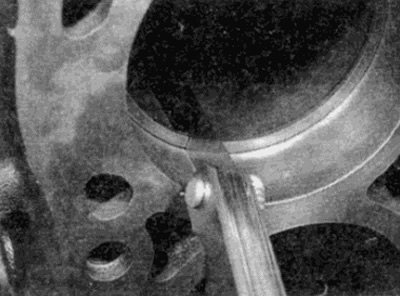
Fig. 18.5. Determining the gap in the ring lock

Fig. 18.5. Determining the gap in the ring lock


6. When installing new rings, avoid too small a gap in the lock, otherwise, if the ends of the ring touch during operation, there is a risk of damaging the cylinder mirror. Ideally, you should select a ring so that the gap in its lock is equal to the nominal one, but in extreme cases this problem can be solved by filing the ends of the ring with a thin file. Fix the file in a vice, spread the ring over the file and slowly move the ring to remove material from its ends. Be careful - the rings are fragile and have sharp edges.


7. It is also undesirable for the gap in the lock to be too large. If the gap is large, check whether the ring matches the size of the cylinders of your engine.

8. Continue the inspection procedure for all rings of the first cylinder, then the next, etc. Do not forget to mark the pistons and rings matched to the cylinders.

9. After the clearances in the locks have been checked and, if necessary, adjusted, the rings can be installed in the pistons.

10. Install the rings using the same technique as when removing them. First install the lower oil scraper ring. When installing the ring, insert the expander, then install the oil scraper ring so that the gap is at an angle of 180° to the gap on the expander. Find the marking on one side of the second compression ring (either painted or stamped "TOP") and install the ring with this side up and the bevel down (see Fig. 18.10, a, b). After installing all the rings, rotate their locks at an angle of 120° to each other. Make sure that none of the ring locks are located above the piston pin hole.

Note: Always follow the instructions that come with your new rings - different manufacturers may have different procedures. Don't be alarmed by the first and second compression rings - they have different cross-sections.
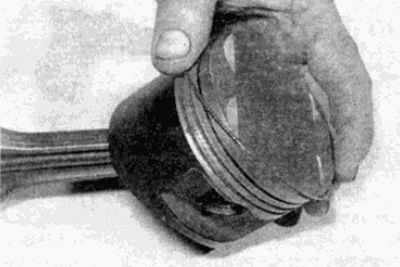

Fig. 18.10, a. Installing the oil scraper ring expander
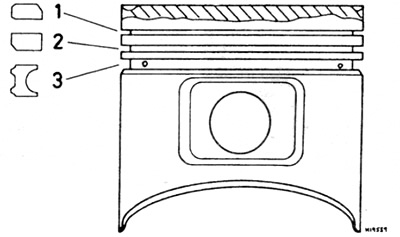
Fig. 18.10, a. Installing the oil scraper ring expander


Fig. 18.10, b. Typical arrangement of rings.

Fig. 18.10, b. Typical arrangement of rings.
1 Oil scraper ring
2 Second compression ring
3 Upper compression ring
This article is available at: russian, bulgarian, belarusian, ukrainian, serbian, croatian, romanian, polish, slovak, hungarian
The article has been verified: Lukyanov Nikita Ilyich
Share with friends:
◀ Previous
C-Class 190 (W201) / Engine overhaul
Next ▶

Engine Repair — Assembly Procedure
Main, connecting rod bearings and bearing cap mounting bolts — inspection and defect detection
Crankshaft — Checking the condition
Pistons and connecting rods — condition check
Cylinder Block/Crankcase — Cleaning and Inspection
Crankshaft — installation and checking of clearance in main bearings
Pistons and connecting rods — installation and checking clearance in the lower head bearings of the connecting rods
More similar articles for repairing other models

☛ Inspection and restoration of pistons and piston rings Mercedes W123 (1976-1985)
☛ Replacing piston rings Mercedes W140 (1991-1998)
☛ Piston rings Mercedes Vito 1 (1996-2003)
Link in different formats to this article
Comments and feedback from visitors
No comments yet


How much will 33 + 46 ?


W203 (2000-2007) 
  • General information
  • Introduction to guide
  • User manual
  • Maintenance
  • Power unit
  • Gasoline engines
  • Diesel engines
  • Cooling system
  • Ventilation and heating
  • Supply system
  • Injection system (gasoline)
  • Injection system (diesel)
  • Exhaust system
  • Ignition and control system
  • Charge and launch systems
  • Transmission
  • Mechanical gearbox
  • Automatic gearbox
  • Clutch and drive shafts
  • Differential
  • Chassis
  • Brake system
  • Car suspension
  • Steering
  • Body
  • Exterior (external elements)
  • Interior (internal elements)
  • Electrical equipment
  • Equipment and devices
  • Lighting system
  • Electrical diagrams (2000)
  • Electrical diagrams (since 2001)
W202 (1993-2000) 
  • General information
  • User manual
  • Driving a car
  • Car care
  • Maintenance
  • Power unit
  • Gasoline engines
  • Diesel engines
  • Lubrication system
  • Cooling system
  • Heating and ventilation
  • Ignition system
  • Fuel system
  • Injection system (gasoline)
  • Injection system (diesel)
  • Exhaust system
  • Transmission
  • Clutch
  • Car gearbox
  • Chassis
  • Suspension, wheels and tires
  • Steering
  • Brake system
  • Body
  • Exterior (external elements)
  • Interior (internal elements)
  • Doors and windows
  • Electrical equipment
  • Equipment and devices
  • Power devices
  • Lighting system
  • Electrical circuits
190 (W201) (1982-1993) 
  • General information
  • Introduction to the guide
  • Operation and care
  • Maintenance (gasoline)
  • Maintenance (diesel)
  • Troubleshooting
  • Power unit
  • Petrol engine I4
  • Petrol engine V6
  • Diesel engines
  • Engine overhaul
  • Cooling and heating
  • Power system (carburetor)
  • Injection system (gasoline)
  • Injection system (diesel)
  • Exhaust system
  • Charge and start system
  • Ignition system (I4)
  • Ignition system (V6)
  • Diesel heating system
  • Transmission
  • Clutch
  • Mechanical gearbox
  • Automatic gearbox
  • Cardan shaft and axle shafts
  • Chassis
  • Brake system
  • Car suspension
  • Steering
  • Body
  • Exterior (external elements)
  • Interior (internal elements)
  • Doors, locks and windows
  • Electrical equipment
  • Equipment and devices
  • Electrical circuits
 
MercedesMan.ru © 2017–2026 · Mobile version · Read about Mercedes · Sitemap: EN BG BY UA RS HR RO PL SK HU · Feedback · Site search · Bookmark A-Class (W168) · C-Class (W201) · C-Class (W202) · C-Class (W203) · E-Class (W123) · E-Class (W124) · E-Class (W210) · G-Class (W463) · M-Class (W163) · S-Class (W116, petrol) · S-Class (W126, petrol) · S-Class (W140) · S-Class (W220) · Sprinter · Vito 1 · Vito 2 · Vario 814D ·
 
We only use cookies without which some of the site's features may not be available.