



Contents: Selection of bearing shells ↡ Checking the working clearance in…↡ Final installation of connecting…↡
Selection of bearing shells
Four cylinder petrol engines
1. To determine the thickness of the required bearing liners, the diameter of the shaft journals and the operating clearance in the bearings must be determined. The required thickness can be calculated as shown in the example in paragraph 19.
2. Mercedes-Benz dealers or engine repair specialists will be able to supply bearings of the required thickness. Refer to the following table to see which bearings are available.

Six cylinder petrol engines
3. The thickness of the required liners can be determined in the same way as described earlier in paragraph 19 for 4-cylinder petrol engines. At the time of writing the manual, information on manufactured bearings for 6-cylinder petrol engines was not available. You can consult with Mercedes-Benz dealers. You can also buy bearings from them.
Diesel engines
4. The thickness of the required liners can be determined in the same way as described earlier in paragraph 19 for 4-cylinder petrol engines.
5. Your dealer or engine repair specialist can supply you with the required bearings. Refer to point 2 to determine which bearings are available.
Checking the working clearance in connecting rod bearings
6. Clean the back of the bearing shells and the surfaces of the small end of the connecting rod and cap.
7. Install the bearings in their places, making sure that the projections on each bearing fit into the cutouts on the connecting rod and cap. Do not touch the working surfaces of the bearings with your fingers. If the "original" connecting rod bearings are installed for inspection, make sure that they are installed in their original positions. There are two ways to check the clearances:,
8. To determine the working clearance using the first method, install the connecting rod cap together with the liners on the connecting rod (check that they are aligned correctly) and measure the inner diameter of the bearing formed by the connecting rod bearing shells using an internal micrometer or calipers. The difference between the diameter of each pair of shells and the diameter of the corresponding connecting rod journal of the crankshaft gives the value of the bearing operating clearance.
9. The second and more accurate method is to use Plastigauge (see paragraph 19).
10. Make sure the connecting rod bearings are installed correctly. Place a piece of Plastigauge thread on each cleaned crankshaft journal.
11. Install the connecting rods on the crankshaft and align the connecting rod caps with them, using the marks made when removing them.
12. Tighten the connecting rod cap nuts and tighten them to the specified torque. Be careful not to dislodge the Plastigauge thread or turn the crankshaft while tightening the caps.
13. Disassemble the units without turning the connecting rods. Use the supplied template to determine the operating clearances in the bearings.
14. If the clearances are significantly different from what you would expect, this means that the bearing size is incorrect (or the bearings are badly worn if the original bearings are used). Before changing the bearing size, make sure that no oil, dust, etc. has gotten between the bearings. If the Plastigauge strip is not the same width, this may indicate that the crankpin surface is tapered.
15. When finished, scrape off all traces of Plastigauge with your fingernail or a wooden or plastic scraper.
Final installation of connecting rods with pistons
Note: It is strongly recommended that new connecting rod bearing cap bolts be used for final connecting rod assembly. A piston ring compressor is required for this operation.
16. The following steps assume that the main bearing caps are installed (see paragraph 19).
17. Make sure that the connecting rod bearing shells are installed correctly as described earlier. When installing new shells, wash off all traces of protective grease with kerosene. Wipe the shells and connecting rods dry with a lint-free cloth.
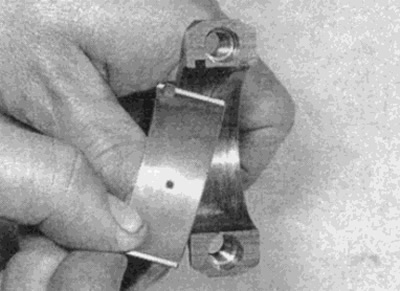
Fig. 20.17. Installing the liner on the connecting rod
18. Lubricate the cylinder bore, pistons and piston rings, then install each piston with connecting rod in the proper order.
19. Start with the first assembly. Make sure the piston rings are positioned as described in paragraph 18. After that, squeeze them with a ring setting tool
20. Insert the piston with the connecting rod into cylinder #4. Turn the piston so that the arrow on its bottom is directed towards the valve timing drive. Using a wooden spacer or a hammer handle, carefully push the piston into the cylinder (see fig. 20.20).
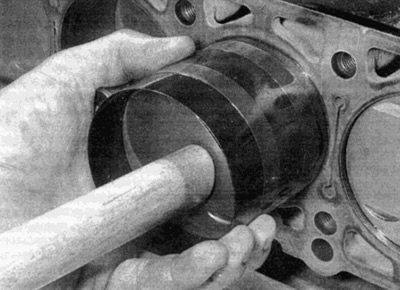
Fig. 20.20. Push the piston into the cylinder using the hammer handle
21. Make sure the connecting rod bearings are in place. Generously lubricate the crankpin and the surfaces of both bearings. Carefully slide the connecting rod down the cylinder to the crank. Install the connecting rod cap, tighten the mounting nuts by hand. Remember that the surfaces with marks must match each other (this means that the mounting protrusions on the liners are adjacent to each other).
22. Lightly lubricate the bolt threads, then tighten the connecting rod bearing cap bolts by hand (see paragraph 16 - It is recommended to use new bolts on all engines).
23. Gradually tighten the bolts to the required torque. Where provided, observe two tightening stages (see fig. 20.23). When tightening bolts to a certain angle, it is recommended to use an angle measuring device to improve the tightening accuracy. If you do not have an angle measuring device, apply alignment marks on the bolt and cover with white paint; they will allow you to determine the angle to which the bolts were turned.
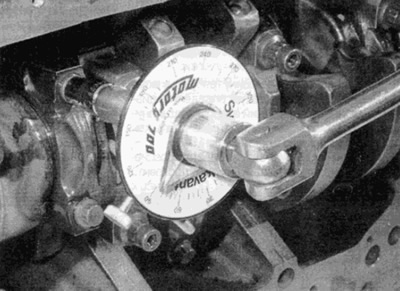
Fig. 20.23. Turning the connecting rod bearing cap bolt
24. When the connecting rod cap nuts are properly tightened, rotate the crankshaft. Make sure it rotates freely; if new parts are installed, some force may be required, but there should be no signs of binding or seizing.
25. Install the remaining connecting rods with pistons in the same way.
26. Perform the following steps according to the engine type:
- a) On 4-cylinder petrol engines, install the oil pan and cylinder head as described in part A of this Chapter.
- b) On B-cylinder petrol engines, install the oil pump, sump and cylinder head as described in part B of this Chapter.
- c) On diesel engines, install an oil pump and oil deflector plate (where provided), the sump and the cylinder head as described in parts of this Chapter.