
Cars BMW Cars Volkswagen Cars Chevrolet Cars Land Rover Cars Lada Cars Honda Cars Peugeot
English Русский
Български
Беларускі
Український
Српски
Hrvatski
Română
Polski
Slovenský
Magyar
Bookmark News and articles Sitemap Feedback Site search
MercedesMan.ru


A-Class C-Class E-Class G-Class M-Class S-Class Others
W123 (1976-1985) W124 (1984-1995) W210 (1996-2002)
  • Main
  • E-Class
  • W210 (1996-2002)
  • General information
  • Vehicle description
  • Diesel 5-cylinder engines: E250D and E290TD

Diesel 5-cylinder engines: E250D and E290TD (Mercedes-Benz E-Class W210)

0
Diesel 5-cylinder engines E 250 D (on the domestic market OM 605) with a volume of 2.5 liters, despite the different number of cylinders, technically correspond to the well-known 4-cylinder engine E 220 D (OM 604). The crank group is mounted on 6 bearings in the 5-cylinder engine (similar to the 5 bearings in a 4-cylinder engine). Instead of a distribution fuel injection pump (high pressure fuel pump) an in-line fuel injection pump with electronic control is installed. In addition, models with a manual gearbox have a dual-mass flywheel to improve smoothness.

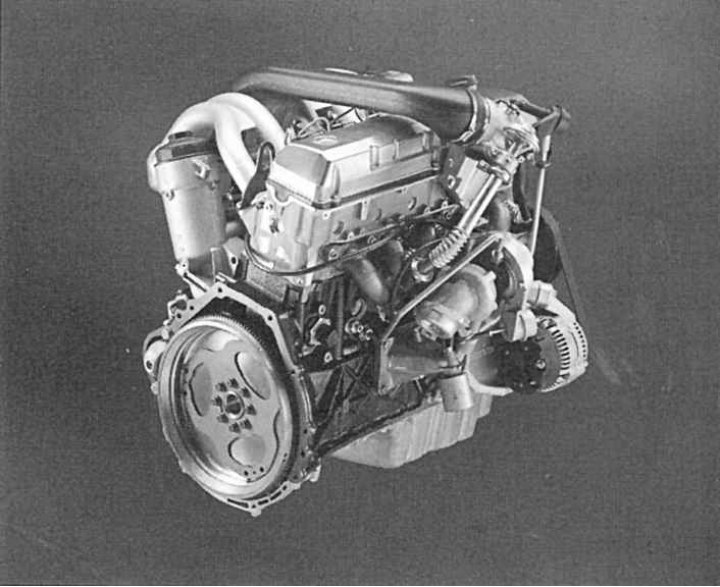
Fig. 1.11. 2.9L turbodiesel (view from the flywheel side). The flywheel, exhaust turbocharger and…

Fig. 1.11. 2.9L turbodiesel (view from the flywheel side). The flywheel, exhaust turbocharger and exhaust system components are visible here
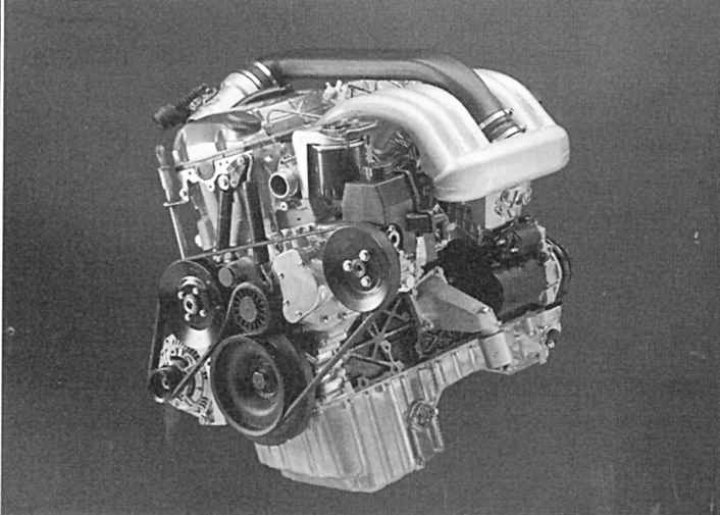

Fig. 1.12. 2.9L turbodiesel (view from the suction side)

Fig. 1.12. 2.9L turbodiesel (view from the suction side)


Another 5-cylinder engine model is the E 290 TD (on the domestic market OM 602) with a volume of 2.9 l (fig. 1.11 and 1.12) is the first direct injection diesel engine for a Mercedes-Benz passenger car.

Diesel has 2 valves per combustion chamber. The injector is screwed directly into it. In a conventional pre-chamber system, the fuel is, so to speak, "stored" in the pre-chamber before spontaneously igniting directly in the combustion chamber. The direct injection system differs from the pre-chamber system by a significant reduction in fuel consumption. This is achieved by more efficient combustion of the fuel, since it enters the combustion chamber under high pressure (up to 31 MPa), where it immediately ignites under the action of hot, high-pressure compressed air.

In the E 290 TD (OM 602) engine, the air is pre-compressed by the exhaust gas turbocharger (similar to KKK or Garrett), accelerates and is fed into the swirl chamber of the cylinder head.
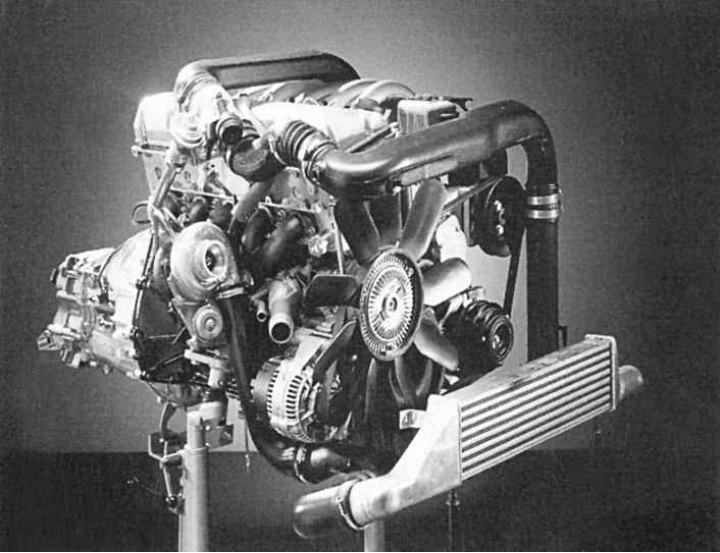
Fig. 1.13. 2.9L turbodiesel with direct injection, exhaust gas turbocharger and charge air cooler

Fig. 1.13. 2.9L turbodiesel with direct injection, exhaust gas turbocharger and charge air cooler


Additionally, a supercharged air radiator (Fig. 1.13) is used, located in front of the cooling system radiator, which brings the temperature of the intake air to 80°C, thereby increasing the density of the air supplied to the combustion chamber.


The compact turbocharger is adjusted in such a way that it reaches a maximum absolute pressure of 195 kPa at an engine crankshaft speed of 1900 min⁻¹. In previous models of turbo engines, when the car starts moving or when the gas pedal is pressed sharply, a "turbo dip" occurs - a lack of incoming air. In the E 290 TD (OM 602) engine, the compressor is adjusted so effectively that this deficiency is practically not felt.

The start and quantity of injection are controlled by the EDS system (Elektronic Diesel Control), which has about 50 preset parameters. Numerous engine condition sensors monitor changes in parameters during movement and provide readings in the form of electrical signals to the EDC, which in turn issues a control command for the amount and order of injection.

EDC controls both engine start and idle speed and the amount of exhaust gases diverted for afterburning. Control is based on the just enough principle – EDC supplies the combustion chambers with as much fuel as is necessary for optimal engine operation.
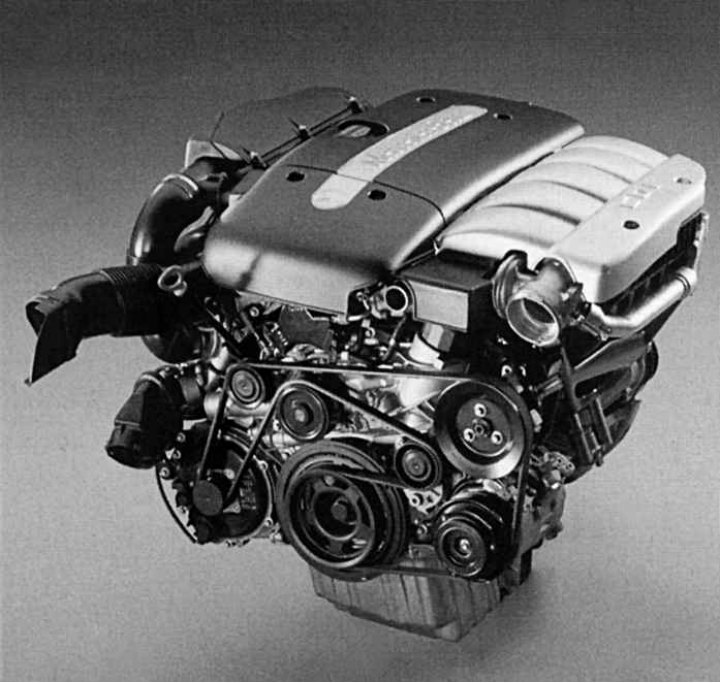
Fig. 1.14. Diesel 5-cylinder engine E 270 CDI

Fig. 1.14. Diesel 5-cylinder engine E 270 CDI


In June 1999, the new in-line 5-cylinder diesel engine E 270 CDI replaced the E 290 TD model. The E 270 CDI engine (Fig. 1.14) was a combination of optimum characteristics.

The output of the diesel engine in the E 270 CDI has increased by 31.5% compared to the previous model and now reaches 125 kW/170 hp at an engine speed of 4,200 min - 1, and the torque has increased to 370 Nm in the speed range of 1,600–2,400 min - 1. The vehicle's top speed is 225 km/h, and the average fuel consumption (NEFZ) is 6.9 l per 100 km.
This article is available at: russian, bulgarian, belarusian, ukrainian, serbian, croatian, romanian, polish, slovak, hungarian
The article has been verified: Polyakov Zakhar Grigorievich
Share with friends:
◀ Previous
E-Class W210 / Vehicle description
Next ▶

Common Rail direct fuel injection
Diesel 4-cylinder engines: E220D, E200CDI and E220CDI
Engines — General Information
Dimensions of Mercedes E-class cars
Luggage compartment capacity
Diesel 6-cylinder engine E300D
Diesel 6-cylinder engine E320CDI
Petrol 4-cylinder in-line engines E200, E230
Petrol 6-cylinder in-line and V-shaped engines E240, E280, E320
Petrol 8-cylinder V-engines E420, E430, E50AMG, E55AMG
More similar articles for repairing other models

☛ General information about engines Mercedes W168 (1997-2004)
☛ Four cylinder petrol engines — removal and installation Mercedes 190 (W201) (1982-1993)
☛ General information about the fuel system of diesel engines Mercedes W463 (1999-2019)
☛ Checking the balance shaft base position (112 series engines only) Mercedes W163 (1997-2005)
☛ Functional diagrams of fuel injection systems (diesel engines of the… Mercedes W140 (1991-1998)
☛ Diesel fuel injection system for engines 904.908/914/923/936 on… Mercedes Vario 814D (1996-2003, diesel)
Link in different formats to this article
Comments and feedback from visitors
No comments yet


How much will 47 + 18 ?


W210 (1996-2002) 
  • General information
  • Vehicle description
  • Working conditions and tools
  • Car care
  • Diesel engines
  • Engine repair
  • Lubrication system
  • Cooling system
  • Injection system
  • Supply system
  • Exhaust system
  • Gasoline engines
  • Engine repair
  • Lubrication system
  • Cooling system
  • Control system
  • Power and exhaust system
  • Transmission
  • Clutch
  • Mechanical gearbox
  • Automatic gearbox
  • Drive shafts
  • Chassis
  • Car suspension
  • Steering
  • Tires and wheels
  • Brake system
  • Body
  • Exterior (external elements)
  • Interior (internal elements)
  • Doors and windows
  • Heating and ventilation
  • Electrical equipment
  • Equipment and devices
  • Power devices
  • Lighting and signaling
  • Electrical circuits
W124 (1984-1995) 
  • General information
  • Governing bodies
  • Driving and operation
  • Weekly care
  • Maintenance (gasoline)
  • Maintenance (diesel)
  • Troubleshooting
  • Power unit
  • I4 petrol engine
  • V6 petrol engine (SOHC)
  • V6 petrol engine (DOHC)
  • Diesel engines
  • Engine overhaul
  • Cooling system
  • Heating and ventilation
  • Fuel system (carburetor)
  • Injection system «Bosch CIS-E»
  • Injection system «Bosch HFM»
  • Diesel fuel system
  • Supply system
  • Starting and charging system
  • Ignition system (I4)
  • Ignition system (V6)
  • Preheating
  • Transmission
  • Clutch
  • Mechanical gearbox
  • Automatic gearbox
  • Drive shafts
  • Chassis
  • Brake system
  • Car suspension
  • Steering
  • Body
  • Exterior (external elements)
  • Interior (internal elements)
  • Doors, locks and windows
  • Electrical equipment
  • Equipment and devices
  • Switches
  • Headlights and lighting
  • Electrical circuits
W123 (1976-1985) 
  • General information
  • Introduction to the guide
  • Power unit
  • Engine device
  • Repair M102 engines
  • Repair M110 and M123 engines
  • Cooling and lubrication (M102)
  • Cooling (M110 and M123)
  • Ignition system
  • Power system «Stromberg»
  • Power system «Solex 4A1»
  • Fuel injection «K-Jetronic»
  • Fuel injection «L-Jetronic»
  • Transmission
  • Clutch
  • Mechanical gearbox
  • Automatic gearbox
  • Cardan and rear axle
  • Chassis
  • Front suspension
  • Rear suspension
  • Steering
  • Brake system
  • Body
  • Exterior (external elements)
  • Interior (internal elements)
  • Doors, locks and windows
  • Electrical equipment
  • Equipment and devices
  • Power devices
  • Electrical circuits
 
MercedesMan.ru © 2017–2026 · Mobile version · Read about Mercedes · Sitemap: EN BG BY UA RS HR RO PL SK HU · Feedback · Site search · Bookmark A-Class (W168) · C-Class (W201) · C-Class (W202) · C-Class (W203) · E-Class (W123) · E-Class (W124) · E-Class (W210) · G-Class (W463) · M-Class (W163) · S-Class (W116, petrol) · S-Class (W126, petrol) · S-Class (W140) · S-Class (W220) · Sprinter · Vito 1 · Vito 2 · Vario 814D ·
 
We only use cookies without which some of the site's features may not be available.