



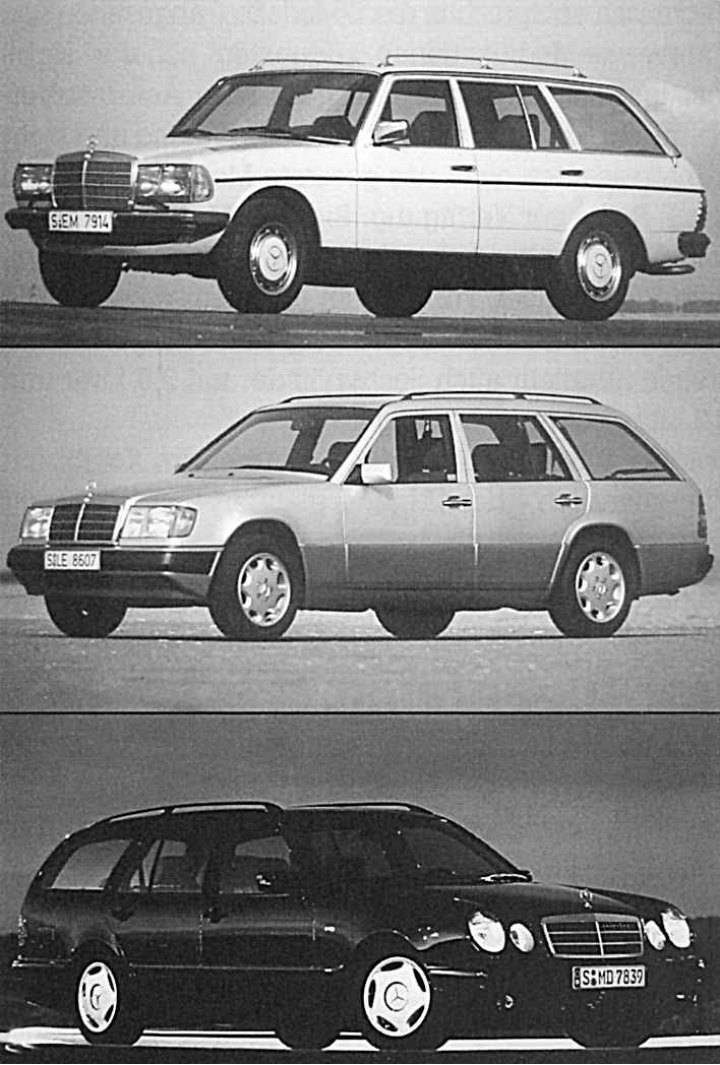
Fig. 1.4. Mercedes cars, T-model with a station wagon body: a – based on the W-123 series; b – based on the W-124 series; in - modern version
In 1977, based on the W-123 series, Mercedes itself produced a station wagon at its plant in Bremen (fig. 1.4, a), which became a symbol of success. It was now not only a work car for specialists, but also a "public" vehicle. Mercedes-Benz made a significant contribution to changing the image with the elegant T-model.
And it is not surprising that the Germans immediately after the presentation of the station wagon added a corresponding T-model to their E-class. Presented in 1996 in Geneva, the modern version of the T-model (fig. 1.4, in) began to be delivered already in May of the same year. And it hit the nail on the head! Compared to the first T-model (based on the W-123 series), and also unlike its predecessor (based on the W-124 series) (fig. 1.4, b) the newcomer impresses with its body volume, which puts the E-class station wagon at the forefront of its class in terms of useful space - almost 2 m³ (according to the VDA assessment method). The length of the load with the passenger seat folded out is more than 3 m. Here you can load 200 kg·more than in a limousine.
In its design and characteristics, the Mercedes T-model is similar to the E-class saloon. However, its chassis has been modified to cope with the increased payload and changed axle load conditions. In addition, T-model enthusiasts are not offered the full range of E-series engines. Up to and including March 1997, T-model owners had to make do with both 4-cylinder engines, the 5-cylinder turbodiesel engine and the 4.2-litre V8. Now, with the introduction of the V6, 2.8-litre and 3.2-litre V6 engines are also available.
V-engines installed in station wagons can also be installed in 4-wheel drive (4Matic) cars. Thus, since 1997, the T-model modifications include eight cars with an E-class station wagon body.
(Material created based on the website www.mercedesman.ru)