



Contents: Removal ↡ Installation ↡
Removal
Note: This operation will require a hoist and winch. A new gasket will be required for installation and new exhaust clamp nuts may be required.
1. Disconnect the negative battery terminal.
2. Remove the air cleaner as described in Chapter 4.
3. Unclip the radiator fan shroud and position it on top of the fan blades as described in Chapter 3.
4. Remove the engine shield from below as described in Chapter 11.
5. Remove the front stabilizer bar as described in Chapter 10. Please note that the stabilizer can be left under the car, providing the ability to unscrew the support mounting bolts.
6. Drain the engine oil as described in Chapter 1A.
7. Where provided, disconnect the wires from the oil level sensor mounted on the pan.
8. Disconnect the wires from the oil pressure warning light switch.
9. On automatic transmission models, remove the mounting bolts and disconnect the transmission fluid heat exchanger lines from the pan.
10. Similarly, on models with a level control system, unscrew the mounting bolt and disconnect the hydraulic tube from the pan.
11. Disconnect the front sections of the exhaust system from the exhaust manifold, as described in chapter 4.
12. Where provided, working from underneath the vehicle, loosen the clamp nuts and release the exhaust system components from the bracket on the gearbox.
13. Insert a metal or thick cardboard sheet between the rear of the engine and the engine compartment bulkhead to protect the bulkhead and brake pipes during the following operations (see fig. 11.13).
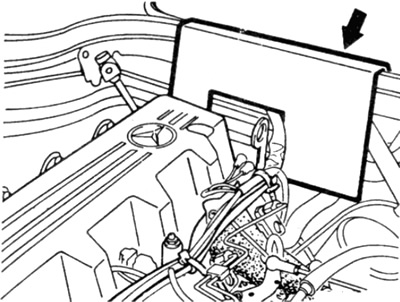
Fig.11.13. Insert the sheet (shown by arrow) from the back of the engine to protect the bulkhead
14. Disconnect the steering trailing rod on the left side and the steering damper on the right side, as described in Chapter 10.
15. Connect the hoist and winch to the engine rigging brackets and lift the hoist to support the engine.
16. Working in turn on each side of the vehicle, remove the bolts of the lower right and left engine mounts.
17. Carefully lift the engine, enough to unscrew the oil pan mounting bolts.
18. Working gradually in a diagonal sequence, unscrew the pan mounting bolts (see fig. 11.18). Remember the location of the bolts as they vary in length.
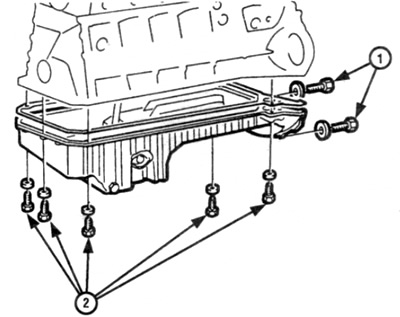
Fig. 11.18. Unscrew the pan mounting bolts
7 Gearbox sump mounting bolts
2 Bolts for fastening the pallet to the cylinder block
19. Remove the pan downwards and remove the gasket.
Installation
20. Begin installation by removing the remaining oil pan and cylinder block gasket, then wipe the surfaces dry.
21. Position the new gasket on the pan, then lift the pan into place and insert the bolts into place.
22. Tighten the bolts gradually to the required force.
23. Carefully lower the engine into place, then install and tighten the lower mount bolts to the specified torque.
24. Disconnect the winch from the rigging brackets and remove the hoist.
25. Connect the steering damper and the steering rod as described in Chapter 10.
26. Where required, install the exhaust system mounting clamps to the gearbox bracket and secure with new nuts.
27. Connect the receiving sections to the manifold as described in Chapter 4.
28. Where provided, tighten the bolt(s) securing the transmission fluid heat exchanger pipes and/or the hydraulic suspension control pipes to the pan.
29. Connect the wire of the oil pressure warning light switch and, where provided, the wires of the oil level sensor.
30. Install the front anti-roll bar as described in Chapter 10.
31. Make sure the drain plug is installed and tightened. Then install the engine shield.
32. Install the radiator fan shroud (Chapter 3).
33. Install the air cleaner.
34. Lower the vehicle to the ground and fill the engine with the required oil (see "Weekly check" and Chapter 1A).
35. Connect the negative battery terminal.