



Basic Provisions
1. The timing gear is an integral part of the camshaft bearing caps. The cams are mounted on separate short shafts that are seated in the camshaft bearing caps. Each cap has one exhaust cam and one intake cam.
2. Hydraulic tappets are mounted on the cams and are supplied with oil through holes in the cams.
Removal
Warning: Many modifications of the camshaft, cam parts and oil pipes have been introduced during engine production. Certain combinations of new and old parts do not mix and may cause engine failure if incompatible parts are installed together. For this reason, when replacing parts, it is recommended to consult with your Mercedes-Benz dealer to ensure that the correct parts are installed.
3. Remove the air cleaner as described in Chapter 4.
4. Remove the camshaft sprocket as described in paragraph 6.
5. Loosen the mounting bolts and remove the oil spray tube from the top of the camshaft bearing caps. Note that the tube, depending on the model, may be secured with two or three bolts. Where it is installed, remove the mounting plate from the central mounting bolt.
6. Check for markings on the cam followers and camshaft bearing caps. The caps are usually marked 1 through 6, counting from the end of the cylinder head with the camshaft sprocket on the exhaust manifold side. The corresponding mark is cast on the cylinder head under the camshaft. If there are no marks, make them using a punch.
7. Gradually loosen the camshaft cover bolts (each cover is secured with four bolts) in diagonal sequence (see fig. 9.7).
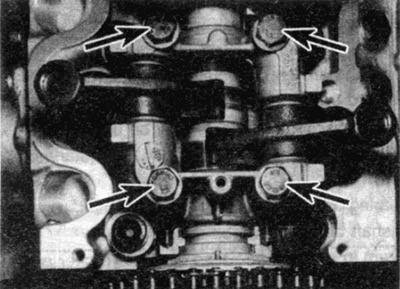
Fig. 9.7. Bolts for fastening the camshaft bearing cover No.1
8. Remove the bearing cap/cam assemblies. Note that the caps are pinned in place - if they are stuck, tap the caps lightly with a mallet.
Tip: Store the contact pads in a divided box with eight compartments labeled 1 through 6 for the inlet valves and 1 through 6 for the outlet valves.
9. Remove the tappet contact pads from the valve stems, keeping them in strict order. Do not swap parts.
10. Carefully remove the shaft from the cylinder head. Where it is installed, remove the thrust washers from the front bearing against the axial free play of the shaft.
Disassembly, inspection and assembly
Distribution bike
11. Check the bearings and camshaft lobes for signs of wear, scoring, deep scratches or pitting. If any are found, the shaft must be replaced. Any damage of this nature indicates a blocked lubrication channel either in the cylinder head, or in the cam assembly, or in the oil splash tube. To determine the cause, you need to carefully inspect the parts. When replacing the camshaft, the cams are also replaced at the same time.
Cam drive gear
12. With the camshaft bearing caps removed, the cams can be removed from the caps by pulling out the short cam shafts. Before removing the cams, check for identification marks and, if any are missing, apply them (designate cams 1 through 6 for intake valves and 1 through 6 for exhaust valves). Do not swap parts. Pay attention to how the cams are installed on the shafts.
13. Screw the M8 bolt into the cam shaft, then use the bolt to pull the cam shaft out by hand. Once the shaft is removed, the cam can be removed. The parts can be stored in a compartmentalized box along with the tappet contact pads (see fig. 9.13).
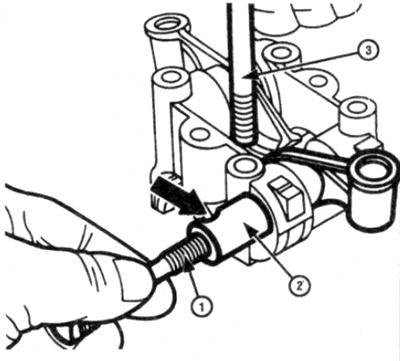
Fig. 9.13. Use the M8 bolt (1) to pull out the cam shaft (2)
14. Check the wear of the tappet contact pads. Check how the cams are installed on their shafts. If visible wear or damage is detected, it is recommended to replace the parts as a set.
15. Clean the parts thoroughly before installation.
16. Lubricate the mating surfaces of the cams and shaft, then, observing the notes below, install the shaft and cam on the appropriate bearing cover.
- a) If working parts are being installed, make sure that they are installed in their original locations.
- b) Ensure that each tappet is installed correctly on the shaft as noted prior to removal.
- c) Make sure that the groove for the camshaft bearing cap mounting bolt on each shaft is aligned with the bolt hole in the cap.
- d) Use the MB bolt to install each cam shaft into the bearing cap.
17. To remove the tappet from the cam, insert a suitable drift into the hole in the top of the cam and push the tappet out of the cam (see fig. 9.17).
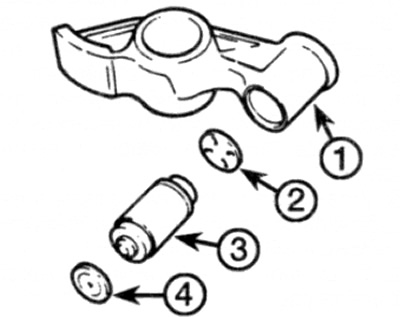
Fig. 9.17. Valve tappet/cam assembly
1 Cam
2 Adjusting washer
3 Valve tappet
4 Contact pad
18. Remove the adjusting washer from the tappet housing on the cam.
19. Keep the valve lifters and washers in proper order so that they can be installed in their proper places.
20. Check the valve lifters and washers for wear. If any wear or damage is found, replace them.
21. The operation of the valve tappets can be checked as follows: (see fig. 9.21).
- a) Hold the valve lifter vertically.
- b) Fill the feed chamber at the top of the tappet with clean engine oil.
- c) Insert a piece of thin wire (diameter 1.5 mm) through the hole in the center of the tappet and press down on the valve ball until it stops. Then release the ball. Repeat these steps until the working chamber at the base of the tappet is filled with oil.
- d) Press down hard on the top of the pusher piston for approximately 10 seconds using a blunt object such as a hammer handle.
- d) If the pusher piston moves downwards, then the entire pusher set must be replaced.
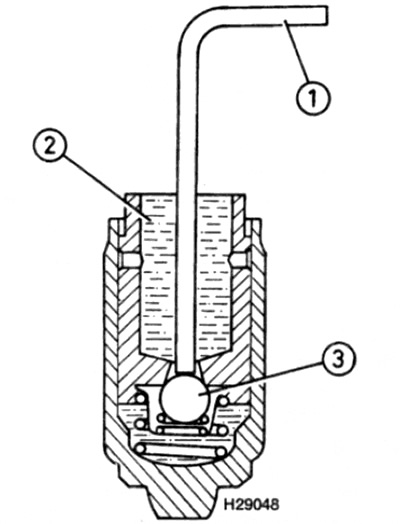
Fig. 9.21. Checking the valve tappet operation
1 Wire diameter 1.5 mm
2 Oil supply chamber
3 Ball valve
22. The design of hydraulic tappets is such that the amount of play or clearance that they can compensate for is limited. This is mainly determined by the small size of the units. To maintain the clearance at a minimum level and to ensure that the tappets can operate within their operating limits, adjusting washers of varying thickness are installed.
23. Under normal conditions, the tappets are automatically adjusted to provide the required clearance between the cam and the valve stem.
24. However, if the parts are significantly worn out or after replacing the camshaft, cams, valves or tappets themselves, the valve assembly becomes noisy in operation, perhaps the clearances have gone beyond the automatic compensation. In this case, it is necessary to replace the adjusting washer with a different size.
25. To determine the required thickness of the adjusting washer, a special indicator device and a clamp are required. The work should be entrusted to a Mercedes-Benz dealer.
26. It is recommended that the valve lifters be installed with the cams already installed on the cam shafts. This will reduce the time required for installation and reduce the possibility of oil draining from the valve lifters if they are prepared as described below.
27. Each valve must be filled with oil before installation. To do this, hold the assembly vertically and fill the chamber with clean motor oil. Using a piece of thin wire inserted through the chamber, press on the ball valve so that the oil can flow into the working chamber (see fig. 9.21). At the same time, press the pusher up to the limiter. Repeat these steps several times until the oil stops flowing into the working chamber.
28. Install the adjusting washer onto the cam body with the oil recesses facing the tappet, then insert the tappet. Push the tappet down until it contacts the retaining ring. The bearing cap/cam assembly can now be installed onto the engine.
Installation
29. Check that the thrust washers are correctly positioned on the front bearing.
30. Lubricate the camshaft and bearings in the bearing caps and cylinder head with clean engine oil, then place the camshaft in its place on the cylinder head. Turn the camshaft so that the TDC pin or hole on the flange at the front of the camshaft faces vertically upward - see paragraph 3.
31. Install the tappet contact pads onto the corresponding valve stems.
32. Install the bearing caps in their places with identification numbers on the exhaust manifold side.
33. Install the cover bolts and tighten them to the required torque gradually, in a diagonal sequence.
34. Check the condition of the oil spray tube, paying particular attention to the spray holes. If the holes are out of shape or damaged, replace the tube.
35. Check that the crankshaft timing mark is aligned with the TDC position of the 1st cylinder (see paragraph 3), then install the camshaft sprocket as described in paragraph 8.
36. Install the air cleaner.