
Cars BMW Cars Volkswagen Cars Chevrolet Cars Land Rover Cars Lada Cars Honda Cars Peugeot
English Русский
Български
Беларускі
Український
Српски
Hrvatski
Română
Polski
Slovenský
Magyar
Bookmark News and articles Sitemap Feedback Site search
MercedesMan.ru


A-Class C-Class E-Class G-Class M-Class S-Class Others
190 (W201) (1982-1993) W202 (1993-2000) W203 (2000-2007)
  • Main
  • C-Class
  • W201 (1982-1993)
  • Power unit
  • Cooling and heating
  • Radiator Fan — Removal and Installation

Radiator Fan — Removal and Installation (Mercedes-Benz C-Class W201)

0
Contents: Fan with thermoviscous engagement ↡ Fan with electromagnetic engagement ↡

Fan with thermoviscous engagement


Removal


Note: On petrol models, this operation requires the use of a special tool to secure the radiator fan pulley to the fan support bracket. If you do not have such a tool and cannot borrow one from your dealer, you can make a replacement from a 4 mm diameter rod. For diesel models, to avoid damaging the fan pulley and related parts, it is recommended to purchase a branded fixing tool.


1. Disconnect the negative battery terminal. Remove the accessory drive belt (see Chapter 1).

2. Remove the screws and separate the plastic panels on the top and bottom of the radiator. Where provided, remove the coolant hose from the retainer on the top panel.

3. On models with a non-removable fan shroud, unhook the metal clips and separate the shroud from the radiator. Slide the shroud over the top of the fan and position it between the motor and fan blades - refer to paragraph 3.

4. On models with a split radiator shroud, remove the locking pin and turn the shroud ring to the left to release it from the radiator shroud. Route the shroud ring over the top of the fan and position it between the motor and fan blades - refer to paragraph 3.

5. Release the metal spring clips, then separate the fan shroud from the radiator and remove it from the engine compartment, followed by removing the shroud ring.

6. On gasoline models, rotate the fan pulley until the locking hole on the rear surface lines up with the notch on the fan support bracket. Insert the locking device (see point 1) so that the pulley is locked on the support bracket and cannot turn (see fig. 5.6).
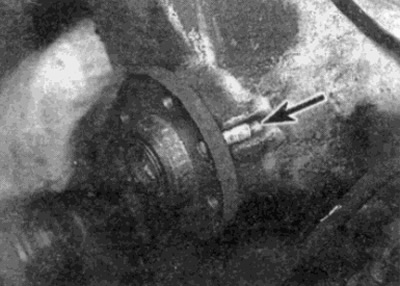


Fig. 5.6. The radiator fan pulley shaft fixed with a homemade device (shown by arrow) — for…

Fig. 5.6. The radiator fan pulley shaft fixed with a homemade device (shown by arrow) — for clarity, the fan, clutch and pulley have been removed


7. On diesel models, the fan pulley shaft must be locked with a proprietary device that grips the edges of the fan pulley without removing the drive belt. Since the central bolt securing the viscous clutch is tightened with a high torque, it is not recommended to use a homemade device.

8. Loosen and remove the bolts, then separate the fan blade assembly from the clutch. On models with a non-separable shroud, remove the shroud from the engine compartment (see fig. 5.8).
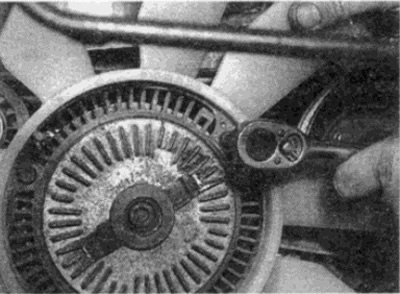
Fig. 5.8. Loosen and remove the bolts and separate the fan blades from the viscous coupling

Fig. 5.8. Loosen and remove the bolts and separate the fan blades from the viscous coupling


9. Loosen and remove the central bolt, then separate the engagement unit from the pulley shaft. If necessary, unscrew the bolts and remove the pulley from the shaft (see Fig. 5.9. a-g).
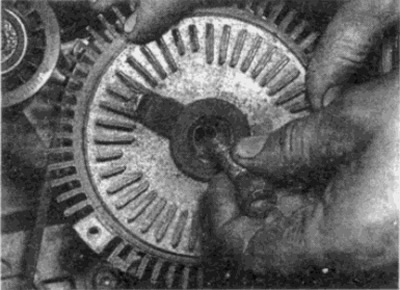


Fig. 5.9, a. Loosen and unscrew the central bolt...
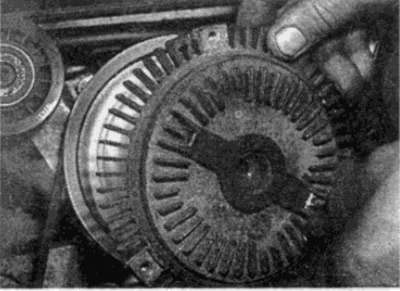
Fig. 5.9, a. Loosen and unscrew the central bolt...


Fig. 5.9. b....then separate the clutch from the pulley shaft
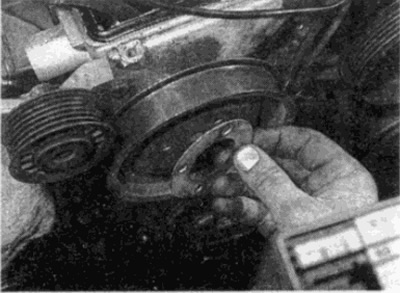
Fig. 5.9. b....then separate the clutch from the pulley shaft


Fig. 5.9, c. If necessary, unscrew the bolts, remove the washer...
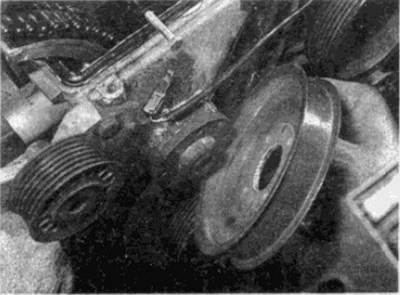
Fig. 5.9, c. If necessary, unscrew the bolts, remove the washer...


Fig. 5.9, g....and remove the pulley from the shaft

Fig. 5.9, g....and remove the pulley from the shaft


Installation


10. Installation is carried out in reverse order. Check that all bolts are tightened to the required torque (see fig. 5.10).


(Read more on the website: www.mercedesman.ru)
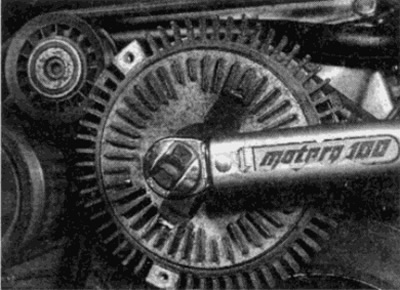
Fig. 5.10. Make sure the coupling center bolt is tightened to the required torque

Fig. 5.10. Make sure the coupling center bolt is tightened to the required torque


Fan with electromagnetic engagement


Removal


11. Disconnect the negative battery terminal. On 4-cylinder gasoline models, follow these steps:
  • a) Drain the liquid from the cooling system (see Chapter 1).
  • b) Remove the radiator (see paragraph 3).
  • c) Remove the air cleaner (see Chapter 4).

12. Contact Chapter 1 and remove the accessory drive belt from the water pump pulley.

13. Loosen the central mounting bolt and remove the fan from the pump spindle (see fig. 5.13).
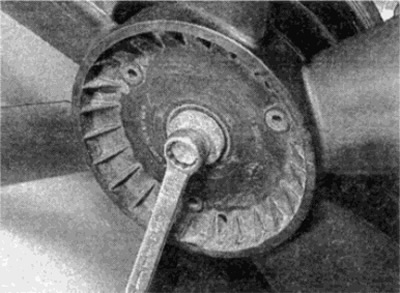
Fig. 5.13. Unscrew the central mounting bolt and remove the fan from the pump spindle

Fig. 5.13. Unscrew the central mounting bolt and remove the fan from the pump spindle


14. Loosen and remove the bolts, then remove the water pump pulley from the spindle (see fig. 5.14).
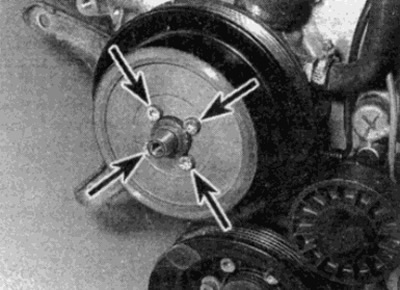


Fig. 5.14. Loosen and unscrew the bolts (shown by arrows), then remove the pump pulley from the…

Fig. 5.14. Loosen and unscrew the bolts (shown by arrows), then remove the pump pulley from the shaft


15. On early models with split accessory drive belts, remove the three bolts securing the clutch housing to the water pump and pump bracket. Remove the clutch, disconnect the plug on the connector, and remove the unit from the vehicle (see Fig. 5.15, a, b).
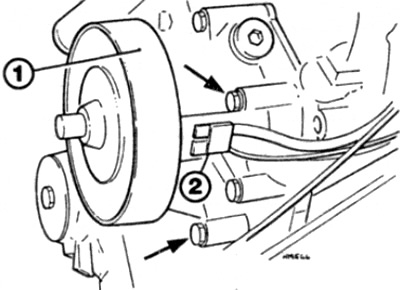
Fig. 5.15. a. Location of left coupling mounting bolts (shown by arrows) - early models

Fig. 5.15. a. Location of left coupling mounting bolts (shown by arrows) - early models
1 Clutch housing
2 Connector plug
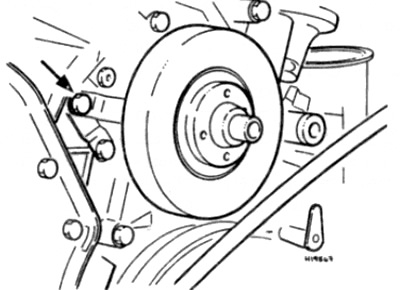

Fig. 5.15. b. Location of the coupling bracket mounting bolt (shown by arrow) - early models

Fig. 5.15. b. Location of the coupling bracket mounting bolt (shown by arrow) - early models


16. On later models with a single drive belt, remove the bolts on the rear of the clutch housing that secure it to the backing plate. Disengage the clutch, disconnect the plug from the connector, and remove the unit from the engine.


Installation


17. Installation is carried out in the reverse order. Install the washers on the fan mounting bolt as shown in Fig. 5.17, and tighten all fasteners to the required torque.
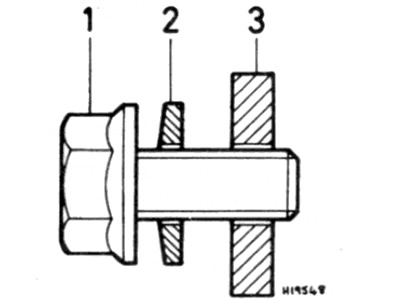
Fig. 5.17. Fan mounting bolt, washer and spacer

Fig. 5.17. Fan mounting bolt, washer and spacer
1 Bolt
2 Plate washer
3 Spacer
This article is available at: russian, bulgarian, belarusian, ukrainian, serbian, croatian, romanian, polish, slovak, hungarian
The article has been verified: Lukyanov Nikita Ilyich
Share with friends:
◀ Previous
C-Class 190 (W201) / Cooling and heating
Next ▶

Thermostat — Removal, Checking and Installation
Radiator — removal, inspection and installation
Coolant Hoses — Disconnecting and Replacing
Basic information and precautions
Technical data
Electrical Cooling System Switches — Removal and Installation
Water pump — removal and installation
Heater/Ventilation Parts — Removal and Installation
Air Conditioning System — Basics and Precautions
More similar articles for repairing other models

☛ Radiator Blower Fan — Removal and Installation Mercedes W168 (1997-2004)
☛ Removal, inspection, cleaning and installation of the radiator Mercedes W123 (1976-1985)
☛ Removal and installation the cooling system radiator Mercedes W463 (1999-2019)
☛ Removal and installation the cooling system radiator Mercedes W163 (1997-2005)
☛ Removal and installation the cooling system radiator Mercedes W140 (1991-1998)
☛ Oil radiator — removal and installation Mercedes Sprinter (1995-2000, diesel)
Link in different formats to this article
Comments and feedback from visitors
No comments yet


How much will 23 + 24 ?


W203 (2000-2007) 
  • General information
  • Introduction to guide
  • User manual
  • Maintenance
  • Power unit
  • Gasoline engines
  • Diesel engines
  • Cooling system
  • Ventilation and heating
  • Supply system
  • Injection system (gasoline)
  • Injection system (diesel)
  • Exhaust system
  • Ignition and control system
  • Charge and launch systems
  • Transmission
  • Mechanical gearbox
  • Automatic gearbox
  • Clutch and drive shafts
  • Differential
  • Chassis
  • Brake system
  • Car suspension
  • Steering
  • Body
  • Exterior (external elements)
  • Interior (internal elements)
  • Electrical equipment
  • Equipment and devices
  • Lighting system
  • Electrical diagrams (2000)
  • Electrical diagrams (since 2001)
W202 (1993-2000) 
  • General information
  • User manual
  • Driving a car
  • Car care
  • Maintenance
  • Power unit
  • Gasoline engines
  • Diesel engines
  • Lubrication system
  • Cooling system
  • Heating and ventilation
  • Ignition system
  • Fuel system
  • Injection system (gasoline)
  • Injection system (diesel)
  • Exhaust system
  • Transmission
  • Clutch
  • Car gearbox
  • Chassis
  • Suspension, wheels and tires
  • Steering
  • Brake system
  • Body
  • Exterior (external elements)
  • Interior (internal elements)
  • Doors and windows
  • Electrical equipment
  • Equipment and devices
  • Power devices
  • Lighting system
  • Electrical circuits
190 (W201) (1982-1993) 
  • General information
  • Introduction to the guide
  • Operation and care
  • Maintenance (gasoline)
  • Maintenance (diesel)
  • Troubleshooting
  • Power unit
  • Petrol engine I4
  • Petrol engine V6
  • Diesel engines
  • Engine overhaul
  • Cooling and heating
  • Power system (carburetor)
  • Injection system (gasoline)
  • Injection system (diesel)
  • Exhaust system
  • Charge and start system
  • Ignition system (I4)
  • Ignition system (V6)
  • Diesel heating system
  • Transmission
  • Clutch
  • Mechanical gearbox
  • Automatic gearbox
  • Cardan shaft and axle shafts
  • Chassis
  • Brake system
  • Car suspension
  • Steering
  • Body
  • Exterior (external elements)
  • Interior (internal elements)
  • Doors, locks and windows
  • Electrical equipment
  • Equipment and devices
  • Electrical circuits
 
MercedesMan.ru © 2017–2026 · Mobile version · Read about Mercedes · Sitemap: EN BG BY UA RS HR RO PL SK HU · Feedback · Site search · Bookmark A-Class (W168) · C-Class (W201) · C-Class (W202) · C-Class (W203) · E-Class (W123) · E-Class (W124) · E-Class (W210) · G-Class (W463) · M-Class (W163) · S-Class (W116, petrol) · S-Class (W126, petrol) · S-Class (W140) · S-Class (W220) · Sprinter · Vito 1 · Vito 2 · Vario 814D ·
 
We only use cookies without which some of the site's features may not be available.