



Contents: Models with 4-cylinder petrol engines ↡ Models with 6-cylinder petrol engines ↡ Models with diesel engines ↡
Models with 4-cylinder petrol engines
1. Disconnect the negative terminal of the accumulator. Drain the liquid from the cooling system.
2. Remove the radiator fan and accessory drive belt pulley as described in paragraph 5.
3. Remove the thermostat as described in paragraph 4. Then unscrew the bolts and remove the thermostat housing from the cylinder head. Loosen the hose clamps, separate the bypass hose from the pump and remove the thermostat housing from the engine (see fig. 7.3. a, b).
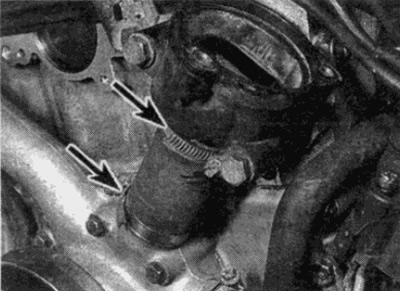
Fig. 7.3, a. Loosen the hose clamps (shown by arrows)...
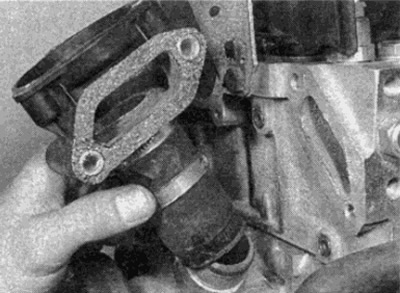
Fig. 7.3, b....then separate the bypass hose from the pump and remove the thermostat housing from the engine
4. Loosen the clamps and disconnect the lower hose and the return hose of the interior heater radiator from the water pump (see fig. 7.4). Similarly, disconnect the additional hose from the left side of the pump.
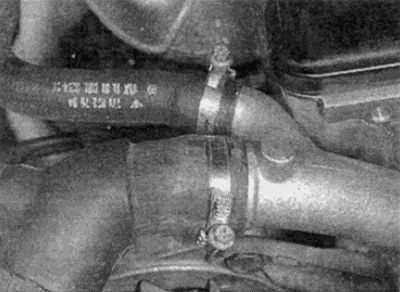
Fig. 7.4. Disconnect the lower radiator hose and the heater return hose from the water pump
5. For early models with multiple drive belts, refer to paragraph 5 and remove the electromagnetic clutch from the water pump shaft.
6. On later models with a single ribbed belt, disconnect the plug on the electromagnetic clutch connector and release the cable from the holders - for details, refer to paragraph 5.
7. Remove the alternator as described in Chapter 5 Part A. Loosen the bolts and remove the generator bracket from the water pump.
8. Loosen and remove the water pump mounting bolts, then lift the water pump up (see Fig. 7.8, a, b). Mark the location of each bolt well, as they are of different lengths.
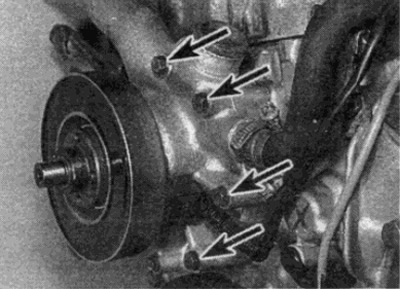
Fig. 7.8, a. Loosen and unscrew the water pump mounting bolts (arrows show bolts on the left side)...
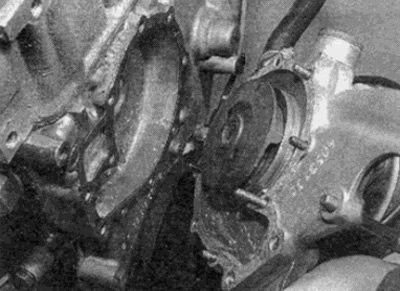
Fig. 7.8, b....then lift the water pump
Installation
9. Thoroughly clean the mating surfaces of the pump and cylinder block, removing all traces of the old gasket. Take care not to scratch the surface, as this will cause leaks. Similarly, clean the mating surfaces of the thermostat housing and cylinder head.
10. Install the water pump in reverse order. Please note the following points: (see fig. 7.10):
- a) Use a new gasket and tighten all bolts to the correct torque (where specified in technical data).
- b) Install the electromagnetic clutch as described in paragraph 5.
- c) Install and tension the accessory drive belt as described in Chapter 1.
- d) When finished, fill the cooling system as described in Chapter 1.
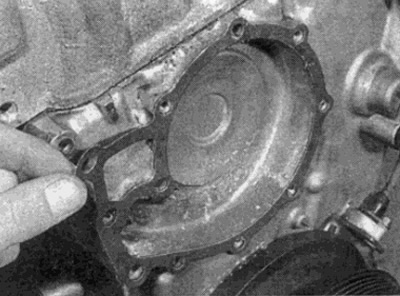
Fig. 7.10. Use a new gasket when installing
Models with 6-cylinder petrol engines
Removal
11. Disconnect the negative battery terminal. Drain the cooling system as described in Chapter 1.
12. Remove the accessory drive belt and tensioner.
13. Referring to Chapter 10, remove the bolts and the power steering pump from the engine without disconnecting the hydraulic hoses (just take them away from the work area).
14. Remove the air cleaner and the decorative air intake cover (see Chapter 4).
15. Access to the pump can be improved by removing the distributor (see Chapter 5, Part B) and the drive belt cover panel.
16. Where provided on earlier models, remove the six mounting bolts and move the air conditioning compressor to the side without disconnecting the hoses.
17. Loosen and remove the bolt, then disconnect the heater radiator return pipe from the water pump. Remove the sealing ring (see Fig. 7.17, a, b). Release the tube from the holder on the radiator fan bracket.
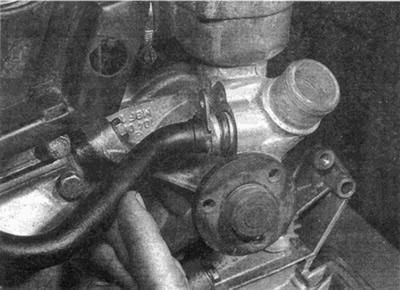
Fig. 7.17, a. Disconnect the heater radiator return pipe from the water pump...
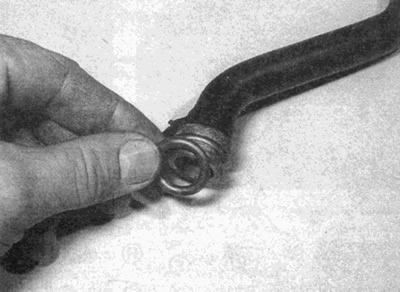
Fig. 7.17, b....and remove the sealing ring
18. On vehicles with an oil heat exchanger, unscrew the bolts and remove the coolant pipe fitting from the side of the pump. Remove the sealing ring. After unscrewing the screw, release the coolant pipe mounting bracket from the intake manifold support post.
19. Refer to paragraph 4 and remove the thermostat.
20. Loosen the clamps and disconnect the cylinder head hoses and the upper radiator hose from the water pump (see fig. 7.20, a, b).
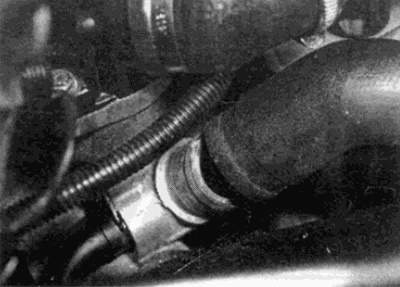
Fig. 7.20, a. Disconnect the radiator...
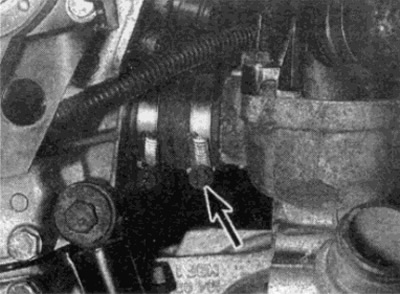
Fig. 7.20, b....and cylinder head hoses (shown by arrows) from the water pump
21. Loosen and remove the four mounting bolts, then lift the pump out of the engine (see fig. 7.21). Remove the two bushing sleeves and the sealing ring.
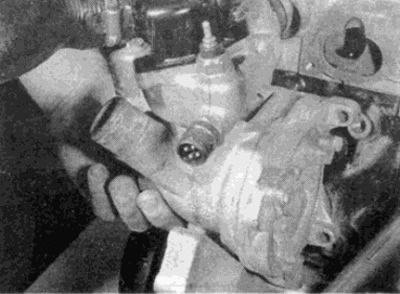
Fig. 7.21. Loosen and remove the bolts, then remove the water pump from the engine
Installation
22. Thoroughly clean the mating surfaces of the pump and cylinder block, removing all traces of the old gasket. Try not to scratch the surface, as this will cause leaks.
23. Installation is carried out in reverse order. Please note the following points:
- a) Most of the rear water pump mounting bolts are hard to reach. Use a rod and magnet or magnetic Allen key to insert them.
- b) Where required, tighten all bolts to the required torque.
- c) Replace the heater radiator return hose seal to the pump, the water pump seal to the cylinder block and the thermostat seal to the housing.
- d) Install and tension the accessory drive belt as described in Chapter 1.
- d) When finished, fill the cooling system as described in Chapter 1.
Models with diesel engines
Removal
24. Disconnect the negative battery terminal. Drain the cooling system as described in Chapter 1.
25. For models with electromagnetic fan engagement, refer to Chapter 1 and remove the accessory drive belt and tensioner.
26. Contact paragraph 5 and remove the viscous or electromagnetic clutch of the radiator fan from the water pump (depending on what is installed).
(Article obtained from this portal: mercedesman.ru)
27. On models with a viscous fan, remove the drive belt as described in Chapter 1. After this, unscrew the bolts and remove the pulley from the water pump.
28. Loosen the clamps and remove all hoses from the water pump housing (see fig. 7.28). Unscrew the heater radiator return pipe from the fittings and remove the sealing ring.
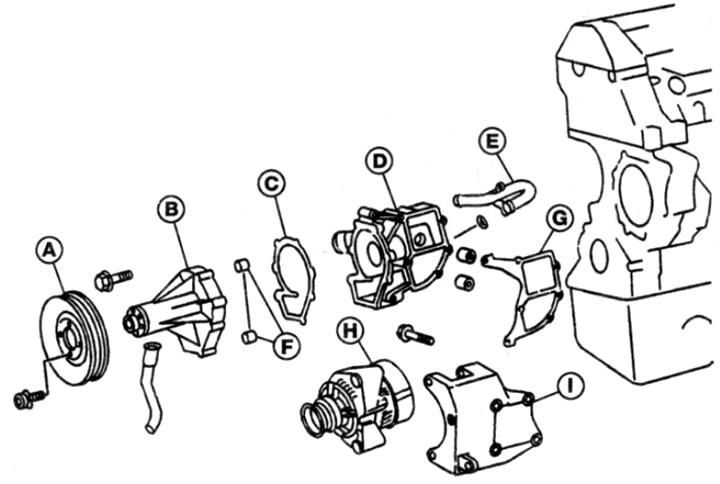
Fig. 7.28. Water pump (models with diesel engines)
A Pulley
B Water pump
C Gasket
D Water pump housing
E Return pipe
F Keys
G Gasket
H Alternator
I Generator support bracket
29. Remove the generator as described in Chapter 5 Part A. Then unscrew the bolts and remove the generator support bracket from the engine.
30. Unscrew the water pump housing bolts and remove it from the engine block together with the pump. Remove the gasket.
31. Loosen the bolts and remove the pump from the housing together with the gasket.
Installation
32. Thoroughly clean the mating surfaces of the pump and cylinder block, removing all traces of the old gasket. Try not to scratch the surface, as this will cause leaks.
33. Installation is carried out in reverse order. Please note the following points:
- a) Use new gaskets and, where required, tighten all bolts to the required torque.
- b) Install the radiator fan as described in paragraph 5.
- c) Install and tension the accessory drive belt as described in Chapter 1.
- d) When finished, fill the cooling system as described in Chapter 1.