



Removal
1. The thermostat is located in a housing that is bolted to the side surface of the water pump.
2. Disconnect the negative battery cable. Drain the cooling system as described in Chapter 1.
3. Loosen the clamp and remove the thermostat cover from the housing (see fig. 4.3).
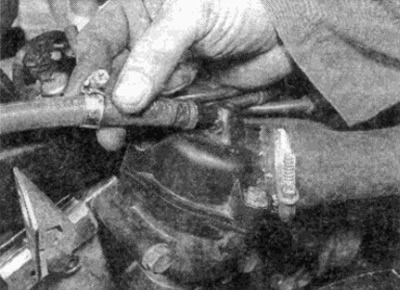
Fig. 4.3. Loosen the clamp and disconnect the cooling hose from the thermostat cover (4-cylinder petrol engine)
4. Loosen the mounting bolts and remove the thermostat cover from the housing. If the cover is stuck, gently tap it or rock it back and forth. Do not use a lever to avoid damaging the mating surfaces (see fig. 4.4).
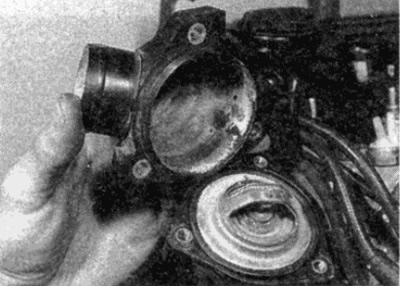
Fig. 4.4. Remove the thermostat cover from the housing
5. Remove the seal, then lift the thermostat out of the housing, noting its orientation (see Fig. 4.5, a, b).
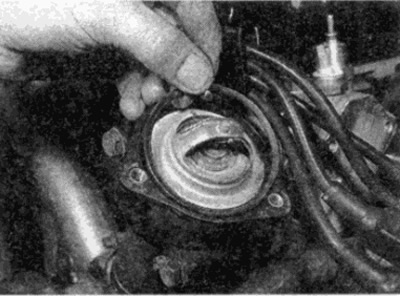
Fig. 4.5, a. Remove the seal...
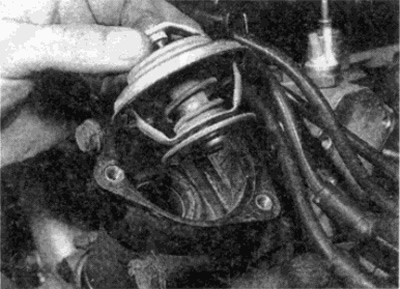
Fig. 4.5, b....then lift the thermostat out of the housing
Examination
6. To roughly check the thermostat, hang it on a wire in a container of water. Heat the water to boiling - the thermostat should open. If it does not open, replace it.
7. Using a thermometer, you can determine the minimum opening temperature of the thermostat. Compare with the technical data. The opening temperature is also indicated on the thermostat.
8. A thermostat that does not close when the water cools down should also be replaced.
Installation
9. Before installation, thoroughly clean the mating surfaces of the cover and body.
10. Install the thermostat in the housing, taking into account that the spring-loaded side should be facing the housing. Recall that on diesel engines, the recess on the thermostat rim should be aligned with the rib on the housing cover. On gasoline models, install the thermostat so that the air release valve is located at the highest point of the housing.
11. Place the new seal into the housing, making sure it is correctly positioned.
12. Install the thermostat housing cover, then install the mounting bolts and tighten them to the required torque.
13. Connect the cooling hose to the thermostat cover.
14. Fill the cooling system as described in Chapter 1.