



2. If you notice that the engine takes a long time to warm up to operating temperature (according to the indicator readings), the thermostat may be stuck open. In this case, the thermostat should be replaced.
3. On the other hand, a long warm-up may be due to the absence of a thermostat. This could have been done intentionally or unintentionally (forgot to install after repair). Do not operate the vehicle without a thermostat. The engine management system will keep the engine in warm-up mode for a longer period of time. During this time, the engine will consume more fuel and the exhaust gases will contain more harmful impurities.
4. If the engine is overheating, feel the upper radiator hose. If it is not hot and the engine is overheating, the thermostat may be stuck in the closed position. Fluid does not enter the radiator and circulates in a small circle. In this case, replace the thermostat.
5. If the upper radiator hose is hot, this means that the thermostat is open and the fluid is circulating normally in the system. In this case, read the recommendations given in Section Troubleshooting.
Checking with thermostat removal
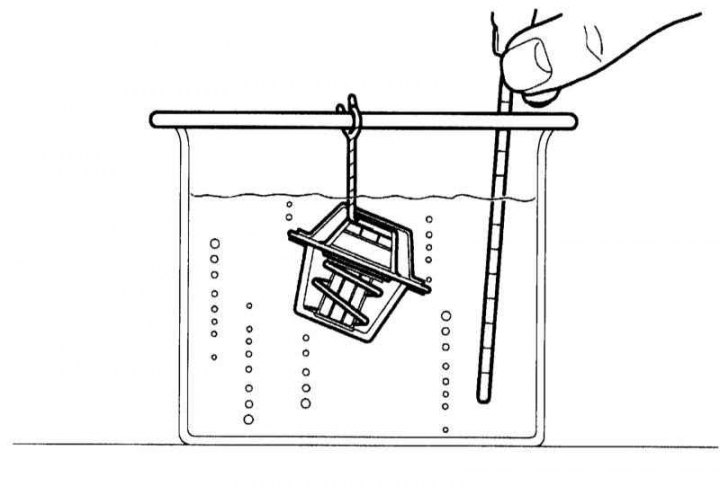
Checking the proper functioning of the thermostat
1. Remove the thermostat (see Section Removal and installation the thermostat).
2. If the thermostat is open at room temperature, it is faulty and must be replaced.
3. To roughly check the thermostat's functionality, hang it on a piece of string in a container of water. The thermostat should not touch the walls of the container. Start heating the container.
4. As the water heats up, the thermostat should open (this happens just before the water boils)Since the boiling point of water is 100°C, the thermostat may not open fully (refer to Specifications). Remove the thermostat and allow it to cool. As it cools, it should close completely.
[Article based on data from the website: Mercedesman.ru]
5. If the thermostat does not open when heating or does not close when cooling, replace it.
6. When installing the thermostat, pay attention to the following points:
- a) Thoroughly clean the mating surfaces and replace the sealing ring;
- b) Place the thermostat in the housing, oriented correctly;
- c) Tighten the cover mounting bolts to the required torque;
- d) Reinstall all hoses in their original positions, then fill with coolant (refer to Chapter Routine care and maintenance);
- e) Start the engine, warm it up to operating temperature and check for leaks.