



Removal
Note: This operation requires a hoist and a sliding hammer. A new cylinder head gasket and coolant elbow seal ring will be required during installation. New cylinder head bolts may also be required (see text).
1. Before you begin removing the cylinder head, make sure the engine is cold; please note that the cylinder head will be removed together with the exhaust manifold.
2. Disconnect the negative battery terminal.
3. Raise the engine hood until it stops as described in chapter 11.
4. Drain the engine oil and coolant as described in chapter 1B.
5. Remove the camshaft as described in paragraph 9.
6. Remove the injectors as described in chapter 4.
7. Remove the radiator as described in chapter 3.
8. Remove the accessory drive belt tensioner in the following order (see fig. 10.8).
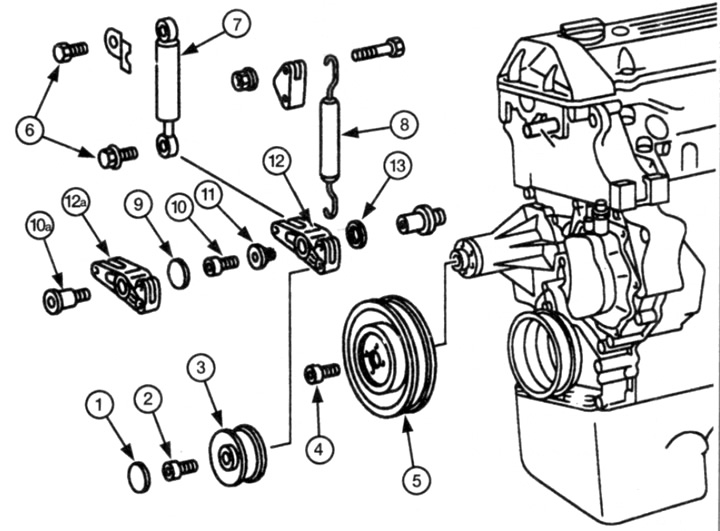
Fig. 10.8 Components of the auxiliary drive belt tensioner
1 Plastic lid
2 Bolt
3 Intermediate pulley
4 Bolt
5 Fan pulley
6 Bolts
7 Tensioner shock absorber
In Tension spring
9 Plastic lid
10 Bolt
10a Bolt of other type
11 Bushing
12 Tensioner
12a Tensioner of other type
13 Bushing
- a) Remove the plastic cover, unscrew the mounting bolt and remove the auxiliary drive belt tension pulley.
- b) Loosen the mounting bolt and remove the radiator fan pulley.
- c) Unscrew the bolts and remove the tensioner shock absorber. Remove all gaskets and/or brackets, noting their location.
- c) Using pliers, unhook the tension spring, remembering its correct position to restore it during assembly.
- d) If necessary, remove the cover and, having unscrewed the tensioner mounting bolt, pull out the bushing to which the tensioner is mounted.
- d) Remove the tensioner and remove the bushing.
Information copied from the website mercedesman.ru
9. On non-turbocharged models, remove the air cleaner housing, inlet pipe and filter element as described in Chapter 4.
10. On turbocharged models, perform the following operations.
- a) Remove the turbocharger inlet manifold.
- b) Unscrew the turbocharger mounting bracket.
- c) Unscrew the union nut and disconnect the turbocharger return oil line from the cylinder block.
11. Place a rag next to the detachable connection of the fuel line with the fuel filter, then unscrew the player nuts and disconnect the fuel line, remember the location of the parts for correct assembly (see fig. 10.11). Plug the open ends of the fittings and tubes to prevent dirt from entering the fuel line and fuel from leaking.
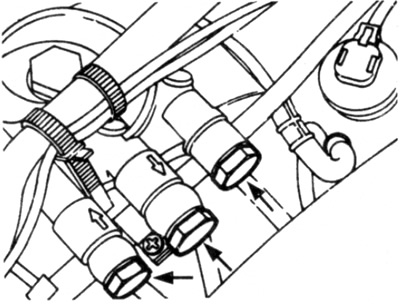
Fig. 10.11. Disconnect the fuel lines (shown by arrows)
12. Unscrew the bolts from the cylinder head and remove the filter.
13. Loosen the bolts and remove the oil dipstick tube from the cylinder head.
14. On models with exhaust gas recirculation, disconnect the pipe from the exhaust gas recirculation valve (see fig. 10.14).
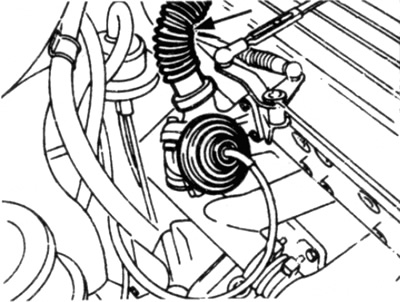
Fig. 10.14 Disconnect the hose (shown by arrow) from the exhaust gas recirculation valve
15. Working from underneath the vehicle, first remove the bolts securing the exhaust bracket to the gearbox, then the bolts securing the bracket to the exhaust system.
16. Disconnect the front section of the exhaust system from the manifold, in accordance with chapter 4.
17. Using a suitable bent-end tool or a piece of wire, release the clamp latch on the bent coolant supply hose to the oil cooler (see fig. 10.17)
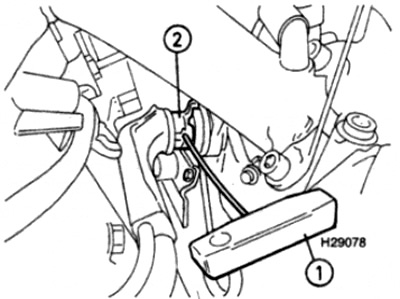
Fig. 10.17 Use a tool with a curved end (1) to pull out the retaining ring (2) on the coolant hose
18. Unscrew the elbow from the oil filter assembly, then pull it out of the connector.
19. Unscrew the nuts and disconnect the connector from the spark plug.
20. Remove the intake manifold as described in chapter 4.
21. Remove the upper camshaft timing chain guide as described in paragraph 8.
22. Remove the two bolts securing the cylinder head to the timing chain cover, which can be accessed from under the chain cover.
23. Make a final check to ensure all pipes and wires are disconnected and will not interfere with removal of the cylinder head.
24. Gradually loosen the cylinder head mounting bolts in the reverse order to that shown in Fig. 10.43a and 10.43b.
25. Remove the cylinder head mounting bolts, noting their location as the bolts are different lengths.
26. Attach the hoist straps to the rigging brackets at the front left of the cylinder head and the rear right of the exhaust manifold. The hoist must be capable of supporting the weight of the cylinder head.
27. Separate the cylinder head from the cylinder block and pins by rocking it. Do not insert a tool between the mating surfaces for this purpose, as this may damage the cylinder head gasket.
28. Carefully lift the cylinder head together with the exhaust manifold and remove it from the engine compartment.
29. Remove the cylinder head gasket.
Inspection
30. Contact chapter 2G, where the disassembly of the cylinder head is described in detail. If you want to remove the exhaust manifold, then refer to chapter 4.
31. Before installing the head, the mating surfaces of the cylinder head and cylinder block must be thoroughly cleaned. Use a scraper to remove all traces of gasket and carbon deposits; also clean the tops of the pistons. Be especially careful with the cylinder head, as its metal can be easily damaged. Also check that no small particles have fallen into the open holes, oil and water passages. Using masking tape and paper, cover all these holes and the bolt holes in the cylinder block. To prevent clogging with carbon deposits, inject a small amount of grease into the gap between the piston and the cylinder liner. After cleaning each piston, turn the crankshaft so that the piston moves down inside the cylinder, and wipe off the grease and carbon deposits with a cleaning material,
32. Check the block and head for dents, deep scratches and other damage. Minor damage can be carefully removed from the surface of the cylinder block with a file. More serious damage must be removed by grinding, but this work should be done by a specialist.
33. If there is a suspicion of warpage of the cylinder head, apply a metal ruler and check the surface distortion in accordance with chapter 2G.
34. Clean the bolt holes using compressed air or a thin cloth wrapped around a screwdriver. Make sure all traces of water or oil are removed, otherwise the hydraulic pressure when tightening the bolts may cause cracks in the block.
35. Check that the threads on the bolts and in the holes in the cylinder block are not damaged. If necessary, restore the threads in the block with a suitable tap.
36. The manufacturer recommends measuring the length of the bolts to determine which ones need to be replaced; on the other hand, some car owners prefer to replace all bolts with new ones, regardless of their condition
37. Measure the length of each bolt, from the base of the head to the end of the shaft (see fig. 10.37). If the bolt length exceeds the maximum value specified in section "Technical data", the bolt should be replaced.
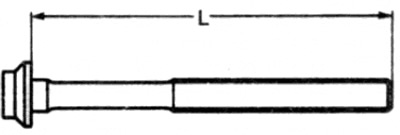
Fig. 10.37 Measure the length (L) of the cylinder head bolts
The maximum length value is given in the section "Technical data"
Installation
38. If required, install the exhaust manifold in accordance with chapter 4.
39. Make sure that when cylinder #1 is at TDC, the timing marks on the crankshaft and camshaft are correctly aligned as described in paragraph 3.
40. Place the gasket on the cylinder block, installing it on the pins.
41. Using a lifting mechanism to support the cylinder head, lower it onto the block.
42. Lubricate the threads and surfaces of the cylinder head bolts that contact the cylinder head (see points 36 and 37), then insert the bolts and tighten them by hand into the cylinder block. Make sure that all the bolts are in the correct places marked during disassembly.
43. Tighten the bolts in the order shown (see Fig. 10.43, a, b). Tighten the bolts in several stages, in accordance with the instructions in "Technical data" tightening torques for each stage: i.e. first tighten all bolts to the tightening torque value specified for stage 1, then tighten all bolts to the value of stage 2, and so on.
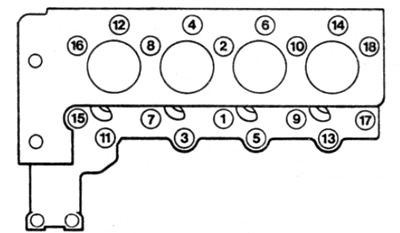
Fig. 10.43, a. Cylinder head bolt tightening sequence - 4-cylinder diesel engine
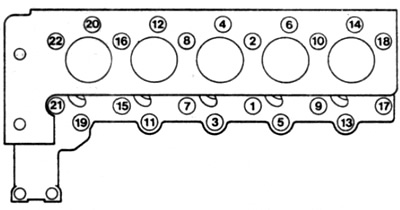
Fig. 10.43, b. Cylinder head bolt tightening sequence - 5-cylinder diesel engine
44. Install and tighten the cylinder head to camshaft timing chain cover bolts.
45. Install the upper camshaft timing chain guide as described in paragraph 8.
46. Install the intake manifold as described in chapter 4.
47. Connect the connector to the spark plug and tighten the mounting nuts.
48. Install the coolant supply elbow to the oil cooler using a new O-ring. Lubricate the O-ring with coolant before installation. Install the retaining ring.
49. Attach the front section of the exhaust system to the exhaust manifold, in accordance with chapter 4.
50. Install the exhaust pipe mounting bracket to the gearbox and tighten the mounting bolts. Make sure that the exhaust system is secured without tension.
51. Carry out further installation in the reverse order of removal, taking into account the following points.
- a) Make sure the fuel lines are properly connected to the fuel filter as noted before removing them.
- b) Install the accessory drive belt tensioner by performing the operations in the reverse order to that described in point 8.
- c) Install the radiator as described in chapter 3.
- d) Install the injectors as described in chapter 4.
- d) Install the camshaft as described in paragraph 9.
- e) Fill the cooling system and add oil to the engine as described in chapter 1B.