



Removal
Note: Before removing the camshaft, you can check the condition of the valves as described in points 10 through 18. A new camshaft thrust washer may be required for installation (see chapter 2G).
1. Remove the camshaft drive sprocket as described in paragraph 8.
2. The crankshaft bearing caps must be numbered in the direction from the drive chain to the engine. Make sure that the bearing caps are numbered and, if necessary, make the appropriate marks using a quick-drying felt-tip pen or a punch.
3. The bearing cap mounting bolts must be loosened taking into account the following notes.
Caution: To avoid damaging the camshaft, it is absolutely necessary to follow the correct sequence in which you loosen the camshaft bearing cap bolts, 4-cylinder engine (see fig. 9.3a).
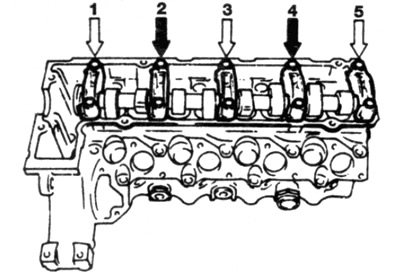
Fig. 9.3a Sequence of unscrewing bearing cap bolts - 4-cylinder engine
Remove bearing caps 1, 3 and 5 (light arrows), then loosen cover bolts 2 and 4 by one turn (dark arrows)
- a) Gradually loosen and then remove the bolts from bearing caps 1, 3 and 5.
- b) Remove the upper halves of bearings 1, 3 and 5 and put them down, maintaining their relative positions. Pay attention to the pins on which the upper halves are placed: if the pins are stuck, they must be removed by gently tapping with a soft-tipped straightening hammer.
- c) Gradually loosen bearing cap bolts 2 and 4, turning them only one turn at a time, until the pressure on the camshaft is completely relieved. Be careful not to create uneven load on the camshaft when loosening the bolts.
- d) Completely unscrew the remaining bolts and remove the upper halves of the bearings (2 and 4), also maintaining their relative position.
- d) Lift the camshaft from the cylinder head.
5-cylinder engine (see fig. 9.3b)
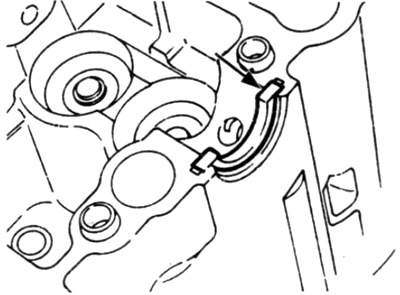
Fig. 9.3b Sequence of unscrewing bearing cap bolts - 5-cylinder engine
Remove bearing caps 1, 2 and 3 (light arrows), then loosen cover bolts 3, 4 and 5 by one turn (dark arrows)
- a) Gradually loosen and then remove the bolts from bearing caps 1, 2 and 6.
- b) Remove bearing caps 1, 2 and 6 and place them, maintaining their relative positions. Pay attention to the pins on which the caps are placed: if the pins are stuck, they must be removed by gently tapping with a soft-tipped straightening hammer.
- c) Gradually loosen bearing cap bolts 3, 4 and 5, turning them out only one turn at a time, until the pressure on the camshaft is completely relieved. Be careful not to create uneven load on the camshaft when loosening the bolts.
- d) Completely unscrew the remaining bolts and remove the bearing caps (3, 4 and 5), also maintaining their relative position.
- d) Lift the camshaft from the cylinder head.
4. Remove the thrust half ring for limiting axial play located on the rear bearing (see fig. 9.4)
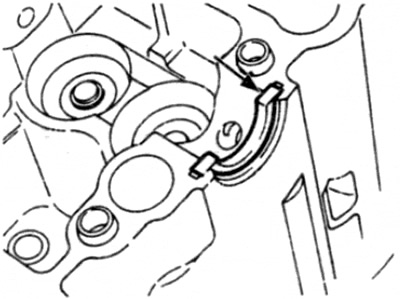
Fig. 9.4 Remove the thrust half ring for limiting axial play (shown by arrow)
5. Remove the hydraulic valve lifters from the cylinder head holes
Tip: Store each valve lifter in a labeled, oil-filled plastic container.
Inspection
6. Check the bearings and cam lobe surfaces for any signs of scoring, scratching or pitting caused by wear and replace the camshaft if found. Any damage of this nature will prevent the normal oil flow in the cylinder head and a thorough inspection should eliminate such obstructions.
Valve lifters - testing performed on removed lifters
7. Inspect the valve lifters and gaskets. Replace them if they show signs of wear or damage;
8. The normal operation of the valve lifters can be checked in the following order.
- a) Press for about 10 seconds on the top of the piston of each of the pushers, using some blunt object, such as a wooden hammer handle.
- b) Note how far the piston moves when compressed.
- c) Repeat this operation with each of the pushers in turn.
- d) If any of the pistons compresses more easily than the others, replace the corresponding pushrod.
9. Check the valve lifter bores in the cylinder head for wear and corrosion. If there is any serious damage, the cylinder head must be replaced.
Valve lifters - testing that is carried out without removing them
10. Start the engine and warm it up to normal operating temperature.
11. Check the engine oil level, make sure it does not exceed the norm.
12. Remove the camshaft cover in accordance with paragraph 4 - Be careful: the engine is hot!
13. Crank the engine (clockwise), to bring cylinder #1 to TDC. Make sure that the timing marks on the crankshaft and camshaft are correctly aligned as described in paragraph 3.
14. Make sure the valves are fully closed, i.e. the camshaft lobes are raised, then using a soft metal or hard wood stick, lightly press on the top of the No.1 valve tappet at the front of the cylinder head (see fig. 9.14).
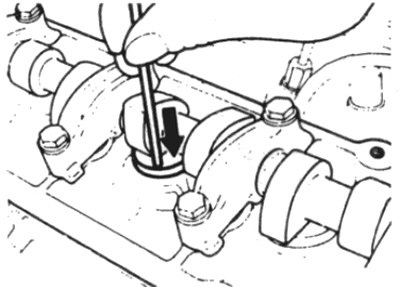
Fig. 9.14 Press the top of the valve lifter down to check the clearance between the lifter and the camshaft lobe
15. While holding the valve tappet in a compressed state, measure the clearance between the valve tappet and the camshaft lobe using a feeler gauge.
16. If the clearance is greater than specified in the "Technical Data", the tappet must be replaced. Note that further disassembly of the tappet is possible, but it is best if it is performed by a Mercedes-Benz dealer or an engineer with the appropriate qualifications.
17. Using a socket wrench on the pulley/damper mounting bolt, rotate the crankshaft and repeat the check of the remaining valve lifters. In each case, the corresponding valve should be completely closed, i.e. the camshaft lobe should be facing upwards.
Caution: When turning the crankshaft, do not use the camshaft sprocket mounting bolt, and do not turn the engine in the opposite direction (i.e. counterclockwise).
18. When all valve lifters have been checked, install the camshaft cover in accordance with paragraph 4.
Installation
19. Lubricate the outer surfaces of the valve lifters with clean engine oil, then install them in their places in the cylinder block. Check that the lifters slide freely in their seats.
20. Check the condition of the thrust half rings and replace them if necessary.
21. Lubricate the camshaft and bearing seats in the cylinder head with clean engine oil, then place the camshaft in its place in the cylinder head. The alignment mark on the flange at the front of the camshaft should be facing upwards.
22. Place the bearing caps in their positions over the camshaft, making sure each cap fits exactly in the position it was removed from, and tighten the mounting bolts.
Caution: To avoid damaging the camshaft, it is absolutely necessary to follow the correct tightening sequence of the camshaft bearing cap bolts.
4-cylinder engine (see fig. 9.3a)
- a) Install the upper bearing caps 3 and 4, insert the bolts and tighten them gradually, turning them one turn at a time, to the required tightening torque. Be careful not to create uneven pressure on the camshaft when tightening the bolts.
- b) Install bearing caps 1, 3 and 5 and tighten the bolts.
(Article was borrowed from the website: mercedesman.ru)
5-cylinder engine (see fig. 9.36)
- a) Install the upper halves of bearing shells 3, 4 and 5, insert the bolts and gradually tighten them to the required tightening torque, turning them one turn at a time. Be careful not to create uneven pressure on the camshaft when tightening the bolts.
- b) Install the upper halves of bearing shells 1, 9 and 6 and tighten the bolts.
23. Install the camshaft drive sprocket as described in paragraph 8.