



Contents: Oil pump ↡ Drive chain - replacement ↡
Oil pump
Removal
1. Remove the pan as described in paragraph 11.
2. Loosen the oil pump sprocket mounting bolt and remove the washer. Remove the sprocket from the oil pump axle together with the drive end.
3. On a 5-cylinder engine, unscrew the bolt securing the oil intake tube from the support bracket.
4. Unscrew the three bolts securing the oil pump to the cylinder block and remove the washers (see fig. 12.4). If necessary, loosen the mounting bolts and remove the oil pump screen.
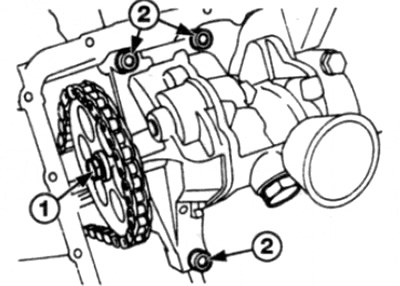
Fig. 12.4 Oil pump sprocket mounting bolt (1) and oil pump mounting bolts (2)
5. Remove the oil pump from the cylinder block, taking into account that it is located on two mounting pins.
Inspection
6. Except for the bypass valve parts, the oil pump is a sealed unit. The procedure for removing the bypass rivet is as follows.
7. Remove the valve plug. Be careful as it may be forced out by the spring pressure when the threads reach the end.
8. Remove the spring, guide pin and piston (see fig. 12.8).
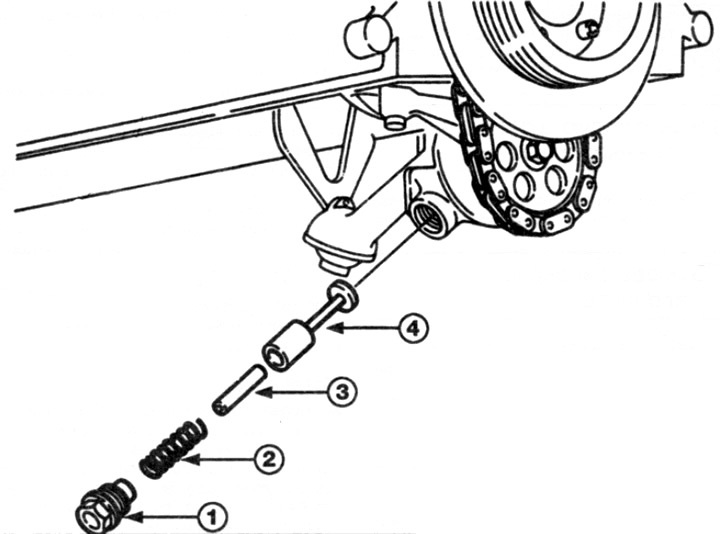
Fig. 12.8 Components of the oil pressure relief valve
1 Cork
2 Spring
3 Guide pin
4 Piston
9. Carefully wipe all parts and check their condition. If there are signs of severe wear or damage, replace the corresponding part, paying special attention to the spring.
10. Assemble the parts in the reverse order of disassembly and tighten the plug to the required torque.
11. On models with a block-mounted oil pump screen, it is a good idea to clean the screen when removing the oil pump. Simply unbolt, remove, clean and re-attach.
12. Install in the reverse order of removal, taking into account the following points.
- a) Prime the oil pump by filling it with clean engine oil.
- b) Ensure that the pump is correctly seated on the locating pins.
- c) Tighten the pump mounting bolts to the required torque.
- d) Install the sprocket with the convex side facing the pump.
- d) Install the tray as described in paragraph 11.
Drive chain - replacement
Caution: Removing the chain as described below will require the use of a portable electric grinder to cut one of the chain links. Before starting work, make sure that such a tool is available, as well as a new chain and its connecting link. When replacing the oil pump drive chain, the oil pump sprocket must also be replaced.
13. Remove the pan as described in paragraph 11.
14. Loosen the oil pump sprocket mounting bolt.
15. Using a grinder, grind down the protruding pins on one of the chain links located on the sprocket - be very careful not to damage the sprocket.
16. Remove the plate from the axle and push the chain link back.
17. Loosen the oil pump sprocket mounting bolt, remove the washer, then remove the sprocket from the pump axle.
18. Using a new link, connect the end of the new chain to the end of the old chain so that when the engine is turned clockwise, the new chain will go up, wrap around the crankshaft sprocket and emerge from the bottom on the other side. Insert the link from the back of the sprocket and make sure the link is properly seated, do not place the plate on the link at this stage.
19. After this, you should pass the new chain through the sprockets and guides. During this operation, it is important to observe the following points:
- a) Maintain tension on the new chain, ensuring that the links remain in contact with the crankshaft sprocket.
- b) Push the old chain forward to prevent it from slipping off the crankshaft sprocket or getting stuck in the housing.
20. Using a socket wrench that fits the pulley/damper bolt to the crankshaft hub, slowly turn the crankshaft clockwise while following the steps outlined above.
21. When the end of the new chain appears, remove the connecting link (making sure that the new chain is taut and that the remaining links are engaged with the sprocket teeth) and disconnect the new chain from the old one. Remove the old chain.
22. Align both ends of the chain with the connecting link by inserting it from the back of the sprocket
23. Install the connecting plate and secure it by riveting the end of the connecting rods. There is a special tool for this, but a satisfactory result can be achieved using a hammer and a metal bar (or with a second hammer), pressed against the back of the chain - while doing this, great care must be taken not to damage the chain or sprocket.
24. Check that the chain link is fastened at the joint without any metal build-up or burrs.
25. Place the chain on the teeth of the new oil pump sprocket.
26. Install the sprocket on the shaft with the convex side facing the pump.
27. Tighten the sprocket mounting bolt to the required tightening torque
28. Install the tray as described in paragraph 11.