
Cars BMW Cars Volkswagen Cars Chevrolet Cars Land Rover Cars Lada Cars Honda Cars Peugeot
English Русский
Български
Беларускі
Український
Српски
Hrvatski
Română
Polski
Slovenský
Magyar
Bookmark News and articles Sitemap Feedback Site search
MercedesMan.ru


A-Class C-Class E-Class G-Class M-Class S-Class Others
W123 (1976-1985) W124 (1984-1995) W210 (1996-2002)
  • Main
  • E-Class
  • W210 (1996-2002)
  • Electrical equipment
  • Lighting and signaling
  • Continuous monitoring of lighting devices

Continuous monitoring of lighting devices (Mercedes-Benz E-Class W210)

0
Contents: All lighting fixtures must work ↡ Adjusting the light range ↡ Lamp health check device ↡
Check the headlight installation on your car regularly, for example before passing the technical inspection. Also check the condition of the lights before each trip.

All lighting fixtures must work


To do this, turn on the ignition and turn on the parking, low and high beams, as well as the fog lights, one after the other. The reversing lights, license plate lights and rear fog lights should be working properly at the rear of the car. There should always be a set of replacement bulbs in the car.
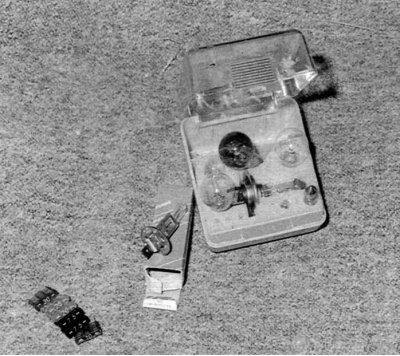
Fig. 9.16. A spare set of bulbs should always be in the car. It contains not only the most…

Fig. 9.16. A spare set of bulbs should always be in the car. It contains not only the most important spare bulbs, but also fuses


The vehicle should have the following set of spare bulbs (Fig. 9.16):
  • halogen lamp H7, 55 W (low and high beam);
  • halogen lamp H1, 55 W (fog light);
  • halogen lamp H, 6 W (side/parking light);
  • round lamp P or PY, 21 W (front and rear direction indicator with white or yellow bulb);
  • round lamp P, 21 W (reversing light, rear fog lights);
  • round lamp P, 21/4 W (brake light, side/parking light);
  • round lamp R, 5 W (rear light, parking light);
  • spotlight lamp C, 5 W (license plate light);
  • spotlight lamp C, 10 W (interior and trunk lighting);
  • lEDs (exterior rear view mirrors, additional brake light).

Additional equipment - low beam headlights with gas discharge lamps (xenon) lamps
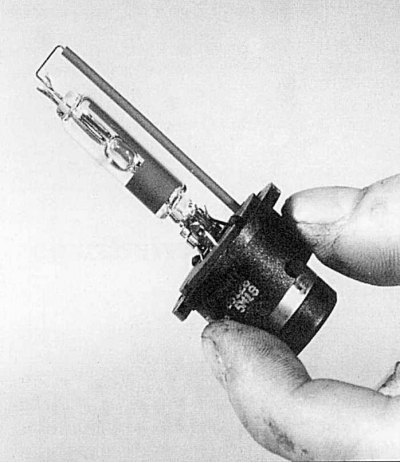


Fig. 9.17. Xenon lamps serve the entire service life of the vehicle. If necessary, replacement…

Fig. 9.17. Xenon lamps serve the entire service life of the vehicle. If necessary, replacement should be carried out at a service station, since due to the presence of contacts under high voltage and the risk of explosion, independent replacement is difficult


The latest and currently best development in lighting technology is headlights with gas discharge lamps (xenon) lamps in a quartz glass housing (Fig. 9.17). The light source is xenon gas and particles of various metal salts. The electronic switching unit ignites this mixture with a short pulse of voltage up to 28,000 V, an arc discharge is formed between the electrodes of the lamp. It replaces the incandescent spiral that was used until now.

The advantage of such lamps is that with an energy consumption of only 35 W, a xenon lamp shines twice as bright as a halogen incandescent lamp of 55 W. It also has a longer service life. Replacing gas-discharge lamps is possible, but usually there is no need for this. Xenon lamps last the entire service life of the car. If necessary, replace such a lamp at a service station.

Material borrowed from an online resource: MercedesMan.ru

Another advantage is the pleasant glow of the lamp, as close as possible to daylight. Thanks to this, better and brighter illumination of the road ahead and to the side is ensured, especially when turning corners and illuminating adjacent roads.

Adjusting the light range


According to legal regulations, the headlights of a vehicle when loaded must be adjusted so that they do not blind oncoming vehicles.

Light of halogen lamps. On E-class models with halogen headlights, the beam range is adjusted by a three-position regulator on the instrument panel. For this purpose, each headlight is equipped with a pneumatic corrector mechanism, which, when the regulator position is changed, operates due to the vacuum created during the engine intake cycle. The regulator supplies a vacuum to the corrector between 0.4 bar (position "0") and 0.05 bar (position "3"), thus determining its stroke.


Light of xenon lamps. Since the risk of blinding oncoming traffic from xenon headlights is particularly high, the headlights are adjusted automatically depending on the vehicle load.
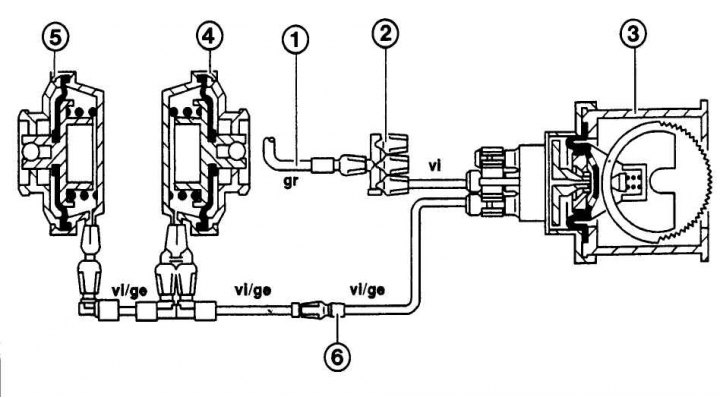
Fig. 9.18. Operating principle of the headlight range adjustment system: 1 – vacuum hose from the…

Fig. 9.18. Operating principle of the headlight range adjustment system: 1 – vacuum hose from the intake pipe or vacuum distributor; 2 – distributor; 3 – vacuum regulator next to the light switch; 4 – headlight corrector mechanism right; 5 – left headlight corrector mechanism; 6 – plug connection


Sensors on the front and rear axles detect each change in the position of the car relative to the horizontal axis and transmit information to the headlight range control unit (Fig. 9.18). The unit is located under the rear seat. The current position of the headlights is determined in the control unit by a potentiometer installed in the headlight corrector mechanisms. The control unit issues a command to change the position of the headlights with a delay, when a certain amount of time has passed since the moment the position of the car changed.

Lamp health check device


The external lighting bulbs for low beam, side light, tail lights and brake lights are controlled by this device. When a bulb burns out, the control lamp lights up and remains lit as long as the consumer is switched on. When the brake light bulbs burn out, the control lamp remains lit until the ignition is switched off.

The control unit detects a fault in a circuit if too little current flows through it. At higher current, for example when a trailer is switched on, this does not lead to false alarms.
This article is available at: russian, bulgarian, belarusian, ukrainian, serbian, croatian, romanian, polish, slovak, hungarian
The article has been verified: Polyakov Zakhar Grigorievich
Share with friends:
◀ Previous
E-Class W210 / Lighting and signaling
Next ▶

Headlights — General Description
Replacing headlight bulbs
Replacing the fog light bulb
Removal headlights
Approximate headlight adjustment
Headlight adjustment
More similar articles for repairing other models

☛ Lighting fixtures — general provisions Mercedes W168 (1997-2004)
☛ Replacement of incandescent lamps for outdoor lighting devices Mercedes W203 (2000-2007)
☛ Replacing interior lighting bulbs Mercedes W463 (1999-2019)
☛ Outdoor lighting (ML 430) Mercedes W163 (1997-2005)
☛ Installation of electrical and electronic devices Mercedes W140 (1991-1998)
☛ Checking the lighting Mercedes Sprinter (1995-2000, diesel)
Link in different formats to this article
Comments and feedback from visitors
No comments yet


How much will 45 + 33 ?


W210 (1996-2002) 
  • General information
  • Vehicle description
  • Working conditions and tools
  • Car care
  • Diesel engines
  • Engine repair
  • Lubrication system
  • Cooling system
  • Injection system
  • Supply system
  • Exhaust system
  • Gasoline engines
  • Engine repair
  • Lubrication system
  • Cooling system
  • Control system
  • Power and exhaust system
  • Transmission
  • Clutch
  • Mechanical gearbox
  • Automatic gearbox
  • Drive shafts
  • Chassis
  • Car suspension
  • Steering
  • Tires and wheels
  • Brake system
  • Body
  • Exterior (external elements)
  • Interior (internal elements)
  • Doors and windows
  • Heating and ventilation
  • Electrical equipment
  • Equipment and devices
  • Power devices
  • Lighting and signaling
  • Electrical circuits
W124 (1984-1995) 
  • General information
  • Governing bodies
  • Driving and operation
  • Weekly care
  • Maintenance (gasoline)
  • Maintenance (diesel)
  • Troubleshooting
  • Power unit
  • I4 petrol engine
  • V6 petrol engine (SOHC)
  • V6 petrol engine (DOHC)
  • Diesel engines
  • Engine overhaul
  • Cooling system
  • Heating and ventilation
  • Fuel system (carburetor)
  • Injection system «Bosch CIS-E»
  • Injection system «Bosch HFM»
  • Diesel fuel system
  • Supply system
  • Starting and charging system
  • Ignition system (I4)
  • Ignition system (V6)
  • Preheating
  • Transmission
  • Clutch
  • Mechanical gearbox
  • Automatic gearbox
  • Drive shafts
  • Chassis
  • Brake system
  • Car suspension
  • Steering
  • Body
  • Exterior (external elements)
  • Interior (internal elements)
  • Doors, locks and windows
  • Electrical equipment
  • Equipment and devices
  • Switches
  • Headlights and lighting
  • Electrical circuits
W123 (1976-1985) 
  • General information
  • Introduction to the guide
  • Power unit
  • Engine device
  • Repair M102 engines
  • Repair M110 and M123 engines
  • Cooling and lubrication (M102)
  • Cooling (M110 and M123)
  • Ignition system
  • Power system «Stromberg»
  • Power system «Solex 4A1»
  • Fuel injection «K-Jetronic»
  • Fuel injection «L-Jetronic»
  • Transmission
  • Clutch
  • Mechanical gearbox
  • Automatic gearbox
  • Cardan and rear axle
  • Chassis
  • Front suspension
  • Rear suspension
  • Steering
  • Brake system
  • Body
  • Exterior (external elements)
  • Interior (internal elements)
  • Doors, locks and windows
  • Electrical equipment
  • Equipment and devices
  • Power devices
  • Electrical circuits
 
MercedesMan.ru © 2017–2026 · Mobile version · Read about Mercedes · Sitemap: EN BG BY UA RS HR RO PL SK HU · Feedback · Site search · Bookmark A-Class (W168) · C-Class (W201) · C-Class (W202) · C-Class (W203) · E-Class (W123) · E-Class (W124) · E-Class (W210) · G-Class (W463) · M-Class (W163) · S-Class (W116, petrol) · S-Class (W126, petrol) · S-Class (W140) · S-Class (W220) · Sprinter · Vito 1 · Vito 2 · Vario 814D ·
 
We only use cookies without which some of the site's features may not be available.