



Contents: Removal ↡ Installation ↡ Electronic Control Unit (ECU) ↡ Front wheel sensor ↡ Rear wheel sensor ↡ Front wheel sensor toothed rotor ↡ Rear wheel sensor toothed rotor ↡ Protection relay ↡ Anti-lock braking system relay ↡
Removal
1. Remove the ground cable from the battery.
2. Unscrew the cap from the brake system refill tank and add brake fluid to the max mark. Place a piece of polyethylene on the neck of the refill tank and screw the cap on. This will seal the cap of the refill tank, as a result of which the loss of brake fluid during further work will be minimal.
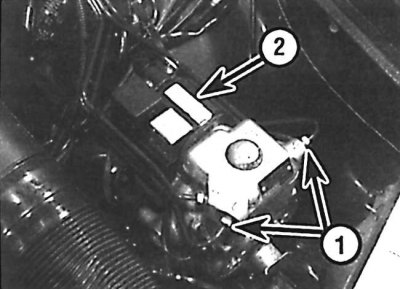
3. Clean the place where the brake pipes are connected to the hydraulic device and mark the location of the brake pipes. Unscrew the connecting nuts and disconnect the pipes from the hydraulic device and close the ends of the pipes with plugs.
4. Unscrew the screw and remove the relay cover from the hydraulic device. Disconnect the electrical connector from the hydraulic device, then unscrew the bolt and remove the ground bus.
5. Unscrew the nuts and remove the hydraulic device from the bracket.
Attention! Do not disassemble the modulator unit, as it cannot be repaired.
Installation
1. Installation is carried out in the reverse order of removal, taking into account the following points:
- a - check the condition of the rubber bushings and replace them if necessary;
- b - connect the brake pipes to the hydraulic unit and secure them with the connecting nuts, tightening them to the required torque;
- c - Before installing the pressure accumulator, remove air from the hydraulic system.
Electronic Control Unit (ECU)
Removal
Connecting the brake pipes (1) and electrical connector (2) to the hydraulic unit of the anti-lock brake system
Location of the electronic control unit for the anti-lock brake system
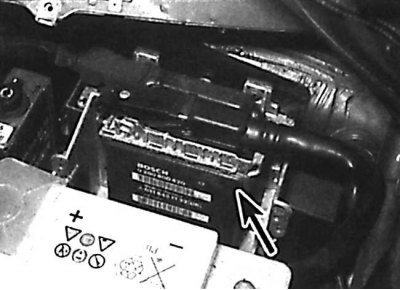
1. The ABS electronic control unit is located under a plastic cover and mounted on the rear of the battery tray. Remove the ground cable from the battery.
2. Remove the rubber seal and cover. To improve access to the electronic control unit, remove the rubber seal located at the base of the windshield, then detach the mounting bracket, unscrew the screws and remove the side section of the ventilation shroud.
3. Release the retaining clip and disconnect the electrical connector from the ECU, then remove the ECU from its socket (see Fig. Location of the electronic control unit for the anti-lock brake system).
Installation
1. Installation is carried out in the reverse order of removal.
Front wheel sensor
Removal
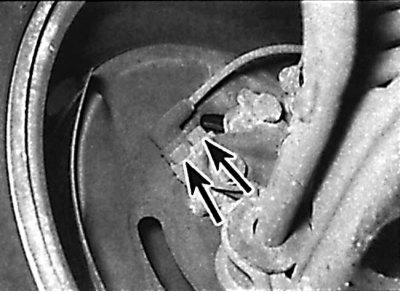
Front Wheel Sensor Mounting Bolt Location
1. Apply the parking brake, then raise the front of the vehicle and secure it on stands. Remove the affected front wheel.
2. Make sure the ignition is off, then remove the electrical connector from the mounting bracket and disconnect it from the main wiring harness. Remove the sensor wiring from the mounting brackets and retainers.
3. Unscrew the bolt securing the sensor to the steering knuckle and remove the sensor along with the wires (see picture). Check the condition of the sensor sealing ring and replace it if necessary. When installing the sensor, a new mounting bolt must be used.
Installation
1. Clean the wheel sensor and the wheel sensor rotor grooves from dirt. Apply a thin layer of grease to the mating surfaces of the sensor and the steering knuckle.
2. Install the sensor sealing ring.
3. Install the wheel sensor into the steering knuckle and secure with new bolts, tightening them to the specified torque.
4. Secure the sensor wiring with clamps and fasteners. Check that the electrical connector sealing ring is in good condition, then connect the electrical connector and secure it with a clamp.
5. Install the wheel, then lower the vehicle to the ground and tighten the wheel bolts to the specified torque.
Rear wheel sensor
Attention! When installing the sensor, it is necessary to use a new mounting bolt.
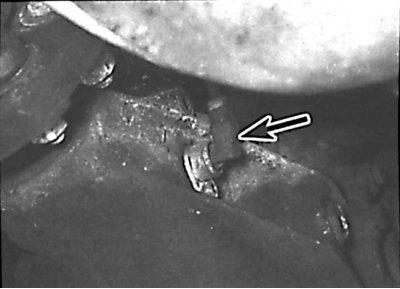
Location of the rear wheel sensor on the rear final drive housing
1. Raise the rear of the vehicle and support it on stands.
2. To improve access to the sensor's electrical connector, remove the rear seat.
3. Make sure the ignition is off, then disconnect the sensor electrical connector from the wiring harness. Release the sensor wiring from the mounting brackets so that it can be removed together with the sensor.
4. Working underneath the vehicle, remove the sensor wiring from the brackets securing it to the underbody of the vehicle.
5. Unscrew the mounting bolt and remove the sensor with the sealing ring from the rear final drive housing (see picture). Check the condition of the sensor sealing ring and replace it if necessary. When installing the sensor, a new mounting bolt must be used.
Installation
1. Clean the mating surfaces of the sensor and the rear final drive housing and install a new sensor O-ring.
2. Reinstall the sensor and secure it with a new bolt, tightening it to the specified torque.
3. Thread the sensor's electrical connector through the rubber seal in the vehicle's underbody, then connect the electrical connector to the main wiring harness inside the vehicle. Secure the sensor's wiring with staples.
4. Install the rear seat and lower the vehicle.
Front wheel sensor toothed rotor
The front wheel sensor toothed rotor is mounted on the rear of the wheel hub. Clean the grooves and check the condition of the rotor teeth. If the rotor needs to be replaced, the hub assembly must be replaced.
Rear wheel sensor toothed rotor
The toothed rotor of the rear wheel sensor is an integral part of the rear main gear. Remove the rear wheel sensor and check the condition of the rotor teeth through the sensor hole. To replace the toothed rotor of the rear wheel sensor, it is necessary to disassemble the rear main gear and this work must be performed at a service station.
Protection relay
Removal
1. The protection relay is located near the electronic control unit (ECU). Before removing the relay, make sure the ignition is off.
2. Unscrew the mounting screw, pull the relay out of the socket and remove it from the engine compartment.
Installation
1. Check the condition of the protection relay connecting contacts on the relay and in the relay installation socket.
2. Installation is carried out in the reverse order of removal.
Anti-lock braking system relay
Removal
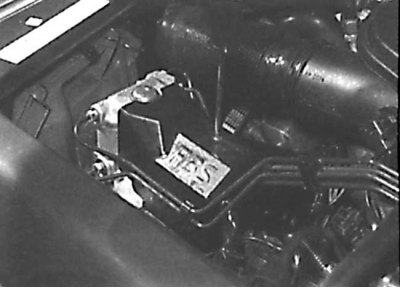
Unscrewing the screw securing the relay cover to the hydraulic device
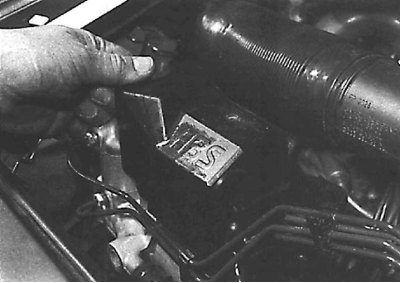
Removal the relay cover from the hydraulic device
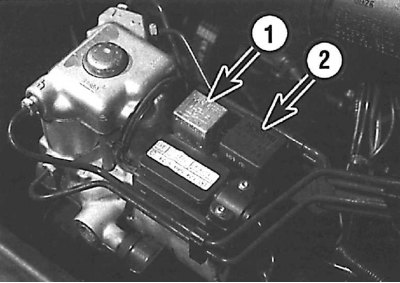
Location of the electromagnetic valve relay (1) and the return pump relay (2) of the anti-lock brake system
1. Unscrew the screw and remove the relay cover from the hydraulic device (see fig. Unscrewing the screw securing the relay cover to the hydraulic device, Removing the relay cover from the hydraulic device)
2. Make sure the ignition is off and remove the required relay from the control unit. The solenoid valve relay is smaller in size than the return pump relay (see Fig. Location of the electromagnetic valve relay and the return pump relay of the anti-lock brake system).