



Contents: Removal ↡ Installation ↡
Removal
Note: A hoist and winch are required to perform this job.
1. Remove the gearbox as described in Chapter 7.
2. Where required, remove the engine shield from below as described in Chapter 11.
3. Drain the oil and coolant from the engine as described in Chapter 1A.
4. Remove the air cleaner as described in Chapter 4.
5. Remove the radiator and radiator fan as described in Chapter 3.
6. On models with air conditioning, place a large piece of cardboard in front of the air conditioning condenser to protect it from damage during the following steps.
7. Where provided, unscrew the union nuts and disconnect the hydraulic pipes from the suspension level control pump located in front of the cylinder head (see fig. 4.7). Prepare for liquid spillage and plug open ends of pump and tubes.
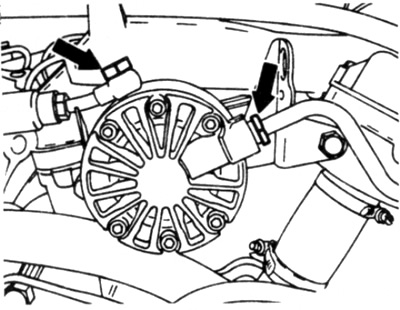
Fig. 4.7. Disconnect the hydraulic pipes (shown by arrows) from the pump of the suspension level control system
8. On models equipped with air conditioning, remove the accessory drive belt as described in Chapter 1 and disconnect the plug from the compressor.
9. Remove the bolts and pull the belt tensioner components forward from the engine. Note the location and orientation of all components so you can reinstall them correctly (see Fig. 4.9, a, b, c).
- a) On models without a hydraulic shock absorber strut, unscrew the mounting bolt and remove the tensioner.
- b) On models with a hydraulic shock absorber strut located below the tensioner, unscrew the bolt securing the lower end of the strut and the two bolts securing the tensioner bracket, then unscrew the bolt in the center of the tensioner and remove the parts.
- c) On models with the hydraulic shock absorber strut located above the tensioner, remove the power steering pump pulley, then remove the tensioner pulley. Remove the end of the strut from the tensioner bracket, using an open-end wrench to hold the bolt against turning if necessary. Remove the shock absorber strut bolts from the alternator support bracket and remove the washer where provided. Hold the tensioner bolt to the power steering pump bracket and remove the nut from the bottom of the bracket. Remove the two bolts securing the tensioner bracket to the camshaft timing chain housing. Remove the bolt from the center of the tensioner and remove the tensioner and bracket together.
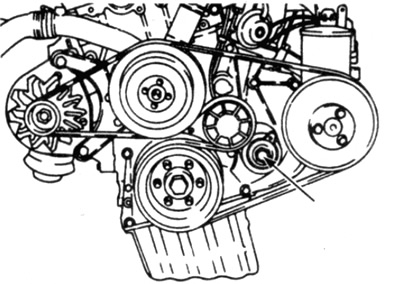
Fig. 4.9, a. Unscrew the mounting bolt (shown by arrow) and remove the accessory drive belt tensioner - models without shock absorber
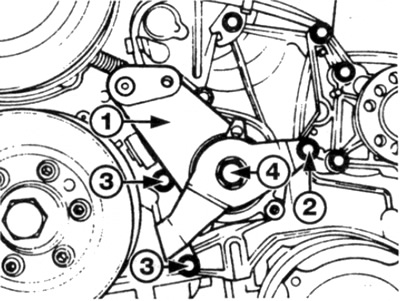
Fig. 4.9, c. Details of the auxiliary drive belt tensioner - models with a shock absorber strut located above the tensioner
1 Tensioner
2 Tensioner mounting bolt to power steering pump bracket
3 Bolts securing the tensioner bracket to the camshaft drive chain housing
4 Tensioner center bolt
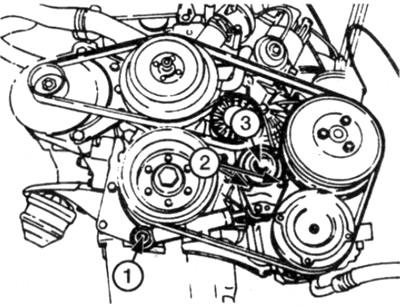
Fig. 4.9, b. Details of the auxiliary drive belt tensioner - models with a shock absorber strut located below the tensioner
1 Lower shock absorber strut mounting bolt
2 Tensioner Bracket Bolts
3 Central tensioner mounting bolt
10. Unscrew the power steering pump pulley.
11. Remove the rear bracket bolts on the power steering pump and air conditioning compressor (where it is installed) and the cylinder block. Remove the bracket from the engine (see fig. 4.11).
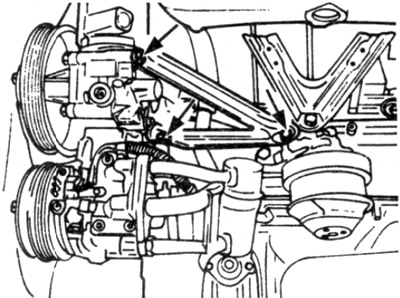
Fig. 4.11. Power steering pump/air conditioning compressor rear bracket mounting bolts
12. Loosen the power steering pump bolts (see Chapter 10) and move it to the side without disconnecting the hydraulic pipes.
13. Similarly, on models with air conditioning, remove the compressor bolts (refer to Chapter 3) and move it to the side without disconnecting the cooling pipes.
14. Where provided, remove the bracket bolts and release the pipe/hose assembly from the front left corner of the cylinder head.
15. Disconnect the generator wire.
16. Working in the engine compartment, disconnect the wires from the corresponding parts and connectors. Remember the location and routing of all connections so as not to mix them up during installation. Unscrew the bolts or unfasten the holders of all wires and wiring harnesses on the engine.
17. Similarly, disconnect all vacuum lines, taking note of their location and how they are routed.
18. Disconnect the throttle cable from the throttle control lever (if necessary, refer to Chapter 4). then release the cable from all brackets on the engine and move it to one side.
19. On fuel injected models, bleed the fuel system as described in Chapter 4B.
20. Where provided, unscrew the union nuts, then disconnect the supply and return lines from the carburetor / fuel distributor / pressure regulator. Where necessary, hold the unions. Be prepared to collect the spilled fuel, plug the open ends of the fuel lines and unions.
21. Disconnect the heater hose from the left rear corner of the cylinder head.
22. Loosen the fittings and disconnect the power steering vacuum hose from the intake manifold.
23. If not already done, attach a hoist and winch to the rigging brackets on the cylinder head and adjust the winch to support the engine. Note that the hoist must be able to lift the engine high enough to separate it from the car.
24. Insert a piece of cardboard between the rear of the cylinder head and the firewall to protect the firewall when the engine is lifted (see fig. 4.24).
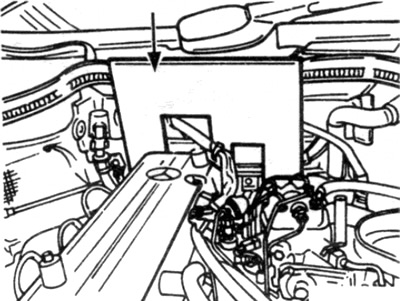
Fig. 4.24. Insert a sheet of cardboard (shown by arrow) from the back of the engine
25. Make a final check that all required hoses, tubes and wires are disconnected and do not interfere with engine removal.
26. If not already done, remove the two lower engine mount bolts. Where provided, also remove the mount shock absorber on the left side of the vehicle.
27. Raise the hoist and, if necessary, adjust the winch so that the engine is raised vertically.
28. Slowly lift the unit upwards and take care not to damage the surrounding parts in the engine compartment.
Installation
29. Installation is carried out in reverse order. Please note the following points.
- a) Where required, tighten all fasteners to the required torque.
- b) Make sure all wires, hoses, tubes and brackets are installed and routed as they were before.
- c) Connect and, if necessary, adjust the throttle cable as described in Chapter 4.
- d) Where required, install the accessory drive belt as described in Chapter 1.
- d) Install the radiator and radiator fan as described in Chapter 3.
- e) Install the gearbox as described in Chapter 7.
- g) When finished, fill the engine with oil and fill the cooling system as described in Chapter 1A.