



Precautions when handling brake fluid
The hydraulic clutch uses brake fluid, which is toxic, so the following precautions must be taken before any work is carried out with it.
Brake fluid should be stored in a special container with the appropriate markings. The liquid is poisonous, even 100 ml of liquid can cause death.
Use gloves and goggles to protect skin and eyes. If liquid comes into contact with skin, wash immediately with soap and water. In case of contact with eyes, rinse immediately with clean water. If necessary, consult a doctor.
Avoid contact of brake fluid with painted surfaces of the vehicle. In case of contact, rinse immediately with clean water.
Brake fluid is hygroscopic; when it absorbs moisture, the boiling point of the fluid decreases. For this reason, it must be stored in a tightly closed container.
Even a small amount of mineral oil entering the brake fluid can damage the rubber hoses of the hydraulic system. It is especially difficult to notice oil contamination when using colorless or yellow brake fluid. If oil gets into the system, it is necessary to replace the reservoir, the clutch master cylinder and all rubber parts of the brake system. After this, flush the system with fresh brake fluid and bleed it. Given these consequences, be careful to ensure that no oil enters the system.
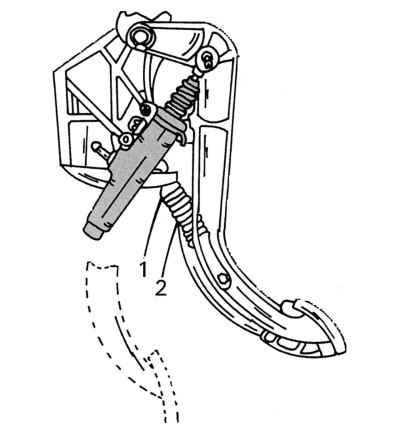
Figure 182. Location of the clutch master cylinder: 1 - return spring; 2 - spring cup
Figure 182 shows the location of the master cylinder. When removing, the following operations must be performed:
- remove the trim under the instrument panel on the left side;
- remove the rug from the floor on the left side;
- to prevent working fluid from leaking out of the system, the outlet hose from the master cylinder can be clamped with a suitable clamp. Otherwise, by pressing the clutch pedal, drain the fluid from the system through the bleed nipple of the working cylinder and the drain hose into a special container;
- remove the outlet hose from the master cylinder;
- disconnect the brake light switch connector;
- unscrew the master cylinder from the clutch pedal bracket;
- remove the clutch pedal, disconnect the spring, its protection and washer from the pressure rod;
- use snap ring pliers to remove the spring ring securing the push rod (at the top of the clutch pedal);
- remove the connecting hose with the tip from the cylinder and remove it.
Installation of the master cylinder is carried out in reverse order. It is imperative to pay attention to the correct installation of the connecting hose tip. When connecting the push rod, its flanged end should face the pedal. Check that the retaining ring fits properly into the groove. After completing the work, bleed the clutch drive (see subsection 6.8).