



Contents: Control of pipeline laying and…↡ All units (engine, gearbox, rear…↡ Rubber protective covers, shock…↡ Checking the condition of the…↡
Control of pipeline laying and places of their possible abrasion!
1. Check for leaks:
- engine,
- gearbox,
- power take-off mechanism,
- transfer case,
- rotary reducer,
- front axle,
- rear axle,
- steering gear and power steering pump.
If there is a persistent oil leak, it should be fixed immediately and the oil level adjusted.
Light wetting of the sealed areas does not pose a danger.
All units (engine, gearbox, rear axle, steering gear, power steering pump, brake system)
All pipelines and hoses
1. All lines, hoses and wires on the engine, clutch, fuel system, cooling system and brake system, as well as the wiring of the ABS, ESP and brake pad wear indicator sensors, must be checked for leaks, damage and proper routing.
2.1 The compressed air leak in the pneumatic system must be checked.
Secure the vehicle against rolling and release the parking brake before checking for air leaks. If there is a high compressed air leak, locate the leak and eliminate the leak.
Rubber protective covers, shock absorbers, air springs
Chassis and body
1. All fuel, coolant, compressed air or vacuum, oil, grease and brake fluid reservoirs must be checked for leaks and damage. Leaky tank (eg fuel tank, radiator, receiver) if necessary, seal or replace.
2. Pneumatic and hydraulic devices - check for leaks, such as air suspension and brake system valves, brake master cylinder, brake calipers, brake force regulator, hydraulic pumps and hydraulic cylinders (clutch drive, tipping system, tailboard system, etc.), as well as shock absorbers. If necessary, seal or replace leaky components.
3. All covers and trim - check for damage and proper fastening.
Damaged covers and trim should be replaced and secured if necessary.
4. Check the cuffs and protective caps for damage and tight fit. If seals and protective caps are damaged or leaking, check the corresponding components (e.g. ball joints (1) of the axle suspension or joints (2) of the drive shafts) and replace if necessary.
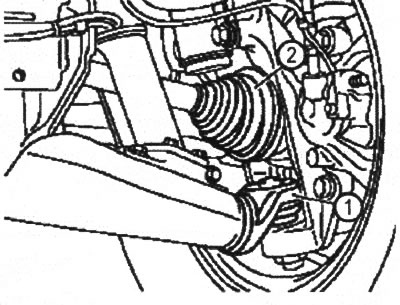
VN 1.021
5. The air springs (3) should be checked for damage. Damaged air springs (3) (for example, cracks, peeling, abrasions, etc.) - replace.
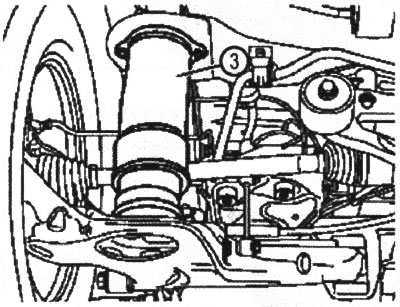
VN 1.022
Checking the condition of the mechanical components of the steering system
1. Start the engine. At the same time, set the front wheels to the straight-ahead position,
2. Check the clearance (a) on the steering wheel. The steering wheel should be turned alternately left and right until the front wheels start to move. If the permissible clearance on the steering wheel is exceeded, it is necessary to check the steering mechanism and all elements transmitting the steering force from the steering mechanism for increased clearance and, if necessary, repair them.
Permissible clearance on the steering wheel in the middle position: 30 mm along the steering wheel rim,
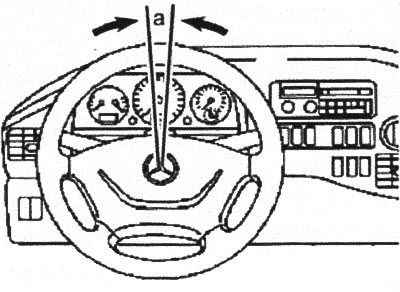
VN 1.023
3. Check the steering rods and steering rod ends (1). There should be no noticeable play in the steering rod ends.
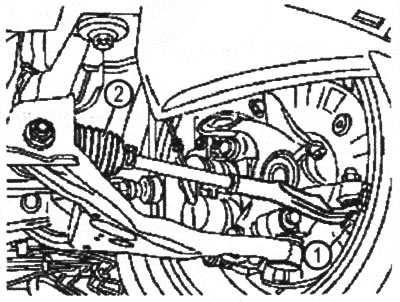
VN 1.024
1. Tie rod ends
2. Corrugated covers (dust covers)