



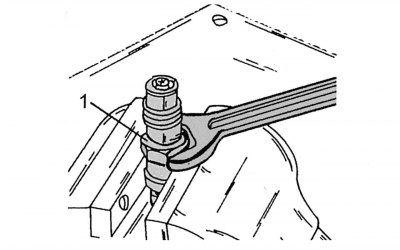
Figure 158. Disassembling the injector
- clamp the injector in a vice so as not to damage the fuel line fittings, and unscrew nut 1 (figure 158);
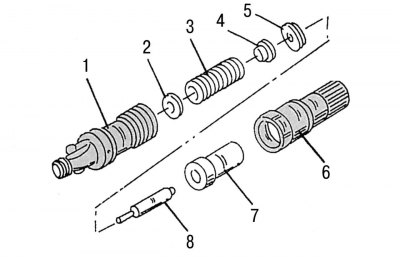
Figure 159. Injector design: 1 - nozzle body; 2 - steel thrust washer; 3 - spring; 4 - push pin; 5 - intermediate washer; 6 — nozzle holder; 7 - sprayer; 8 — injector needle
- remove the injector body with the needle, pressure pin, spring and steel washer from the clip. The injector parts are shown in the figure 159;
- immerse all parts in diesel fuel to dissolve deposits. If necessary, thoroughly clean the parts with a brush. Make sure that the hairs from the brush do not remain on the nozzle parts;
- make sure not to mix up the parts of different injectors - they cannot be disassembled.
Cleaning injectors
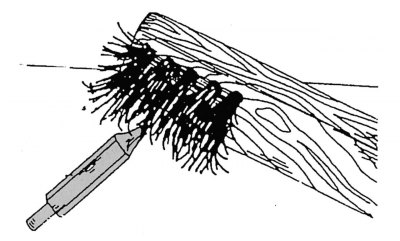
Figure 160. Cleaning the injector needle with a brass brush
[Article obtained from this portal: MercedesMAN.ru]
Under no circumstances should sandpaper, scrapers or other similar tools be used to clean the injectors. You can use hardwood sticks, gasoline or diesel fuel. The injector needle should only be handled by the push pin, as its contact surface may corrode from contact with wet fingers. The surfaces outside the nozzle body can be cleaned with a brass brush, and the needle head can be cleaned in the same way, as shown in the figure 160.
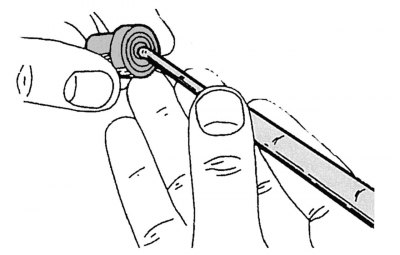
Figure 161. Cleaning the inside of the needle body with a scraper for annular recesses
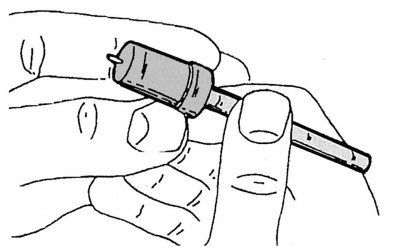
Figure 162. Cleaning the sprayer using a special tool
Clean the nozzle hole with a wooden stick previously soaked in diesel fuel. Using a scraper for annular recesses or a wooden stick soaked in diesel fuel, clean the injector body from the inside (figure 161). Carefully clean the needle seat inside the housing with a cleaning needle, and the sprayer with a special tool, moving from the inside out (figure 162).
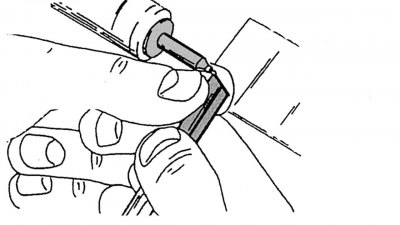
Figure 163. Cleaning the nozzle needle with a hardwood stick
If the needle is covered with carbon, it should be clamped by the pin in the chuck of a lathe or electric drill and cleaned with a wooden block with a sharp edge, previously soaked in diesel fuel (figure 163). After cleaning a used injector, visually inspect the surface of the needle seat, body and sprayer for damage. Damaged injectors should be replaced.
After external inspection, the ease of movement of the needle should be checked. Place the injector body and needle separately in filtered diesel fuel, then insert the needle into the body. Holding the nozzle body vertically, pull the needle out about 1/3 of its length. It should fall back down freely under its own weight. Then turn the needle slightly clockwise and repeat the check. If the needle does not drop, it and the housing should be replaced. The injector is assembled in the reverse order.
The special Bosch EFEP 60H test device can also be used to check the spray cone, the injected fuel volume and the injector opening pressure. These works are carried out at service stations using equipment for repairing diesel engines.
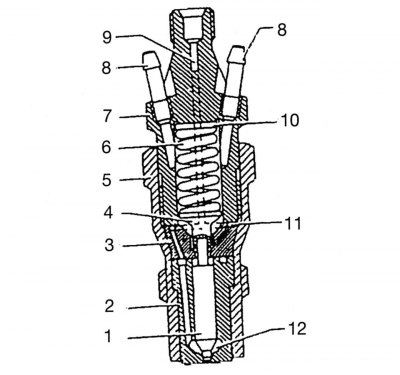
Figure 164. Nozzle: 1 - needle; 2 - sprayer; 3 — spacer; 4 - push pin; 5 - union nut; 6 - spring; 7 - nozzle body; 8 — drain pipe nipple; 9 — discharge channel; 10 - thrust washer; 11 — feed channel; 12 - high pressure chamber
The installed injectors must match the engine type. Figure 164 shows a cross-section of the injector. The nozzles are marked with the index DN 0 SD 261.