



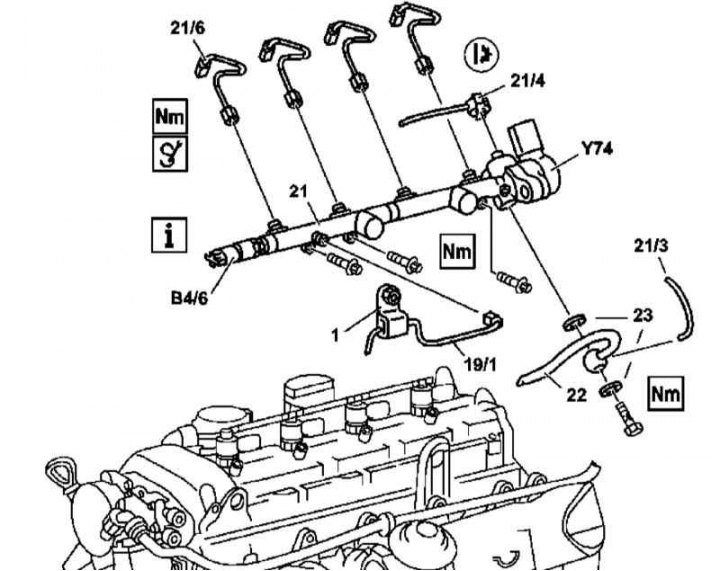
Fuel Rail Installation Details on 163.113 Models (612 series engine)
1 - Pressure line support bracket; 19/1 - Pressure line of high-pressure fuel pump; 21 - Fuel line; 21/3 - Oil drain line; 21/4 - Fuel return line; 21/6 - Fuel lines of injectors; 22 - Fuel return line from cooler; 23 - Sealing rings; B4/6 - Fuel line pressure sensor; Y74 - Pressure Regulator Valve
1. Fuel distribution line installation details on 163.113 models (612 series engine) are shown in the illustration, to which all references found in the text refer.
2. Remove the cylinder head cover trim panels.
3. Disconnect the electrical wiring from the sensor (B4/6) and the pressure regulating valve (Y74).
4. Remove the injector fuel lines (21/6).
5. Remove the pressure (19/1) and return (21/4) lines from the fuel line (21).
6. Remove the cooler fuel return line (22) and the oil return line (21/3).
7. Remove the fuel line, if necessary remove the injectors (see below).
8. Installation is carried out in the reverse order - do not forget to replace all sealing elements.
9. Finally, start the engine and check the fuel system components for signs of developing leaks, clear the memory of the on-board diagnostic module (see Chapter Engine electrical systems).
Nozzles
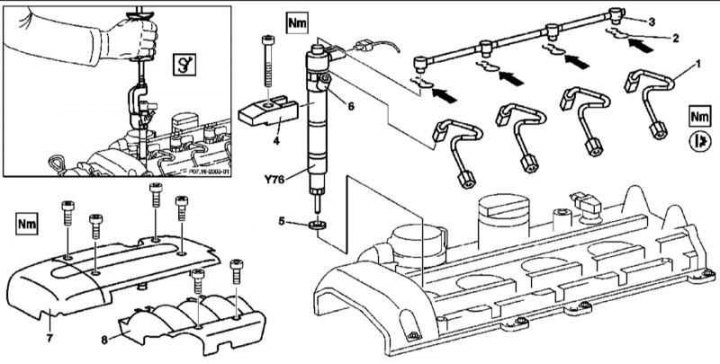
Injector installation details for models 163.113 (612 series engine)
1. Details of installation of injectors on models 163.113 (612 series engine) are shown in the illustration, to which all references found in the text refer.
2. Remove the expansion tank of the cooling system.
3. Remove the cylinder head cover trim panels (7 and 8).
4. Disconnect the electrical wiring from the injectors (Y76).
5. Release the clamps (2) and remove the oil drain line (3).
6. Remove the clips (4) and remove the injectors (Y76).
7. Installation is carried out in the reverse order - do not forget to replace the sealing elements.
8. Finally, start the engine and check the fuel system components for signs of developing leaks, clear the memory of the on-board diagnostic module (see Chapter Engine electrical systems).
Models 163.128
Highway
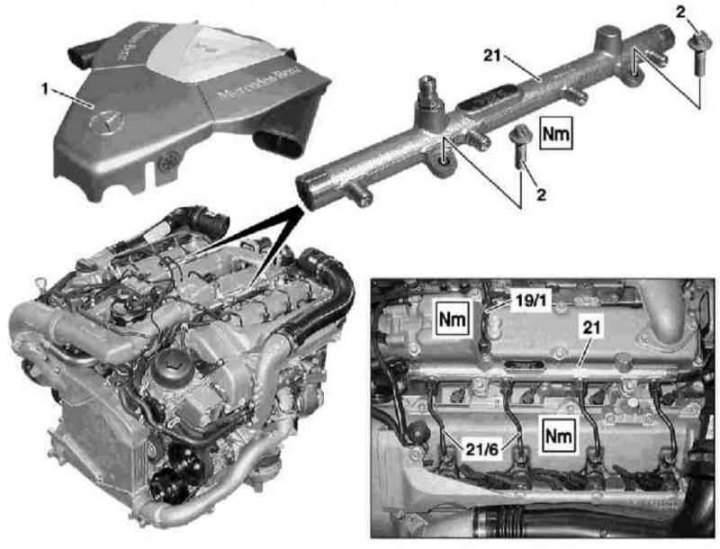
Fuel Rail Installation Details for 163.128 Models (628 series engine)
1 - Air purifier; 2 - Bolts; 19/1 - Pressure line valve block/fuel line; 21 - Fuel line; 21/6 - Fuel lines of injectors
1. Fuel distribution line installation details on 163.128 models (628 series engine) are shown in the illustration, to which all references found in the text refer.
2. Remove the air distributor (see Section Servicing air intake tract components).
3. Remove the injector fuel lines (21/6) and the pressure fuel line (19/1).
4. Unscrew the bolts (2) and remove the fuel line (21).
5. Installation is carried out in the reverse order - tighten the fastening bolts only after installing the pressure lines.
6. Finally, start the engine and check the fuel system components for signs of developing leaks, clear the memory of the on-board diagnostic module (see Chapter Engine electrical systems).
Nozzles
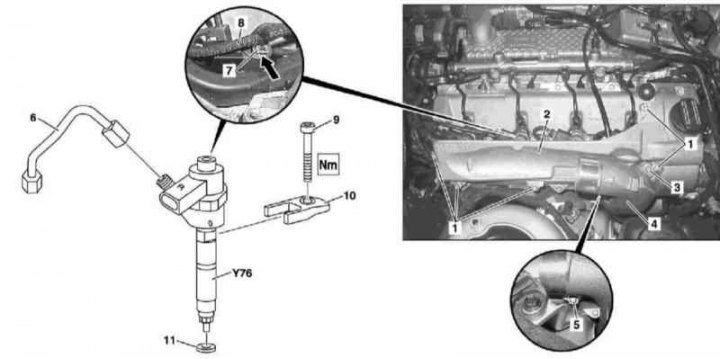
Injector installation details for models 163.128 (628 series engine)
1 - Screws; 2 - Lid; 3 - Screw; 4 - Boost tract air intake duct; 5 - Screw; 6 - Fuel line of the injector; 7 - Retainer; 8 - Oil drain line; 9 - Screw; 10 - Retainer; 11 - Sealing ring; Y76 - Injector
1. Details of installation of injectors on models 163.128 (628 series engine) are shown in the illustration, to which all references found in the text refer.
2. Remove the air distributor (see Section Servicing air intake tract components).
3. Remove the left air duct (4).
4. Remove the left front wheel and wheel arch protection liner.
5. Disconnect the air intake duct from the cylinder head cover and move it to the side.
6. Remove the right and left injector covers (2).
7. Disconnect the electrical wiring and fuel lines from the injectors (6).
8. Release the clamps (7), then remove and move aside the oil drain lines (8).
Attention! The fasteners must be replaced!
9. Remove the clamps (10) and take out the injectors (Y76).
10. Installation is carried out in the reverse order - do not forget to replace the sealing elements.
11. Finally, start the engine and check the fuel system components for signs of developing leaks, clear the memory of the on-board diagnostic module (see Chapter Engine electrical systems).