



Note: If air enters the system as a result of a leak, the cause of the malfunction must first be eliminated.
If air gets into a single wheel cylinder, it is sufficient to bleed only the corresponding support. If air gets into the system tract as a result of excessive lowering of the fluid level in the master cylinder reservoir, as well as after removal/installation of the latter, the entire system must be bled. The same applies to the case of performing maintenance procedures that require dismantling the hydraulic modulator.
Pumping without using a special device
Attention! When any of the chambers of the master cylinder reservoir is completely empty (for example, as a result of a breach in the tightness of any of the tracts, or if the liquid was not added to the tank after performing maintenance procedures) the air sucked into the tract inevitably ends up in the ABS pump - in this case, bleeding must be done in a service station using a special device.
1. Check the level in the brake fluid reservoir and make the appropriate adjustments if necessary (see Chapter Checking fluid levels, leak control).
Attention! During the procedure, the fluid in the master cylinder reservoir should not drop excessively - periodically adjust its level by adding fresh fluid!
2. Remove the dust cap from the bleeder valve of the corresponding brake caliper. Attach a piece of transparent hose to the valve and lower the free end into a drain container partially filled with brake fluid to prevent air from being sucked in during bleeding.
3. Using a spanner, carefully loosen the valve.
4. Ask an assistant to press the foot brake pedal all the way down several times and then lock it in the lower position.
5. Open the valve - the brake fluid will start to flow into the drain container. When the pressure weakens, close the valve and repeat the procedure.
6. Continue bleeding until the fluid being pumped out of the circuit is completely free of air bubbles/fresh fluid starts being pushed out of the hose (in case of its replacement), - do not forget to check and, if necessary, adjust the fluid level in the master cylinder reservoir.
7. Once bleeding is complete, tighten the valve, remove the hose and replace the dust cap.
8. If necessary, proceed in a similar manner to bleed the calipers of the remaining brake mechanisms - do not forget to periodically add fluid to the master brake cylinder reservoir.
9. Finally, adjust the fluid level in the master cylinder reservoir (see Chapter Checking fluid levels, leak control) and check the proper functioning of the brake system and clutch.
Pumping using a special device
The device must be connected in strict accordance with the instructions of its manufacturer; the procedure should be entrusted to car service specialists.
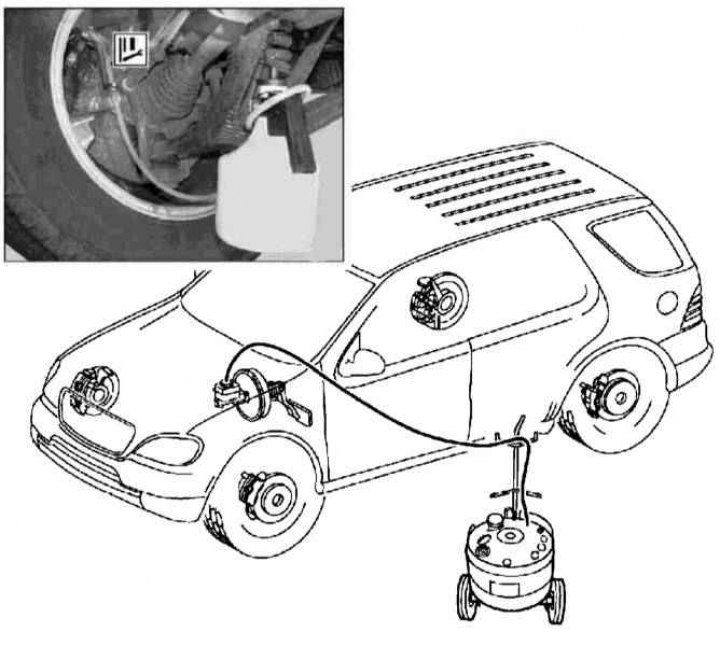
Bleeding the brake system using a special device
Original published on the website (MercedesMAN)