



- first, turn each wheel. Carefully remove stones and other objects from the tread with a screwdriver. If glass or a nail is found in the tire, air may be leaking from that area;
- pay attention to possible damage to the tread - breaks, cuts, cracks. If the rubber is damaged, moisture can get inside the tire. It is impossible to determine from the outside whether corrosion of the metal cord has begun. For added safety, have your tires checked by a professional. The same should be done in case of increased wear;
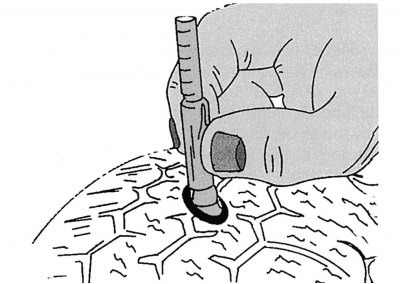
Figure 342. Measuring the tire tread depth with a tester
- the tread depth over the entire surface of the tire must be at least 1.6 mm. Some brands of tires are equipped with a special wear indicator in several places, the installation locations of which are marked with the letters "twi" (tread wear indicator) on the sidewall of the tire. For safety reasons, replace your tires when the wear depth reaches 2 mm. The vehicle's handling deteriorates as tire wear increases, especially on wet roads. To measure the tread depth, special testers are used, which are applied to the tire, as shown in the figure 342. By pushing the measuring pin, the value (in mm) can be determined on the tester scale;
- check the uniformity of tire wear;
- inspect the sidewalls of the tires carefully. "Bulges" and protrusions indicate damage to the tire.
Types of tire wear
Tire wear manifests itself as follows:
- the outer edge is worn out (front wheels). Taking corners too fast. Swap the tires on the rims to the other side or swap the wheels back;
- the outer edges are worn more than the middle of the tread. The tires were operated at insufficient pressure for a long time;
- transverse wear stripes. Indicates incorrect wheel alignment, especially if the tire is worn on only one wheel;
- severe wear in the center of the tread. Occurs when driving frequently at maximum speed. Under the influence of lifting force, the tires bend and the center wears more. This effect is especially noticeable on the rear wheels;
- uniform wear marks. The shock absorber may be faulty;
- uneven wear (in several places). Wheel imbalance. Balance the wheels;
- severe wear in one place. May occur when braking with wheel locking.
Publication reprinted from this resource (MercedesMAN.ru)