



Warning! The brake fluid used in the hydraulic clutch system is poisonous, so if it gets on your skin, immediately rinse the area with plenty of water. If the fluid gets into your eyes or inside your body, you should immediately consult a doctor. Some fluids are highly flammable and can catch fire even from contact with hot vehicle components. In addition, the fluid used in the hydraulic clutch system dissolves paint and plastic, so if the fluid gets on your vehicle's paintwork, rinse it with plenty of water. This fluid is also hygroscopic, i.e. it absorbs moisture from the air, and therefore it is not recommended to use the fluid if it has been stored in an open container for a long time.
Attention! To remove air from the hydraulic clutch system, Mercedes-Benz recommends using special equipment that allows air to be removed under pressure.
Any hydraulic system will operate properly and reliably if air is removed from the hydraulic fluid in the system.
When bleeding air, add only clean fluid of the correct type. Never reuse fluid that has leaked from the hydraulic clutch system.
If different types of fluids are accidentally mixed in the hydraulic system, remove the fluid from the hydraulic system, flush the system with clean fluid of the correct type, and install new O-rings.
If there are persistent hydraulic fluid leaks or air enters the hydraulic system, determine the cause and location of the leak and repair the damage.
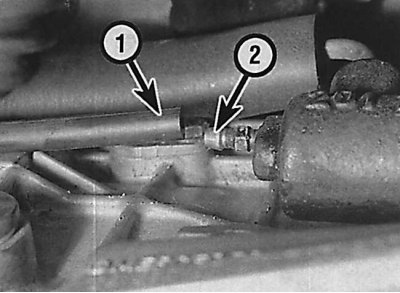
Installing the tube (1) onto the bleed nipple (2) of the clutch slave cylinder
1. Raise the front of the vehicle and support it on stands.
2. Remove the engine splash shield.
3. Check that the hydraulic tube and clutch hose connections are securely tightened and that the bleeder screw on the rear of the clutch slave cylinder is screwed in. Remove the dust cap from the bleeder screw and clean any traces of dirt around the screw.
4. To remove air from the hydraulic system, it is necessary to use special equipment that operates under external pressure (inflated spare tire tube). After connecting the sealed chamber with fluid to the brake system expansion tank, air removal consists of draining the fluid through the bleed nipple on the clutch slave cylinder until the flowing fluid comes out without air bubbles.
5. Using this method with a large fluid reservoir provides additional protection for the hydraulic clutch system from possible air ingress during bleeding.
6. Place a transparent hose on the bleed nipple, and lower the other end into a glass container partially filled with brake fluid (see picture).
7. Connect the pressure bleeding device to the brake system reservoir according to the instructions.
8. Unscrew the bleed screw half a turn and allow the liquid to drain into the glass container until it comes out without air bubbles.
9. After bleeding the hydraulic clutch system, screw in the bleeder nipple, remove the hose from it and remove the device from the refill tank.
10. Clean the bleed nipple from brake fluid and install the dust cap on it.
11. Check the brake fluid level in the reservoir and add brake fluid if necessary.
Publication reprinted from this resource [mercedesman.ru]
12. Check the smoothness of the clutch pedal. If the clutch pedal moves jerkily when pressed, there is air in the clutch hydraulic system. If, after re-bleeding the air, the clutch pedal moves unevenly again, the sealing rings of the clutch master or slave cylinder are worn.
13. Lower the car.