



- place the rear of the car on supports and remove the rear wheels;
- drain the oil from the rear axle housing. If the volume of drained oil is less than 1 liter, you can suspect damage to the wheel bearings due to lack of oil. In this case, the bearings should be removed and inspected. Check the oil for metal particles. Their presence indicates damage to the main transmission. In this case, replacing the cuff does not make sense, since the rear axle needs to be repaired;
- release the vehicle's parking brake and turn the brake drums. If they turn with difficulty, the brake shoes may be stuck either in the drum or on the brake disc. In the first case, the pads should be brought together as described in section. "Brake system";
- unscrew the propeller shaft from the rear axle flange;
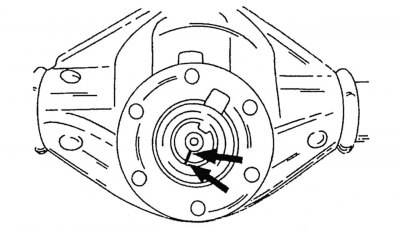
Figure 237. Applying marks for the relative positions of the flange and drive gear (for subsequent assembly)
- mark the position of the spline nut relative to the drive gear shaft as shown in the figure 237;
- install a torque wrench together with a spline nut wrench and, by rotating the gear shaft, determine the turning torque. Remember or write down the obtained value;
- holding the flange from turning, unscrew the flange nut;
(Text republished from the website: MERCEDESMAN.ru)
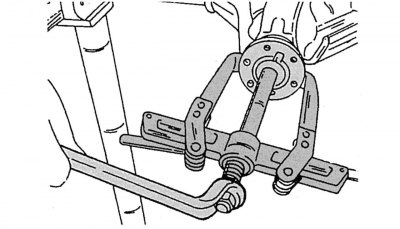
Figure 238. Removing the rear axle gearbox flange
- remove the flange with a two-jaw puller (figure 238). On the inside of the flange there is a spline that is opposite the spline of the gear shaft. This is important during installation. Check the flange surface where the sealing parts are installed; if damage is detected, the flange should be replaced;
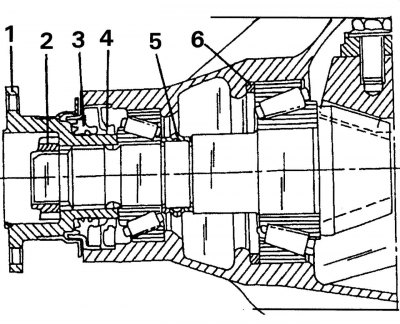
Figure 239. Main gear drive pinion: 1 — drive flange; 2 - slotted nut; 3, 4 - cuffs; 5 - elastic bushing (if the spline nut is tightened too much, it will be crushed); 6 - spacer washer
- carefully remove both cuffs with a screwdriver and thoroughly clean the mounting hole;
- apply universal grease between the dust and working edges of the new cuffs, apply sealant on the outside;
- carefully press the cuffs into the differential housing until they stop;
- install the flange on the shaft so that its spline matches the spline on the gear shaft (when installing a new flange, you will need the old flange);
- tighten the splined nut until the marks made coincide. Using a torque wrench, check that this occurs at the previously determined turning torque;
- if a new flange needs to be installed, unscrew the nut again, install the new flange and, slowly tightening the nut, bring it to a torque of 0.5 N·m greater than the value determined during disassembly. It is very important not to overtighten the nut, as this will cause the internal parts to become jammed and will require a complete gearbox overhaul. Let us repeat once again: the torque for turning the new flange should not exceed the initially set torque by more than 0.5 Nm. Subsequent loosening of the nut to set the required tightening torque is not permitted;
- lock the spline nut and install the cardan shaft. Fill the rear axle gearbox with oil as described in in the next subsection.